
Reviewed · HISTORICAL TOURS
Jaipur Walking Tour- Explore Old Heritage City With Private Guide
You can learn Jaipur fast, just by walking. This private Old City route mixes temples and craft markets so you get the feel of daily life, not just photo stops. I really like that the guide keeps things practical, plus the pacing works well for a half-day outing.
The one thing to think about is logistics: pickup isn’t included, and many shops open closer to 10:30–11:00, so you’ll want to start at the right time. Also, it’s a walking tour with moderate fitness needed, so plan comfy shoes.
In This Review
- Quick highlights you’ll actually feel on this tour
- Walking Jaipur’s Old City without turning it into a scavenger hunt
- Price and Logistics: what $20.17 really buys you
- Stop-by-stop: Kalki Temple to Golcha Cinema
- Stop 1: Kalki Temple
- Stop 2: Hawa Mahal (Palace of Wind) — roadside view
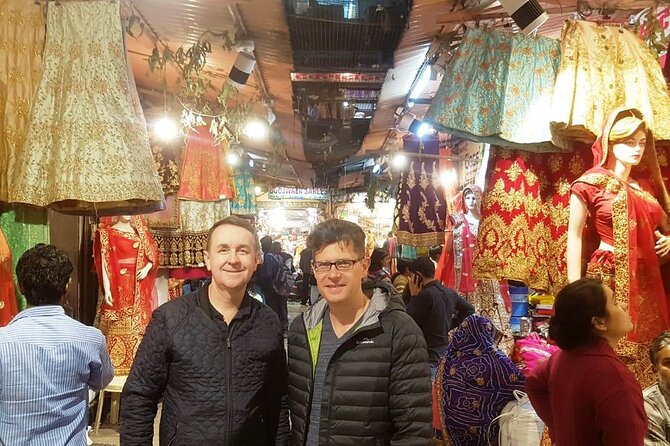
- Stop 3: Purohit Ji Ka Katla area (wedding fabrics and clothes)
- Stop 4: Gopal Ji Ka Rasta — mawa/khoya (khoa)
- Stop 5: Swargasuli Tower — Victory Tower view
- Stop 6: Choti Chopad — silver, flowers, spices, and an ancient temple
- Stop 7: Bhagat Mishthan Bhandar — taste the sweets
- Stop 8: Maniharo Ka Rasta — wedding costume lanes near Tripolia Bazaar
- Stop 9: Thatheron ka rasta — utensil makers and metalwork sounds
- Stop 10: Sai Baba Mandir — oldest Sai Baba temple in Jaipur
- Stop 11: Golcha Cinema — the tour’s finishing point
- Food and tea breaks that keep it local (and budget-friendly)
- Best time to start (and why Sundays can feel different)
- How much walking is it, really?
- Who should book this Jaipur walking tour?
- Should you book this Jaipur walking tour?
- FAQ
- What time does the Jaipur walking tour run?
- Is hotel pickup included in the price?
- What’s included for the $20.17 per person?
- Are entry tickets included for the stops?
- Is street food included?
- Will I need to bring my own travel insurance?
- Does the tour depend on weather?
Quick highlights you’ll actually feel on this tour
- Craft-market streets where you can watch traditional makers at work
- Wedding-costume and fabric shopping areas like Purohit Ji Ka Katla and Maniharo Ka Rasta
- Sweet stop with Bhagat Mishthan Bhandar, where you can taste locally made favorites
- Old-city temple visits including Sai Baba Mandir, said to be the oldest in Jaipur
- A classic Jaipur skyline view at Swargasuli Tower (Victory Tower), plus optional interior tickets
On foot through the old Jaipur lanes
- Jaipur Bazaar & Food Walking Tour
★ 5.0 · 281 reviews - Heritage Walk & Street Food Tasting in Jaipur
★ 5.0 · 158 reviews - Magical Walk of Jaipur
★ 5.0 · 121 reviews - Cultural Walk and Food Tasting In Jaipur
★ 5.0 · 118 reviews
Walking Jaipur’s Old City without turning it into a scavenger hunt
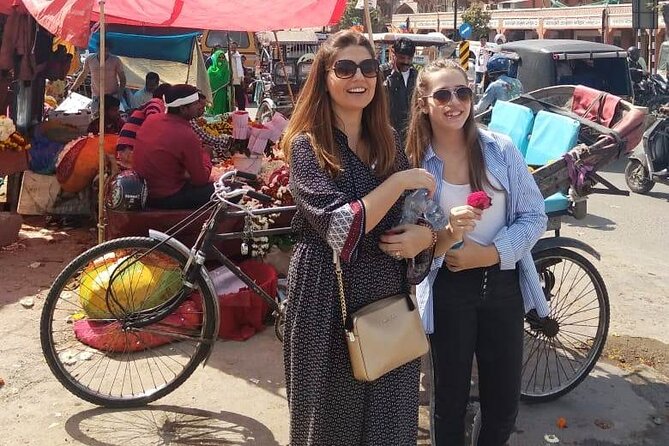
Jaipur’s Old City can feel like a maze at first. This tour’s big advantage is that it’s built around short hops between meaningful places, so you’re not spending your time figuring out where to go next. You’ll walk through lanes tied to specific trades—cloth, silver, dairy sweets ingredients, utensils—so the markets make sense instead of blending together.
Another strong point is the guide experience. If you’re lucky and you get a guide like Gaurav, you can expect a friendly, energetic style with lots of real explanations (and a good sense of fun). It helps a ton when you’re moving through streets full of shops, because the guide can point out what matters and what to look for.
Price and Logistics: what $20.17 really buys you

At about $20.17 per person for roughly 3–4 hours, the value comes from two things: a private, English-speaking local guide and included drinks (bottled water plus tea or coffee). GST is also included, which keeps the math simple.
What’s not included is important to budget for. Entry fees for street food and lunch aren’t covered, and there’s no hotel pickup or drop-off unless you add it for an extra charge. Most entry tickets are free on the route, but two stops are treated differently (Hawa Mahal and Swargasuli Tower), where you can do a roadside view at no cost and go inside only if you choose to pay for tickets.
So, this tour is a great bargain if you’re happy to spend a little extra on snacks and any optional monument entry. If you want everything priced in, you’ll likely spend a bit more once you add street food or inside tickets.
Stop-by-stop: Kalki Temple to Golcha Cinema
This is the kind of itinerary where each stop adds a new angle on Jaipur. One moment you’re at a temple, the next you’re in a lane tied to a craft, then you’re back to food and sweet shops. Here’s how it plays out.
Stop 1: Kalki Temple
You start at Kalki Temple, where the tour begins with a bit of context about this ancient temple. Even if you only plan for quick photos, this is a good warm-up. It sets the tone: Jaipur isn’t just palaces—it’s also faith, routine, and neighborhood life.
The whole Pink City in one loop
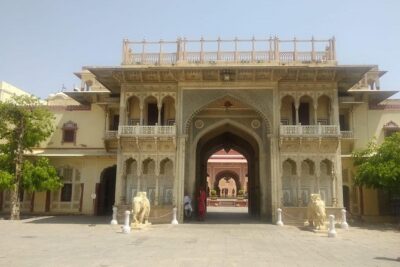

Stop 2: Hawa Mahal (Palace of Wind) — roadside view
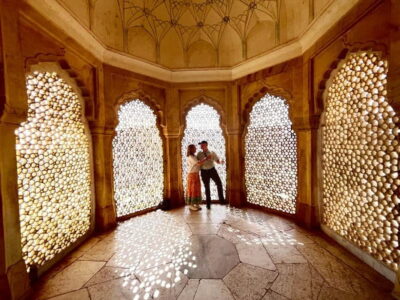
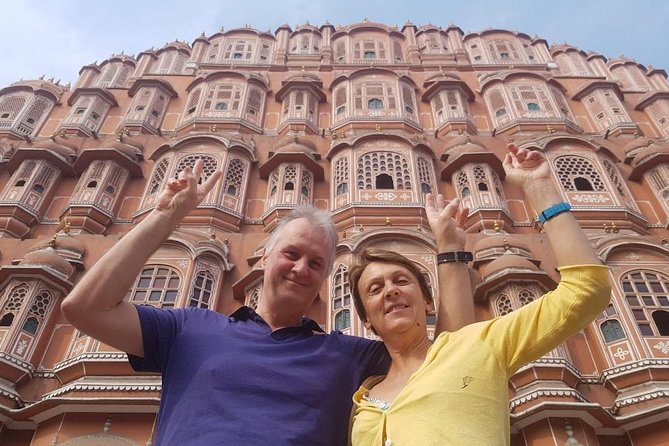
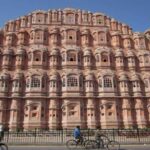
Next up is Hawa Mahal, one of the most recognizable symbols of Rajasthan. The tour’s included portion is a roadside look, with the palace positioned as a cultural inspiration rather than just a landmark.
If you want to go inside, you can—tickets apply—but the schedule is time-sensitive. Entry to spots like this closes about an hour before sunset, so don’t wait until late in the afternoon to decide.
Stop 3: Purohit Ji Ka Katla area (wedding fabrics and clothes)
Then you enter the Jai Mata Di Paridhan market area, which leads you into Purohit Ji Ka Katla, described as a hidden market stocked with wedding fabrics, dresses, and sherwanis. This is the kind of place where you can learn by looking: how textiles are displayed, what kinds of outfits are made for what occasions, and why people shop in Old City lanes.
Practical note: the market entry points can feel intimidating at first, but the idea is that you’re guided through it so you don’t waste time circling.
Stop 4: Gopal Ji Ka Rasta — mawa/khoya (khoa)
At Gopal Ji Ka Rasta, the focus shifts to food ingredients. This market is famed for making mawa, also known as khoya or khoa—dried milk solids that become a key ingredient in many northern Indian sweets.
Even if you’re not buying anything, this stop helps you connect the dots between what you’ll taste later and where the raw stuff comes from.
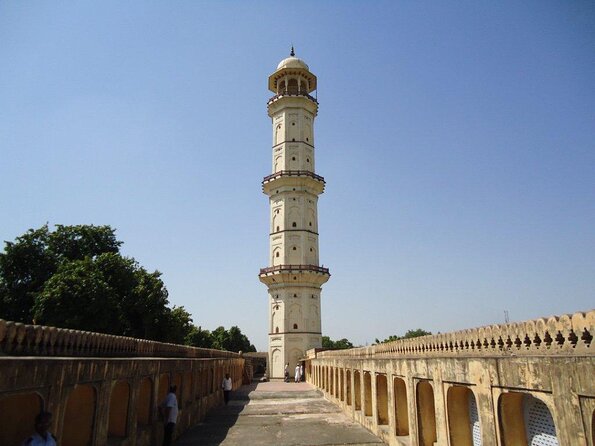
Stop 5: Swargasuli Tower — Victory Tower view
Swargasuli Tower is an 18th-century minaret often called the Victory Tower. On this tour you mainly get a scenic roadside viewpoint, and it’s a nice change of pace after so many close-up market scenes.
As with Hawa Mahal, you can go inside if you want, but you’ll pay entry tickets and you’ll need to respect the closing time (about an hour before sunset).
Stop 6: Choti Chopad — silver, flowers, spices, and an ancient temple
Choti Chopad is where you’ll feel Jaipur’s trade lanes in full. The area mixes an older temple visit with shops selling silver items, plus stops that tie into flower markets and spice markets.
If you like the sensory side of travel—smells of spices, visual texture of flowers, the shine of metal crafts—this stop delivers. The downside is also obvious: it’s shop-heavy, so wear shoes you can stand in.
Stop 7: Bhagat Mishthan Bhandar — taste the sweets
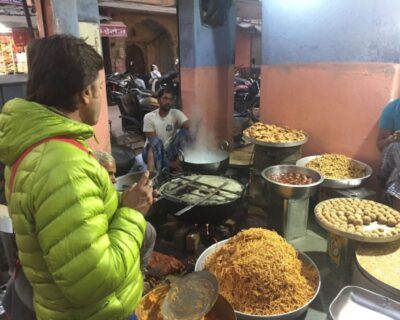
At Bhagat Mishthan Bhandar, the tour becomes food-first. This is the famed sweets shop where you can taste some of the best locally made sweets.
The tour doesn’t include street food charges or lunch, but this is presented as a tasting moment rather than a full meal. Still, have a light breakfast if you want room to enjoy.
Stop 8: Maniharo Ka Rasta — wedding costume lanes near Tripolia Bazaar
Maniharo Ka Rasta sits at the end of Tripolia Bazaar and is described as carrying regal charm from earlier times. It’s known for wedding-related shopping, with the tour framing it as a strong match if you want to see traditional outfits and costume details up close.
This is a great “slow look” area. Instead of rushing, spend a few extra minutes on fabric and ornament details—your guide can help interpret what you’re seeing.
Stop 9: Thatheron ka rasta — utensil makers and metalwork sounds
Next is Thatheron ka rasta, a street where the sounds of metalwork are part of the experience. The route is tied to skilled utensil makers in Jaipur, and the tour leans into the craft tradition.
If you like watching workmanship, this is one of the most memorable parts. The street atmosphere does the storytelling here.
Stop 10: Sai Baba Mandir — oldest Sai Baba temple in Jaipur
Then you visit Sai Baba Mandir, noted as the oldest Sai Baba temple in Jaipur City. This stop adds a spiritual thread to the route—less about shopping, more about the place of devotion in the neighborhood.
It’s also a helpful way to reset your senses after time in markets.
Stop 11: Golcha Cinema — the tour’s finishing point
The tour ends at Golcha Cinema, described as one of Jaipur’s oldest cinema halls. The tour can take you inside if you want; an entry ticket applies, and the guide can help you get the ticket.
It’s a fun “contrast stop.” You go from street crafts and temples to a historic entertainment venue—exactly the kind of mix that makes Old City travel feel real.
Food and tea breaks that keep it local (and budget-friendly)
This tour includes bottled water and tea or coffee, which is genuinely helpful in Jaipur’s heat. The itinerary also sets you up for informal taste moments without forcing you into a full restaurant meal.
Street food and lunch are not included, so think of the snack-and-sip parts as flexible. If you’re the type who likes one or two tastes rather than a full spread, you’ll likely keep costs under control while still getting the street-food feeling.
One more smart move: since sweets and market ingredients are part of the story, don’t skip the sweet stop if you have even a mild sweet tooth.
Best time to start (and why Sundays can feel different)
The tour window is listed from 11:00 AM to 4:00 PM, and there’s a practical recommendation: most markets open by about 10:30 or 11:00, so it’s best to start any time later on around 11:00 up to 5:00 PM.
Sundays are specifically flagged as less eventful in the Old City. Some shops and markets may have limited hours or stay closed. If your dates include a Sunday, consider shifting your sightseeing to other days if you can—unless your schedule makes Sunday unavoidable. The tour can still work, but your time in shops may be less packed.
How much walking is it, really?
You should plan for a moderate physical fitness level. It’s a walking tour through older streets and market lanes, and even if the stops are short, you’ll still be on your feet for most of the 3–4 hour window.
This is one of those experiences where shoes matter more than people expect. Choose something comfortable you can handle on uneven or busy pavement.
Who should book this Jaipur walking tour?
I’d book this tour if you want Jaipur to feel like a living city—temples, craft streets, fabric shopping areas, and a sweets stop that connects to local food ingredients. It’s especially good for:
- First-timers who want a structured way to see the Old City
- People who enjoy markets but hate getting lost
- Anyone who prefers a private guide over group tours
- Travelers who like crafts and food as part of the story, not an add-on
I’d be cautious if you:
- Want hotel pickup included (it’s an add-on)
- Don’t like walking in crowded lanes
- Plan to spend all your time just inside major monuments (most of this route is outside or roadside unless you buy optional tickets)
Should you book this Jaipur walking tour?
Yes, if you want Old City Jaipur in a half-day and you like the idea of trade streets plus a guide who can explain what you’re seeing. The price is low enough that you can comfortably add a few tastings and optional entry tickets without making it feel like a splurge.
Skip it only if your ideal Jaipur day is mostly grand interiors with minimal walking. This tour is about atmosphere and hands-on culture—temple first, markets next, sweets and craft streets throughout, and a historic cinema finish.
FAQ
What time does the Jaipur walking tour run?
The listed opening hours are Monday through Sunday from 11:00 AM to 4:00 PM, with a recommended start time of later on around 11:00 since many shops open by about 10:30–11:00.
Is hotel pickup included in the price?
No. Pickup and drop-off from your hotel are available at an additional charge, but they are not included in the base price.
What’s included for the $20.17 per person?
You get a private English-speaking local guide, bottled water and tea or coffee during the tour, GST, and free access for infants and children up to age 17.
Are entry tickets included for the stops?
Most places on the route are free of entry tickets. Hawa Mahal and Swargasuli Tower are treated as roadside viewing at no cost, and you can go inside if you want by paying entry tickets.
Is street food included?
Street food charges are not included, and lunch is not included either. The tour does include bottled water and tea or coffee.
Will I need to bring my own travel insurance?
The tour notes that it doesn’t include insurance or emergency/medical costs, so you should carry your own travel insurance.
Does the tour depend on weather?
Yes. The tour requires good weather. If it’s canceled due to poor weather, you’ll be offered a different date or a full refund.
If you tell me your travel dates and whether you want to go inside Hawa Mahal or Swargasuli Tower, I can suggest the best start time within the listed window.
The Pink City, End to End
- Jaipur: Full-Day City Tour with Car, Guide & Skip-the-Line★ 4.8 · 512 reviews
- Pink City Cooking Class★ 5.0 · 452 reviews
- Private Jaipur Full One Day Tour In Pink City With Guide★ 5.0 · 322 reviews
- Jaipur: Private Full-Day Guided City Tour★ 4.9 · 308 reviews
- Jaipur Guided City Tour: City Palace, Jantar, Hawa & Jal Mahal★ 5.0 · 186 reviews
- Jaipur: Private Full Day Jaipur City Tour with Pick-Up & Drop.★ 5.0 · 183 reviews
Jaipur on Foot: More Walks
- Jaipur Bazaar & Food Walking Tour★ 5.0 · 281 reviews
- Heritage Walk & Street Food Tasting in Jaipur★ 5.0 · 158 reviews
- Magical Walk of Jaipur★ 5.0 · 121 reviews
- Cultural Walk and Food Tasting In Jaipur★ 5.0 · 118 reviews
- Jaipur Heritage Walk with Rickshaw Ride★ 5.0 · 105 reviews
- Jaipur Heritage Evening Walk – The Twilight Magic of Pink City★ 5.0 · 93 reviews
More Jaipur Tours to Compare
- Jaipur: Private Full Day Sightseeing Tour By Car with Guide★ 4.9 · 1,839 reviews
- 3-Hour Morning Bike Tour of Jaipur★ 5.0 · 1,253 reviews
- Jaipur: Private Sightseeing Day Tour with Guide by Car★ 4.8 · 773 reviews
- Jaipur: Full-Day City Tour with Car, Guide & Skip-the-Line★ 4.8 · 512 reviews
- Full-Day Jaipur Private Sightseeing Tour by Car with Guide★ 5.0 · 472 reviews
- Pink City Cooking Class★ 5.0 · 452 reviews
Newly Added Jaipur Reviews


More from Historical Tours.
 ★ 5.0Heritage Walk & Street Food Tasting in JaipurFrom $21158 reviews
 ★ 5.0Private Full-Day Sightseeing Tour of Jaipur’s Heritage by CarFrom $12110 reviews
Jaipur Heritage Walk with Rickshaw RideFrom $11105 reviews
★ 5.0Private Full-Day Sightseeing Tour of Jaipur’s Heritage by CarFrom $12110 reviews
Jaipur Heritage Walk with Rickshaw RideFrom $11105 reviews
 ★ 5.0Jaipur Heritage Evening Walk – The Twilight Magic of Pink CityFrom $3593 reviews
 ★ 5.0Nahargarh Water Walk – Guided 2-Hour Heritage Tour in JaipurFrom $3989 reviews
 ★ 5.0Jaipur Heritage Walking Tour – Local life, Havelis and TemplesFrom $1672 reviews
 ★ 5.0Jaipur@Twilight Guided Heritage City walk tour with Food TastingFrom $2967 reviews
 ★ 5.0Unlock Hidden Amber! – Guided 2-Hour Heritage Tour in JaipurFrom $4062 reviews
This tour also appears in