
Reviewed · PINK CITY WALKS
Cultural Walk and Food Tasting In Jaipur
Jaipur tastes better on foot. This 3-hour cultural walk + food tasting turns the Pink City into a living classroom, with stops that explain markets, crafts, and stories while you snack your way along old streets. I like that you get proper local food (not just a few token bites) alongside masala chai and dessert, and I also like the small-group pace that keeps you moving through quieter lanes. One thing to consider: this tour is weather-dependent, so you’ll want to keep an eye on conditions before you head out.
You’ll start at Golcha Cinema in the Bapu Bazar area and finish near Choti Choupar in Kishanpole Bazar, walking through classic shopping corridors and focused market zones. Guides such as Vivek and Raj are repeatedly praised for storytelling, friendliness, and keeping you oriented as you move between food stalls, sweet shops, and craft alleys. With up to 10 travellers, expect a lively, hands-on route rather than a sit-down, slow museum-style tour.
In This Review
- Key things that make this Jaipur walk worth it
- A Jaipur food tour that starts with how the city works
- From Golcha Cinema to Choti Choupar: the walking flow
- Market stop 1: Utensils, textiles, and the stuff daily life runs on
- Maniharo Ka Rasta: lac bangles and a craft market you can feel
- Bhagat Jaipur: a famous sweet shop stop included
- The spice market and the stone-cut sculpture street
- What’s actually included in the tastings
- Your guide: why Vivek and Raj keep getting called out
- Price and value: about $22.37 for a guided city-food route
- Logistics that matter: tickets, transport, and how to plan your day
- Practical tips for enjoying the walk (and not losing your appetite)
- Who this Jaipur cultural walk suits best
- Should you book this Jaipur Cultural Walk and Food Tasting?
Key things that make this Jaipur walk worth it
- Maniharo Ka Rasta: bangles shopping with special attention to lac bangles
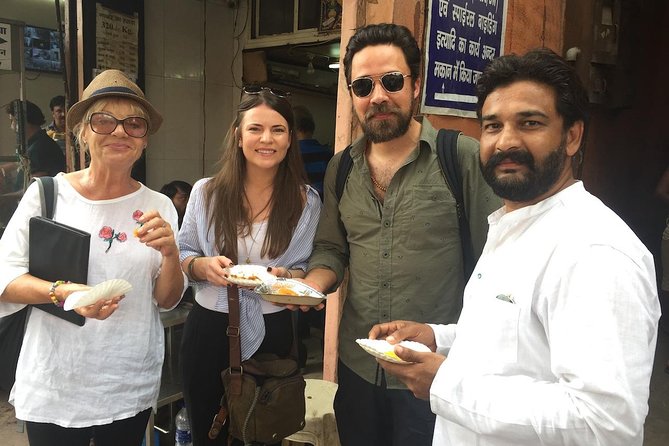
- Bhagat Jaipur sweet stop: a well-known shop included in the tastings
- Spice market time: a dedicated stop where spices and local flavors take center stage
- Craft-and-utility shopping streets: brass, iron, and stainless-steel utensils plus textiles and furniture stalls
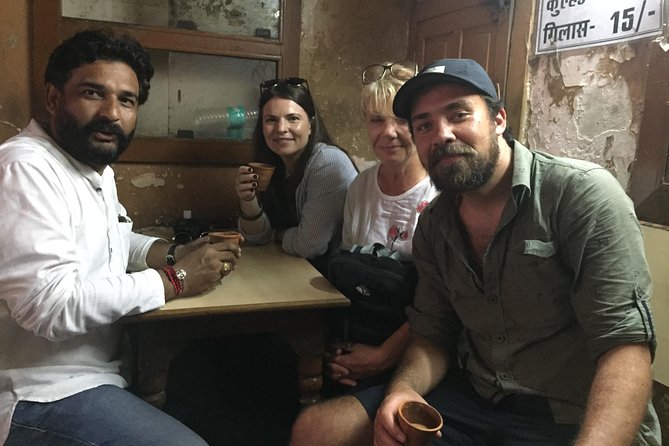
- Tea and a dessert finish: masala chai at local tea shops and a traditional dessert included
- Small group, ~3 hours: up to 10 people makes the walk feel personal
Deeper into the walled city on foot
- Pink City Cooking Class
★ 5.0 · 452 reviews - Private Jaipur Full One Day Tour In Pink City With Guide
★ 5.0 · 322 reviews - Heritage Walk & Street Food Tasting in Jaipur
★ 5.0 · 158 reviews - Full Day Old City Private Tour with Local Market visit in Jaipur
★ 5.0 · 151 reviews
A Jaipur food tour that starts with how the city works
This isn’t a buffet of random street snacks. The point is to help you read Jaipur as you walk it—where people shop, what artisans make, what’s sold in historic lanes, and how daily life shapes what ends up on your plate.
The tour is built around short, meaningful stops. One moment you’re learning why a place exists (like a market tied to a specific craft), and the next moment you’re tasting something that locals actually order. That mix makes the food feel connected, not disconnected.
You’ll also get a practical angle on culture. Instead of treating bazaars like scenery, the route highlights what people buy and why. It’s a nice way to get your bearings fast in a city where the streets can feel busy and confusing without guidance.
From Golcha Cinema to Choti Choupar: the walking flow
You begin at Golcha Cinema, Chaura Rasta Rd (New Gate, Bapu Bazar) and end at Choti Choupar, Kishanpole Bazar Rd near the Pink City’s core. That matters because you’re not stuck zigzagging across random neighborhoods just to collect food samples.
The total duration is listed as about 3 hours, and the experience also describes itself as a walking-focused tour. Translation: you should plan on being on your feet for most of the outing. Good walking shoes help a lot, especially if you want to keep your energy for tasting without rushing.
The group size is capped at 10 travellers, which is a sweet spot for this kind of route. You still get variety in food and shop stops, but you’re not lost in a crowd or waiting long stretches for everyone to catch up.
Market stop 1: Utensils, textiles, and the stuff daily life runs on
One of the first stops focuses on purchasing brass, iron, and stainless-steel utensils, plus shops that sell textiles and furniture. Even if you’re not buying anything, this is one of the most useful parts of the tour.
Why? Because utensils and household goods tell you what people rely on every day. In old city markets, the presence of cookware and material crafts often points to long-running trade routes and workshop traditions. You’re seeing commerce beyond snacks, which makes the rest of the food tastings land better—you understand the surrounding lifestyle.
If you do want souvenirs, this is the segment where it’s most logical. The route is designed to expose you to practical local craftsmanship, not just tourist trinkets.
Maniharo Ka Rasta: lac bangles and a craft market you can feel
Next comes Maniharo Ka Rasta, a lane tied directly to the word Manihar—someone who makes bangles. The highlight here is the focus on lac bangles, along with lots of variations you can spot as you walk.
This stop is short (about 15 minutes), but it’s memorable because it’s specific. You’re not just walking through a generic shopping street. You’re in a craft corridor where the product is the story.
Admission is listed as free for this stop, which is a small but real value point: you’re paying for the overall experience, and at least some segments don’t add extra entry costs on top.
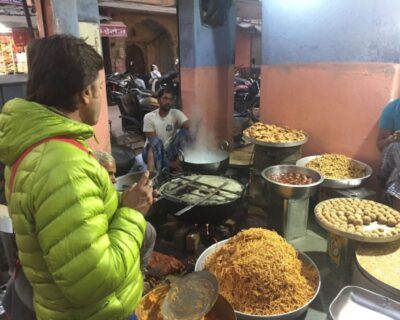
Still hungry? More kachori, ghewar and chaat stops
Bhagat Jaipur: a famous sweet shop stop included
Then you hit Bhagat Jaipur, a very famous sweets shop in Jaipur. This stop is included, and the time on it is about 10 minutes.
What I like about including a known sweet shop is control. Street food can vary wildly depending on timing and vendor supply. Here, you’re given a structured, reliable stop where you can try something that’s part of Jaipur’s sweet culture without having to hunt for the right counter.
It’s also a good break in rhythm. After a craft market, you get something slower and more dessert-like, then you roll back into savory flavors as the route continues.
The spice market and the stone-cut sculpture street
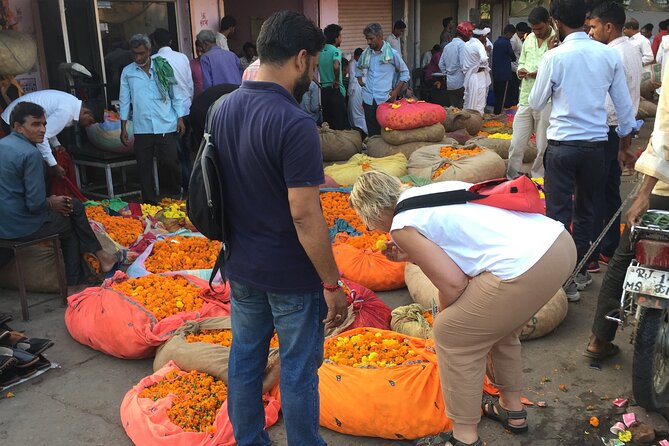
After the sweet stop, you’ll spend time in a spice market. You don’t just pass by spices like set dressing. The tour includes this as a defined segment, so you can connect what you’re tasting later (or what you’re already tasting) to what’s being traded right there.
Then comes a street that’s especially known for delicately designed stone-cut sculptures and marble artwork. That’s a smart pairing after food, because it shifts your attention from taste to visual detail. You start noticing how Jaipur’s craft traditions show up in objects you might not think about at first—like building materials and decorative work.
The tour ends after this segment, so these last stops help round out the trip: flavors first, then the city’s artistry.
What’s actually included in the tastings
Here’s the practical side. Your package includes:
- Food tasting
- Bottled water
- Traditional dessert
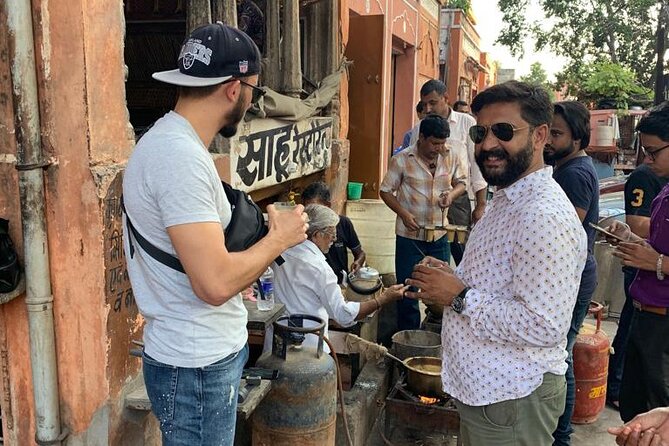
- Masala chai at local tea shops
- English speaking food/foodie tour guide
You’re also covered for a “sweets-and-tea” rhythm, which is a big part of why this tour feels complete. A lot of walking food tours include snacks but skip the warm reset. With masala chai included, you get a natural pause that helps you keep enjoying flavors rather than just pushing through.
Not included: food and drinks other than specified. So if you want additional items beyond what’s part of the tasting plan, you’ll pay extra.
Your guide: why Vivek and Raj keep getting called out
This tour leans heavily on storytelling and context, and that only works when the guide can read the street and explain what you’re seeing in a way that’s easy to follow.
Guides such as Vivek and Raj are praised for being friendly and for showing a lot of culture and history as you walk. They’re also described as making people feel safe, which matters in crowded bazaars where it’s easy to lose the thread of where you’re going.
Another nice detail: the guides are described as adaptive—meaning the pace and the explanations match the group rather than treating everyone like they want the same level of detail at every minute.
If you care about learning while you eat, this is the part that can make or break the day. A good food tour guide doesn’t just point; they connect each stop to how Jaipur lives.
Price and value: about $22.37 for a guided city-food route
At $22.37 per person, you’re paying for:
- a guided walk in central Jaipur
- multiple tasting stops
- chai and dessert
- bottled water
- an English speaking guide
- a route that includes both food and craft-market context
That’s solid value for Jaipur, especially because the experience includes more than just “a taste here and there.” It’s set up as a real walk through market areas, not a quick photo stop with a snack.
Also, the small group size (max 10) usually helps your experience feel tighter. You spend less time waiting and more time eating and learning.
Logistics that matter: tickets, transport, and how to plan your day
You’ll get a mobile ticket, and confirmation is provided at booking time. The meeting point is near public transportation, which helps if you’re juggling a busy itinerary.
Hotel pickup and drop aren’t included, so you’ll want to plan on reaching the start point on your own. The upside is that you’re not paying for a pickup that might still take time.
The tour requires good weather. If conditions are poor, you’ll be offered a different date or a full refund. So if your schedule is tight, it’s smart to book when you have at least one backup option in your Jaipur plan.
Practical tips for enjoying the walk (and not losing your appetite)
This is a walking and tasting tour. That means a few simple habits make the day better:
- Wear comfortable shoes with grip. Old-city streets can be uneven.
- Bring a light layer if mornings or evenings feel cool; you’ll be out for a while.
- Go in ready to try new flavors. The route includes savory stops plus sweets, so keep your expectations open.
- If you want to shop, you’ll have a couple of more product-focused windows (like the craft/utensil street and the bangle market). Plan to do that after you’ve eaten a bit, not right before.
If you’re sensitive to spice, you might still enjoy the spice market section as a cultural stop. Just know that street spice culture is part of the experience.
Who this Jaipur cultural walk suits best
This tour fits well if you:
- want Jaipur street food with context, not random sampling
- like small group walking tours
- enjoy market culture—crafts, utensils, sweets, and tea
- want an English-speaking guide to help you make sense of what you’re seeing
It may be less ideal if you:
- hate walking or don’t want to be on your feet for most of the outing
- are looking for big-ticket landmarks only (this is more bazaars and craft streets than monument heavy)
- need hotel pickup and door-to-door convenience
Should you book this Jaipur Cultural Walk and Food Tasting?
If your goal is to understand Jaipur through food and the working bazaars around it, I think this is a strong pick. The route connects snacks with the city’s market life—bangles at Maniharo Ka Rasta, sweets at Bhagat Jaipur, a spice market moment, plus artisan-focused street views. Add in included masala chai, dessert, bottled water, and an English-speaking guide, and you get a day that feels like real local rhythm rather than a rushed tasting checklist.
Book it if you want value, a small-group feel, and a guided walk that helps you read the Pink City fast. Skip it only if you’re avoiding walking or if you want purely landmark sightseeing.
More Jaipur Tours to Compare
- Jaipur: Private Full Day Sightseeing Tour By Car with Guide★ 4.9 · 1,839 reviews
- 3-Hour Morning Bike Tour of Jaipur★ 5.0 · 1,253 reviews
- Jaipur: Private Sightseeing Day Tour with Guide by Car★ 4.8 · 773 reviews
- Jaipur: Full-Day City Tour with Car, Guide & Skip-the-Line★ 4.8 · 512 reviews
- Full-Day Jaipur Private Sightseeing Tour by Car with Guide★ 5.0 · 472 reviews
- Pink City Cooking Class★ 5.0 · 452 reviews
Eat Jaipur: More Street Food
- Jaipur Bazaar & Food Walking Tour★ 5.0 · 281 reviews
- Heritage Walk & Street Food Tasting in Jaipur★ 5.0 · 158 reviews
- Guided Morning Bicycle Tour with Food Tasting in Jaipur★ 5.0 · 117 reviews
- Jaipur Market Tour & Vegetarian Rajasthani Home Cooking Class★ 5.0 · 113 reviews
- Food Tour and Eat like Locals★ 5.0 · 111 reviews
- Food Walking Tour in Jaipur★ 5.0 · 71 reviews
The Pink City on Foot, Continued
- Pink City Cooking Class★ 5.0 · 452 reviews
- Private Jaipur Full One Day Tour In Pink City With Guide★ 5.0 · 322 reviews
- Heritage Walk & Street Food Tasting in Jaipur★ 5.0 · 158 reviews
- Full Day Old City Private Tour with Local Market visit in Jaipur★ 5.0 · 151 reviews
- Magical Walk of Jaipur★ 5.0 · 121 reviews
- Jaipur Heritage Walk with Rickshaw Ride★ 5.0 · 105 reviews
Newly Added Jaipur Reviews


More from Pink City Walks.
 ★ 5.0Pink City Cooking ClassFrom $27452 reviews
 ★ 5.0Private Jaipur Full One Day Tour In Pink City With GuideFrom $16322 reviews
 ★ 5.0Heritage Walk & Street Food Tasting in JaipurFrom $21158 reviews
 ★ 5.0Full Day Old City Private Tour with Local Market visit in JaipurFrom $55151 reviews
 ★ 5.0Magical Walk of JaipurFrom $10121 reviews
Jaipur Heritage Walk with Rickshaw RideFrom $11105 reviews
★ 5.0Magical Walk of JaipurFrom $10121 reviews
Jaipur Heritage Walk with Rickshaw RideFrom $11105 reviews
 ★ 5.0Private Jaipur Pink City Tour by Car & Driver with a Tour GuideFrom $17104 reviews
 ★ 5.0Jaipur Heritage Evening Walk – The Twilight Magic of Pink CityFrom $3593 reviews
This tour also appears in