
Reviewed · HISTORICAL TOURS
Jaipur Heritage Walking Tour
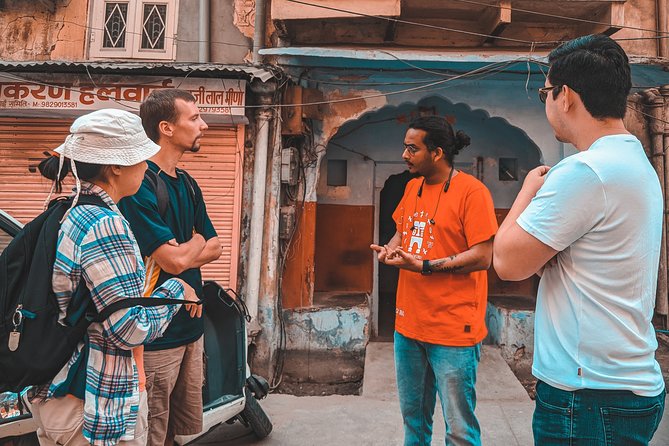
A city gate can teach you a lot. This small-group Jaipur Heritage Walking Tour mixes architecture-focused storytelling with a real walk through the old lanes, topped off with breakfast. I like the fact that the guides are architecture students, so the talk is about how buildings work, not just what they’re called. I also like the added value: Rajasthani breakfast, a water bottle, and complimentary digital photos after the tour.
One thing to keep in mind: this is a walking tour with no hotel pickup, so you’ll want to arrive on time at the start and be ready to move at a steady pace. And given the short, early schedule window, I’d treat timing seriously—bring the confirmation details and plan to contact the provider if anything seems off.
If you want Jaipur beyond the quick photo stops, this is a smart way to get your bearings fast. With a maximum of 10 people, it stays relaxed enough for questions, plus you’ll end with a chai shop Q&A rather than just being herded along.
In This Review
- Key things to know before you go
- Why this Jaipur walk feels different from the usual tour
- Price and logistics: what you’re actually paying for
- Ajmeri Gate: a “busy gate” lesson in Jaipur’s street logic
- Isarlat Sargasooli: where the details are the whole point
- Tripolia Bazar: royalty access turned public story
- Hawa Mahal’s 900 windows: engineering meets daily life
- Jalebi Chowk: the City Palace courtyard connection
- Govind Devji Temple and chai Q&A: where the story lands
- What I think is the best part: architecture storytelling that teaches you how to look
- Possible drawbacks and how to avoid a bad day
- Who should book this Jaipur Heritage Walking Tour
- Practical tips to make the most of the walk
- Should you book this Jaipur Heritage Walking Tour?
- FAQ
- FAQ
- How long is the Jaipur Heritage Walking Tour?
- What is included in the tour price?
- What is the group size limit?
- Is hotel pickup included?
- Are admission tickets included for all the stops?
- When does the tour run?
- Where does the tour end?
- What happens if the weather is bad?
Key things to know before you go
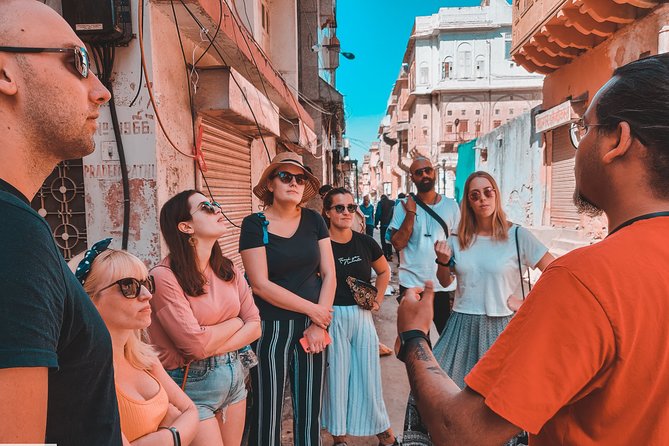
- Small group (up to 10): easier questions, less waiting, more attention to what you’re looking at.
- Architecture student perspective: the stops are explained through building logic and design choices.
- Includes breakfast: you’ll start the day fed, with a Rajasthani breakfast as part of the experience.
- About 3 km on foot: plan for a solid walk, not a casual stroll.
- Some sights may require paid entry: Ajmeri Gate and Jalebi Chowk are free, while other stops list admission as not included.
- Early window and weather rules: it runs between 8:00 AM and 12:00 PM and expects good weather.
On foot through the old Jaipur lanes
- Jaipur Bazaar & Food Walking Tour
★ 5.0 · 281 reviews - Heritage Walk & Street Food Tasting in Jaipur
★ 5.0 · 158 reviews - Magical Walk of Jaipur
★ 5.0 · 121 reviews - Cultural Walk and Food Tasting In Jaipur
★ 5.0 · 118 reviews
Why this Jaipur walk feels different from the usual tour
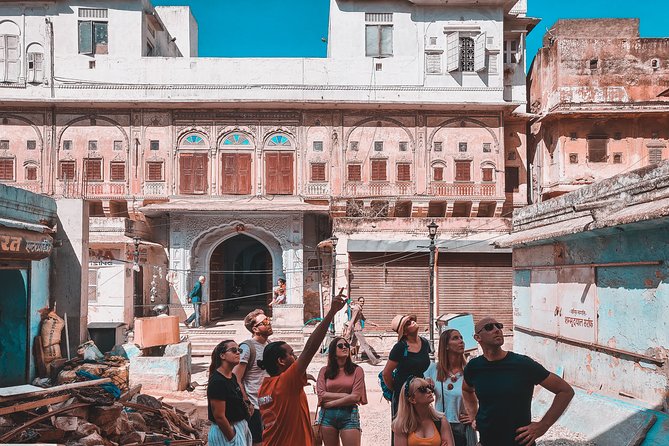
Jaipur can be loud, crowded, and full of sales pitches. What I appreciate about this tour is the focus: you’re not just collecting landmarks—you’re learning how Jaipur’s architecture answers daily life. The guides are English-speaking and architecture-trained (architecture students), so the explanations lean toward design, materials, and why a façade, gate, or window layout was built the way it was.
The price is also unusual in a good way. At about $16, you’re paying for a guided walk plus breakfast and digital photos. With walking tours, the common problem is you get the story but not the care. Here, you also get photo takeaways from the guide, which means you’re not stuck trying to recreate the same angles on your own later.
Price and logistics: what you’re actually paying for
Let’s talk value first, then the practical stuff.
You’re paying for:
- an experienced English-speaking guide
- a small-group walking experience (max 10)
- a Rajasthani breakfast
- water bottle
- lots of stories and architecture/heritage facts
- sharing photos taken by the guide
Not included:
- hotel pickup/drop-off
- GST (Goods and Services Tax)
- some entrance tickets (listed as not included for several stops)
Also, this runs in the 8:00 AM–12:00 PM window, and it’s weather-dependent. If the tour is canceled for poor weather, you should be offered another date or a full refund. If a minimum number of travelers isn’t met, you may get a different option or your money back.
Ajmeri Gate: a “busy gate” lesson in Jaipur’s street logic
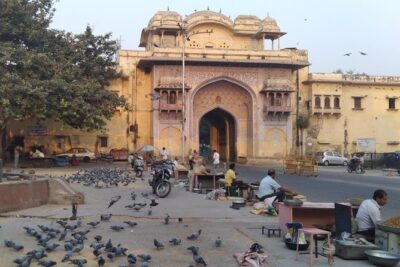
You start at Ajmeri Gate, one of the city’s most active gates. The guide’s angle here is perfect for first-timers: history is tied to function. You’ll hear why this gate mattered, how it worked as part of old-city movement, and how the transport situation has shifted into today’s version of life.
This stop is short (about 15 minutes), which is exactly right. It’s enough time to get the big picture without getting stuck at the curb. Practical tip: Ajmeri Gate is busy, so keep an eye on where your group is crossing or pausing. If you’re the type who loves photos, this is the moment to grab one quick wide shot—then listen, because the story matters more than the single picture.
Isarlat Sargasooli: where the details are the whole point
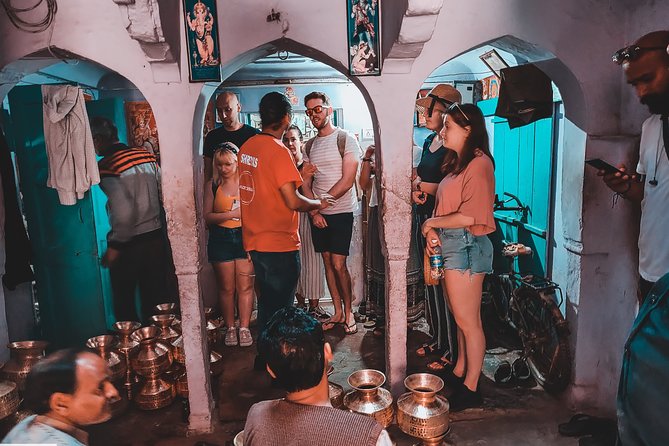
Next you visit Isarlat Sargasooli, with a focus on architecture. The tour doesn’t position it as a must-see icon like Hawa Mahal; it positions it as a clue. You’ll be looking at the structure in front of you while the guide explains the design thoughts behind its construction.
Because the stop is about 15 minutes, you won’t get a full architectural lecture. Still, this is the kind of place where a good explanation changes how you see it. If you like to spot symmetry, window patterns, carvings, and layout logic, you’ll enjoy how this tour teaches you to read the building rather than just name it.
Admission is listed as not included here, so be prepared that you may need to pay an entry fee depending on what’s required at the time.
Deeper into old-town Jaipur
Tripolia Bazar: royalty access turned public story
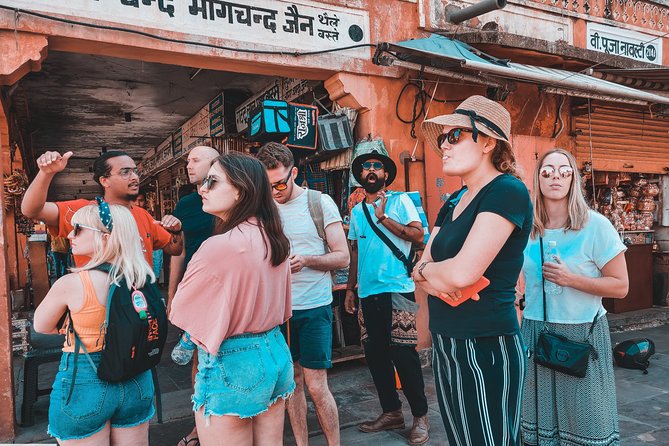
At Tripolia Bazar, the emphasis is on gate-and-gating politics. The gate is described as a private entrance for royal family use, and you’ll hear the story behind how it opened to the general public only once, connected to an event when a former king of Jaipur went to fight an election.
That’s a small detail, but it’s the kind that makes a city come alive. You’re not just seeing a painted gateway—you’re hearing how power and access played out in the streets.
This stop is brief (around 5 minutes). Use that time to look closely: gate architecture in Jaipur often carries symbols and layers. Even in a short stop, you can usually spot enough to appreciate what the guide is pointing out.
Admission is not included, so again, you may have a ticket to handle depending on on-site rules.
Hawa Mahal’s 900 windows: engineering meets daily life

Then comes Hawa Mahal (Palace of Wind)—and yes, it’s one of Jaipur’s most recognizable buildings. You’ll get around 20 minutes here, focused on the famous idea of more than 900 windows and the building’s engineering logic.
What you’ll enjoy most is how the guide frames the windows as a designed system, not just a cute feature for selfies. The windows are explained as part of how the palace works in its climate and layout. If you’ve ever wondered why old architecture can look so decorative while also having a practical job, this stop is your answer.
Admission is listed as not included, so plan on paying if the building requires a ticket for entry. Either way, arrive mentally ready to pause and look slowly. The structure rewards that kind of attention.
Jalebi Chowk: the City Palace courtyard connection
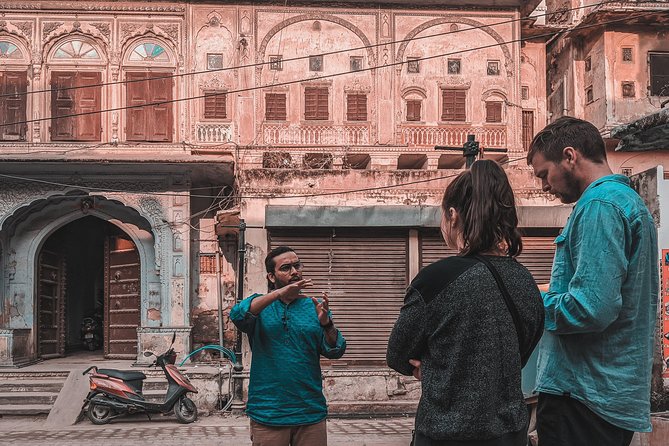
After the big iconic moment, you head to Jalebi Chowk. The description is specific: it’s a square in the back yard of the City Palace, which is tied to the crown of Jaipur. The name comes from a serpentine road that connects it to the main road running east to west.
This stop is about 20 minutes and it works well after Hawa Mahal. You shift from one dramatic landmark to a more human-scale space shaped by movement. The guide ties the geometry of streets and access to how the palace compound functioned.
Important practical note: Jalebi Chowk is listed as free admission. That helps keep the tour’s costs predictable if you’re watching your budget.
Govind Devji Temple and chai Q&A: where the story lands

To wrap up, you visit Govind Devji Temple, described as one of the most famous Krishna temples in Jaipur. This is where the tour ends its narrative thread about the city and then transitions into a more relaxed format: you go to a chai shop for Q&A.
The temple stop runs about 30 minutes, which is longer than the earlier segments. That extra time makes sense because this is an emotional and spiritual place for many visitors. Even if religion isn’t your main focus, it’s a good moment to slow down and let Jaipur shift from architecture talk to lived culture.
Admission is listed as not included here, so be ready for possible entry costs.
The chai Q&A matters more than it sounds. It’s your chance to ask practical questions about what you saw—what something meant, why a gate looks the way it does, or where to go next without getting bounced around by random advice.
What I think is the best part: architecture storytelling that teaches you how to look
A lot of walking tours give you a list of facts. This one does facts plus a method. When you hear how the guides connect gates, window systems, and design choices to the city’s life, you start scanning buildings differently.
I particularly like:
- the small-group cap (10 people), which keeps the pace human
- the architecture student angle, which makes each stop feel like a lesson rather than a stop on a route
- the breakfast + photos bundle, which turns the tour into something you can actually remember later
If you’re traveling solo or with one companion, this format also helps. You don’t get lost in a crowd, but you still get conversation and group energy.
Possible drawbacks and how to avoid a bad day
Here’s the fair part. With any early walking tour, delays are annoying because the schedule is tight. Also, there’s no hotel pickup, so your success depends on getting to the meeting point and start time.
One issue worth flagging: there have been reported cases of a guide not showing up and poor responsiveness when people tried to reach the guide. I can’t predict how your day will go, but you can protect yourself:
- Keep your booking confirmation ready on your phone and screenshot it.
- Arrive a few minutes early.
- If the guide isn’t there, don’t wait too long—contact the provider right away using the details you received at booking.
If you’re the type who needs guaranteed structure and zero surprises, this is worth considering. For most people, the low price and small group make the risk feel worth it, as long as you’re organized.
Who should book this Jaipur Heritage Walking Tour
This tour is a great fit if you:
- like walking and want a guided route that keeps you from getting overwhelmed
- enjoy architecture details, patterns, and how buildings solve problems
- want breakfast included and a quick photo souvenir afterward
- prefer small groups over crowded bus tours
It may not be for you if you:
- need hotel pickup or very easy logistics
- hate walking for roughly 3 km over a couple of hours
- can’t handle short stops at several sites (you’ll want more time at each place)
Practical tips to make the most of the walk
A few common-sense pointers, based on what this tour actually is:
- Wear comfortable shoes with grip. Jaipur’s streets can be uneven and fast in places.
- Bring water. You get one bottle, but you may want a refill option nearby.
- Use the breakfast. Starting with food makes the walk easier, especially during morning heat.
- Keep your phone charged for the digital photos that get shared after.
- If you want great photos at Hawa Mahal, be ready to take them quickly during your allotted window.
And here’s a tip that pays off: don’t try to memorize everything. Let the guide’s architecture lens teach you how to see one or two key ideas, then carry that into your independent exploring later.
Should you book this Jaipur Heritage Walking Tour?
I’d book it if your goal is street-level Jaipur with architecture storytelling, breakfast included, and a small group pace. For around $16, the mix of guided explanations, a real morning meal, and complimentary digital photos is strong value—especially if you’re going to keep exploring the city afterward.
I’d hesitate only if you’re highly sensitive to schedule disruptions or you need effortless logistics like pickup. If you decide to go, plan to arrive early, keep your confirmation handy, and treat the meeting moment like it matters—because with walking tours, it usually does.
FAQ
FAQ
How long is the Jaipur Heritage Walking Tour?
It runs for about 2 to 4 hours.
What is included in the tour price?
The tour includes water bottle, a Rajasthani breakfast, an experienced English-speaking guide, stories and architecture/heritage facts, and sharing digital photos from the tour. GST is not included.
What is the group size limit?
The tour has a maximum of 10 travelers.
Is hotel pickup included?
No. Hotel pickup and drop-off are not included.
Are admission tickets included for all the stops?
No. Ajmeri Gate and Jalebi Chowk list admission as free. Several other stops list admission as not included, such as Isarlat Sargasooli, Tripolia Bazar, Hawa Mahal, and Govind Devji Temple.
When does the tour run?
It operates daily in the 8:00 AM to 12:00 PM window.
Where does the tour end?
The tour ends in a different location than the start. Exact start details aren’t provided in the information here.
What happens if the weather is bad?
The tour requires good weather. If it’s canceled due to poor weather, you’ll be offered a different date or a full refund.
Old Jaipur, Toured Properly
- Heritage Walk & Street Food Tasting in Jaipur★ 5.0 · 158 reviews
- Private Full-Day Sightseeing Tour of Jaipur’s Heritage by Car★ 5.0 · 110 reviews
- Jaipur Heritage Walk with Rickshaw Ride★ 5.0 · 105 reviews
- Jaipur Heritage Evening Walk – The Twilight Magic of Pink City★ 5.0 · 93 reviews
- Nahargarh Water Walk – Guided 2-Hour Heritage Tour in Jaipur★ 5.0 · 89 reviews
- Jaipur Heritage Walking Tour – Local life, Havelis and Temples★ 5.0 · 72 reviews
Jaipur on Foot: More Walks
- Jaipur Bazaar & Food Walking Tour★ 5.0 · 281 reviews
- Heritage Walk & Street Food Tasting in Jaipur★ 5.0 · 158 reviews
- Magical Walk of Jaipur★ 5.0 · 121 reviews
- Cultural Walk and Food Tasting In Jaipur★ 5.0 · 118 reviews
- Jaipur Heritage Walk with Rickshaw Ride★ 5.0 · 105 reviews
- Jaipur Heritage Evening Walk – The Twilight Magic of Pink City★ 5.0 · 93 reviews
More Jaipur Tours to Compare
- Jaipur: Private Full Day Sightseeing Tour By Car with Guide★ 4.9 · 1,839 reviews
- 3-Hour Morning Bike Tour of Jaipur★ 5.0 · 1,253 reviews
- Jaipur: Private Sightseeing Day Tour with Guide by Car★ 4.8 · 773 reviews
- Jaipur: Full-Day City Tour with Car, Guide & Skip-the-Line★ 4.8 · 512 reviews
- Full-Day Jaipur Private Sightseeing Tour by Car with Guide★ 5.0 · 472 reviews
- Pink City Cooking Class★ 5.0 · 452 reviews
Newly Added Jaipur Reviews





More from Historical Tours.
 ★ 5.0Heritage Walk & Street Food Tasting in JaipurFrom $21158 reviews
 ★ 5.0Private Full-Day Sightseeing Tour of Jaipur’s Heritage by CarFrom $12110 reviews
Jaipur Heritage Walk with Rickshaw RideFrom $11105 reviews
★ 5.0Private Full-Day Sightseeing Tour of Jaipur’s Heritage by CarFrom $12110 reviews
Jaipur Heritage Walk with Rickshaw RideFrom $11105 reviews
 ★ 5.0Jaipur Heritage Evening Walk – The Twilight Magic of Pink CityFrom $3593 reviews
 ★ 5.0Nahargarh Water Walk – Guided 2-Hour Heritage Tour in JaipurFrom $3989 reviews
 ★ 5.0Jaipur Heritage Walking Tour – Local life, Havelis and TemplesFrom $1672 reviews
 ★ 5.0Jaipur@Twilight Guided Heritage City walk tour with Food TastingFrom $2967 reviews
 ★ 5.0Unlock Hidden Amber! – Guided 2-Hour Heritage Tour in JaipurFrom $4062 reviews
This tour also appears in