

Reviewed · HISTORICAL TOURS
Heritage Culture and History Walking Tour in Jaipur
Jaipur history in a tight walking loop. This Heritage Culture and History Walking Tour links big-name sights like Jantar Mantar and City Palace with temples and markets, so you see how royal power, faith, and street life share the same sidewalks. The group format keeps it moving, and the route is short enough that you can still enjoy Jaipur afterward without feeling wiped.
Two things I especially like. First, the guide style gets a lot of credit: clear English, friendly answers, and the ability to match the pace to what you care about. Second, I like how the walk doesn’t stop at monuments. You also get time at places like Chandi Ki Taksal, Johri Bazar, and Katla Purohit Ji Ka, where you can watch the city’s craft culture at work.
One thing to plan for: several major sights require extra entry tickets. The City Palace ticket is listed at 1000 INR, plus Jantar Mantar, Hawa Mahal, and Isarlat Sargasooli each have their own fees.
In This Review
- Key Highlights I’d Bet You’ll Appreciate
- A Jaipur Heritage Walk That Fits Real Travel Time
- Starting at Jantar Mantar: Where Jaipur Meets Astronomy
- City Palace of Jaipur: Royal Power in Stone (and a Big Ticket)
- Govind Devji Temple and Aarti: A Peaceful Contrast
- Chandi Ki Taksal Bazaar Stroll: Craft History on Foot
- Mandir Shri Ram Chandra Ji: A Free Temple Pause
- Hawa Mahal (Outside Only): The Icon Without the Rush
- Mandir Shree Laxminarayan Ji: Calm with Cultural Context
- Johri Bazar and Katla Purohit Ji Ka: Shopping Streets With History
- Isarlat Sargasooli: The Final Viewpoint Payoff
- Price and Value: How $20 Turns Into a Real Plan
- Who This Jaipur Walk Suits Best
- Should You Book This Jaipur Heritage Walking Tour?
- FAQ
- How long is the Heritage Culture and History Walking Tour in Jaipur?
- Where does the tour start and end?
- What’s included in the tour price?
- What entrance fees should I expect to pay separately?
- Is Hawa Mahal included as an inside visit?
- Can I use the ticket on my phone?
- Is this a private group tour?
Key Highlights I’d Bet You’ll Appreciate
- Jantar Mantar to City Palace in one smooth flow, with context on astronomy and royal design.
- Temple stops with real practices, including a chance to see the Govind Devji aarti (not a staged performance).
- Hawa Mahal is seen from the outside, which keeps time for the rest of the walk.
- Free temple entries for Mandir Shri Ram Chandra Ji and Mandir Shree Laxminarayan Ji.
- Street-market wandering time in Chandi Ki Taksal, Johri Bazar, and Katla Purohit Ji Ka.
- Isarlat Sargasooli at the end for photos and a final viewpoint payoff.
On foot through the old Jaipur lanes
- Jaipur Bazaar & Food Walking Tour
★ 5.0 · 281 reviews - Heritage Walk & Street Food Tasting in Jaipur
★ 5.0 · 158 reviews - Magical Walk of Jaipur
★ 5.0 · 121 reviews - Cultural Walk and Food Tasting In Jaipur
★ 5.0 · 118 reviews
A Jaipur Heritage Walk That Fits Real Travel Time

This is a tour designed for people who want deep context without a half-day commitment. It runs about 2 hours 25 minutes, and it feels like a practical route: start at Jantar Mantar, then walk your way through royal and religious Jaipur, and finish with a view from Isarlat Sargasooli. For first-time visitors, this is a smart way to get bearings fast—without treating Jaipur like a museum checklist.
I also like that you get a water bottle and a written guide in English and Spanish. That matters more than it sounds, because it helps you follow along when the pace shifts near busy streets. Add in the mobile ticket and the fact that it’s a private activity for just your group, and the whole thing feels easier to manage than tours that shuffle you in and out with strangers.
This is also family-friendly in a real way. The tour description points out that guides bring stories to life and keep things engaging for children. Still, it’s a walking tour, so if your group is very mobility-limited, you may find the street sections and uneven areas a challenge.
Starting at Jantar Mantar: Where Jaipur Meets Astronomy
You meet at Jantar Mantar at the ticket counter. That’s a big deal, because it sets the tone: you’re not just looking at old buildings—you’re learning how Jaipur’s rulers viewed science, measurement, and the sky.
Jantar Mantar is included in the walk but not in the price for admission. The fee is listed as 200 INR, and you’ll spend about 20 minutes there with your guide. The focus is on astronomy and on the vision of Raja Sawai Jai Singh II. Even if you’re not a math person, this kind of explanation helps you see the site as a design project, not an odd collection of rocks.
Practical tip: arrive with a bit of patience. Ticket lines can move slowly, and the tour begins right at the counter. Once inside, expect a quick but clear orientation—enough time to understand what you’re looking at before you move on.
City Palace of Jaipur: Royal Power in Stone (and a Big Ticket)
From Jantar Mantar, you head to the City Palace area. You’ll spend about 20 minutes exploring the complex with the guide sharing history and architectural context. This stop is a highlight for most people because it connects Jaipur’s identity to the royal family and the way the palace was built to represent authority.
But here’s the practical detail that affects your budget: the City Palace admission is 1000 INR, and it’s not included. So if you book this tour hoping it will be a low-cost way to see everything, plan on paying the extra ticket for this single site. It’s also worth carrying some cash or having a simple way to pay locally.
One nice thing about the time here: it’s not rushed to the point where you feel herded. At 20 minutes, the guide can point out the main architectural ideas without trying to cover the entire palace. You’ll likely leave knowing what to notice if you return later.
Govind Devji Temple and Aarti: A Peaceful Contrast
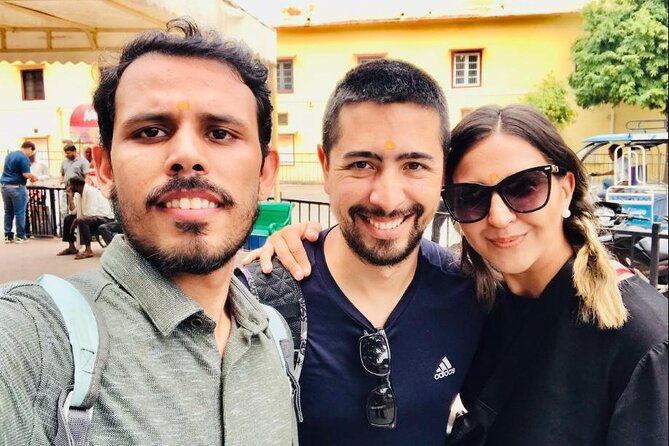
Next comes the Govind Devji Temple, about another 20 minutes. Unlike the palace stop, this is where the mood shifts from royal display to devotional practice.
You get a chance to experience the serene atmosphere and to witness the aarti ceremony. The tour description specifically frames it as something you can watch during your visit, not as a vague “temple stop.” If your group appreciates religion as lived culture—things people do every day—this tends to be one of those moments that sticks.
Practical consideration: temples often mean rules about clothing and behavior. The tour data doesn’t specify dress guidance, so I recommend basic respectful travel habits—cover what you can and keep voices low—so you don’t have to scramble at the entrance.
Deeper into old-town Jaipur
Chandi Ki Taksal Bazaar Stroll: Craft History on Foot
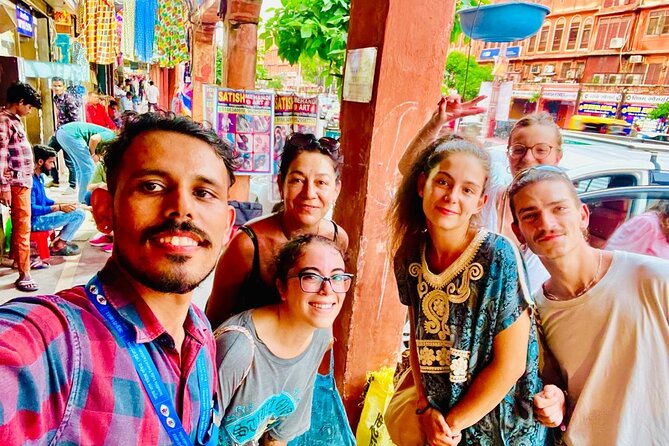
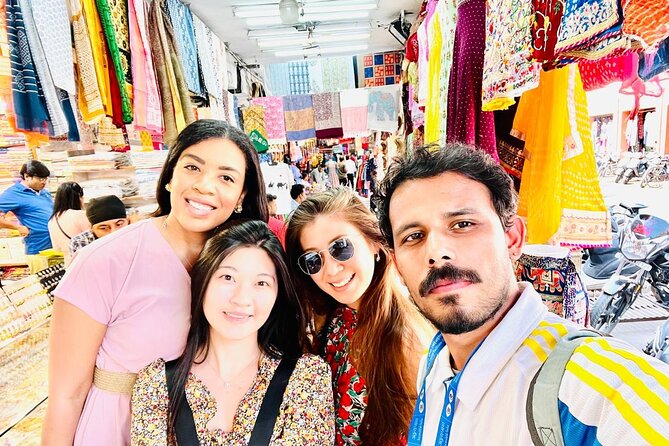
After temples, you’ll stroll through Chandi Ki Taksal, a local bazaar said to have been in existence since the 17th century. This is where the walk becomes “Jaipur day-to-day,” not just “Jaipur landmarks.”
You’ll have time to explore on your own, and the tour explicitly says it doesn’t push purchases. That’s good. Market stops can feel awkward when a guide is constantly steering you toward the same shops, and here the focus is on experiencing the place.
You’ll likely notice the difference between tourist sites and the market world immediately: narrower lanes, more activity, and lots of visual texture. If you want souvenirs, this is a natural moment. If you don’t, it’s still valuable because it helps you understand how the city’s craft economy works.
Mandir Shri Ram Chandra Ji: A Free Temple Pause
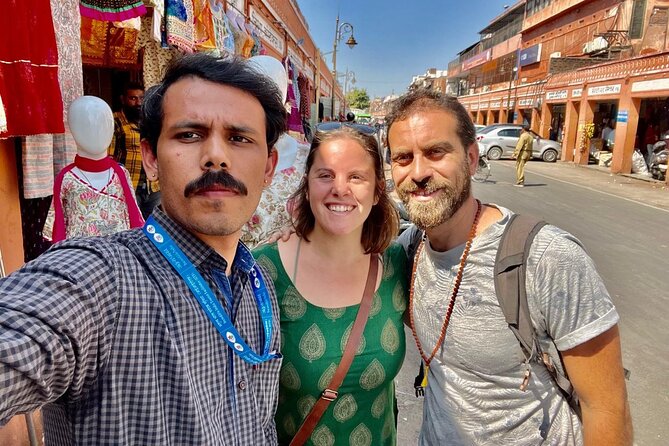
Then you visit Mandir Shri Ram Chandra Ji, dedicated to Lord Rama. This stop runs about 20 minutes and the admission is listed as free.
This is a good break in the route, especially if you’ve already paid several entry tickets. More than that, it gives you a chance to compare how different Hindu sites feel even when they’re close together in the same city block world. The guide focuses on spiritual significance and architecture, so it’s not just a quiet stop with no context.
If you’re traveling with kids, this is a stop that can actually work well. Even without understanding every detail, the setting and the guide’s explanations can make it easier for them to stay engaged during the walk.
Hawa Mahal (Outside Only): The Icon Without the Rush

You’ll walk by Hawa Mahal, the Palace of Wind, spending about 15 minutes here. Important note: the tour description says you won’t go inside. You’ll admire the facade and learn about its history and architectural design.
This approach is practical. Hawa Mahal is famous, and standing close to it helps you appreciate why it has such an iconic silhouette. But keeping it outside-only also protects your schedule for the rest of the walk, especially the markets and your final viewpoint.
If you’re the type who loves photography, this stop can still pay off, because the facade is the product. Bring your camera, but also keep an eye on foot traffic—this is one of those places where the crowd flow can make it hard to pause for long.
Mandir Shree Laxminarayan Ji: Calm with Cultural Context
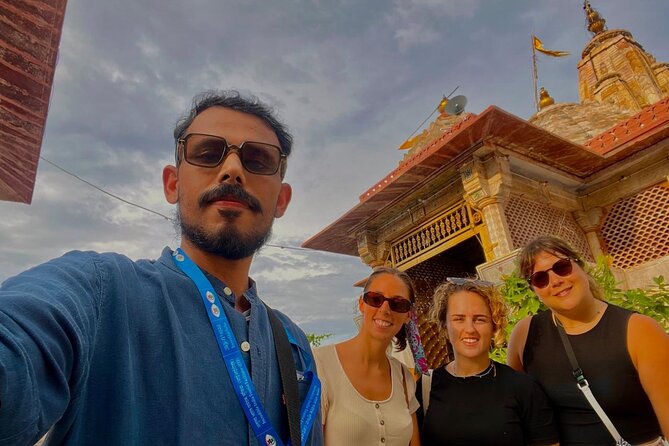
After Hawa Mahal, you visit Mandir Shree Laxminarayan Ji, dedicated to Lord Vishnu and Goddess Laxmi. This is a 25-minute stop, and admission is listed as free.
This temple break works because it offers a quieter rhythm right after the more visually intense Hawa Mahal area. You can appreciate the peaceful ambiance and learn about the site’s importance in Hindu culture. For many people, this is the moment where the walk feels most “human,” because temples remind you that Jaipur isn’t just grand architecture—it’s also daily devotion.
Practical tip: since there are multiple temple stops in a row, plan for the idea that your group will need to reset its energy. If you’re sensitive to crowds or heat, take advantage of the guide’s pauses and use water breaks when offered.
Johri Bazar and Katla Purohit Ji Ka: Shopping Streets With History
The walk then shifts into market territory with a couple of different stops.
First is Johri Bazar, a market known for jewelry and handicrafts. You’ll soak in the atmosphere and explore the colorful shops with time to wander. After that, you’ll head to Katla Purohit Ji Ka, described as an historic market with charm and liveliness.
The tour notes that they don’t promote buying anything, but you’ll still have freedom to look. This is smart. Market culture in Jaipur is part visual education, part social rhythm. Even if you don’t buy, you’ll learn a lot just by observing how vendors display items and how people move through the streets.
Small advice: keep your hands free for lane-walking. In tight market streets, you’ll want your bag secure and your phone ready only when you can pause. Also, if you’re planning purchases, don’t decide in the first shop you see. The walk gives you a short comparison window across areas.
Isarlat Sargasooli: The Final Viewpoint Payoff
Your tour ends at Isarlat Sargasooli—also spelled as Sarkasuli in the meeting/ending info. It’s described as a historic tower built in the 18th century, and it’s your last stop for panoramic views.
You spend about 10 minutes here. This isn’t a long linger, but it’s enough time to get a few solid photos and soak in the layout of Jaipur from above. Like the other major sites, admission here is listed at 200 INR and is not included.
This finish works well because it gives you a reward after several dense stops. After temples and markets, the viewpoint helps you reset your brain and connect the places you just saw to the city’s bigger shape.
Price and Value: How $20 Turns Into a Real Plan
The tour price is listed as $20, with the important detail that several entrances are extra. Here are the listed site fees you should expect to potentially pay for this specific route:
- Jantar Mantar: 200 INR
- City Palace: 1000 INR
- Hawa Mahal: 200 INR
- Isarlat Sargasooli: 200 INR
Two temple stops—Mandir Shri Ram Chandra Ji and Mandir Shree Laxminarayan Ji—are listed as free.
So what makes this good value? You’re not just paying for access to sights. You’re paying for an organized walking route and an explanation thread that connects astronomy, royal architecture, religious practice, and market culture. The included water bottle and the English/Spanish written guide also help you get more out of each stop, especially if your group has different comfort levels with spoken explanations.
If you’re trying to keep costs down, your biggest lever is the City Palace ticket. It’s the largest fee on the route, so decide early if your group truly wants that palace stop or if you’d prefer to spend that budget elsewhere on your own.
Who This Jaipur Walk Suits Best
This is a great match if you want a guided, walkable intro to Jaipur’s most important themes: science and empire (Jantar Mantar and City Palace), everyday devotion (Govind Devji and the temple stops), and the city’s craft-and-commerce culture (Chandi Ki Taksal, Johri Bazar, Katla Purohit Ji Ka).
It also suits families. The tour description calls it engaging for children, and the mix of temples, markets, and viewpoints keeps things varied enough that kids usually don’t feel stuck.
You’ll also like it if you care about questions. Multiple guide-focused comments emphasize that guides were friendly and able to answer questions clearly, and that they adjusted the pace based on what people wanted to focus on. If you’re the type who asks why something was built a certain way, this format tends to reward that.
Should You Book This Jaipur Heritage Walking Tour?
Yes, if you want a guided route that hits major landmarks and real street life in under three hours, and you’re comfortable paying extra entry fees at the big sights. The pacing is tight but not frantic, and the ending viewpoint gives you a satisfying wrap-up.
Book it especially if you’re visiting Jaipur for the first time and want an easy way to understand the city’s “why,” not just its “what.” If you’re traveling with limited budget and you don’t plan to pay for City Palace, you should compare that ticket cost against what else you could do independently that day.
FAQ
How long is the Heritage Culture and History Walking Tour in Jaipur?
The tour lasts about 2 hours 25 minutes.
Where does the tour start and end?
It starts at Jantar Mantar (Malve Nagar, J.D.A. Market, Kanwar Nagar, Jaipur) and ends at Isarlat Sargasooli (Sarkasuli) near Gangori Bazaar in the same area.
What’s included in the tour price?
The tour includes a water bottle and an English and Spanish written guide, plus the guided walking experience.
What entrance fees should I expect to pay separately?
Jantar Mantar: 200 INR. City Palace: 1000 INR. Hawa Mahal: 200 INR. Isarlat Sargasooli: 200 INR. Admission for Mandir Shri Ram Chandra Ji and Mandir Shree Laxminarayan Ji is listed as free.
Is Hawa Mahal included as an inside visit?
No. You’ll view Hawa Mahal from the outside only.
Can I use the ticket on my phone?
Yes. The tour includes a mobile ticket.
Is this a private group tour?
Yes. It’s described as private, with only your group participating.
Old Jaipur, Toured Properly
- Heritage Walk & Street Food Tasting in Jaipur★ 5.0 · 158 reviews
- Private Full-Day Sightseeing Tour of Jaipur’s Heritage by Car★ 5.0 · 110 reviews
- Jaipur Heritage Walk with Rickshaw Ride★ 5.0 · 105 reviews
- Jaipur Heritage Evening Walk – The Twilight Magic of Pink City★ 5.0 · 93 reviews
- Nahargarh Water Walk – Guided 2-Hour Heritage Tour in Jaipur★ 5.0 · 89 reviews
- Jaipur Heritage Walking Tour – Local life, Havelis and Temples★ 5.0 · 72 reviews
Jaipur on Foot: More Walks
- Jaipur Bazaar & Food Walking Tour★ 5.0 · 281 reviews
- Heritage Walk & Street Food Tasting in Jaipur★ 5.0 · 158 reviews
- Magical Walk of Jaipur★ 5.0 · 121 reviews
- Cultural Walk and Food Tasting In Jaipur★ 5.0 · 118 reviews
- Jaipur Heritage Walk with Rickshaw Ride★ 5.0 · 105 reviews
- Jaipur Heritage Evening Walk – The Twilight Magic of Pink City★ 5.0 · 93 reviews
More Jaipur Tours to Compare
- Jaipur: Private Full Day Sightseeing Tour By Car with Guide★ 4.9 · 1,839 reviews
- 3-Hour Morning Bike Tour of Jaipur★ 5.0 · 1,253 reviews
- Jaipur: Private Sightseeing Day Tour with Guide by Car★ 4.8 · 773 reviews
- Jaipur: Full-Day City Tour with Car, Guide & Skip-the-Line★ 4.8 · 512 reviews
- Full-Day Jaipur Private Sightseeing Tour by Car with Guide★ 5.0 · 472 reviews
- Pink City Cooking Class★ 5.0 · 452 reviews
Newly Added Jaipur Reviews





More from Historical Tours.
 ★ 5.0Heritage Walk & Street Food Tasting in JaipurFrom $21158 reviews
 ★ 5.0Private Full-Day Sightseeing Tour of Jaipur’s Heritage by CarFrom $12110 reviews
Jaipur Heritage Walk with Rickshaw RideFrom $11105 reviews
★ 5.0Private Full-Day Sightseeing Tour of Jaipur’s Heritage by CarFrom $12110 reviews
Jaipur Heritage Walk with Rickshaw RideFrom $11105 reviews
 ★ 5.0Jaipur Heritage Evening Walk – The Twilight Magic of Pink CityFrom $3593 reviews
 ★ 5.0Nahargarh Water Walk – Guided 2-Hour Heritage Tour in JaipurFrom $3989 reviews
 ★ 5.0Jaipur Heritage Walking Tour – Local life, Havelis and TemplesFrom $1672 reviews
 ★ 5.0Jaipur@Twilight Guided Heritage City walk tour with Food TastingFrom $2967 reviews
 ★ 5.0Unlock Hidden Amber! – Guided 2-Hour Heritage Tour in JaipurFrom $4062 reviews
This tour also appears in