
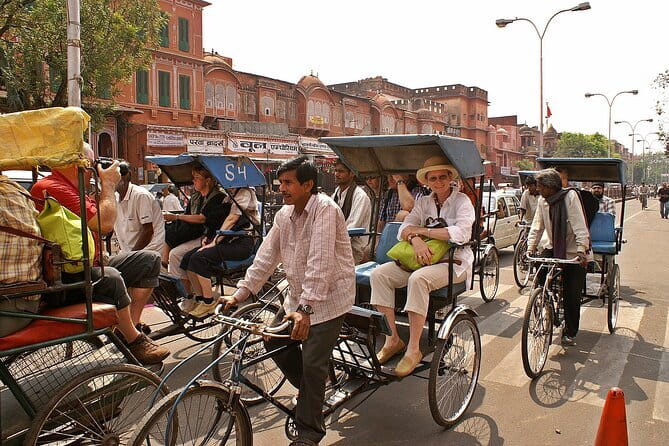
Reviewed · JAIPUR BAZAARS & SHOPPING
Jaipur Heritage and Old Market Shopping Tour
Jaipur shopping with a brain and a plan. In about five hours, you’ll glide through the Pink City lanes, hit classic landmarks like Hawa Mahal, and watch short craft demos for blue pottery and block printing. It’s a clever mix of sightseeing and shopping that helps you spot quality fast.
I love the market structure and what each lane is known for—Chandpole for traditional handicrafts, Khanjane Walon ka Rasta for marble decor, and Maniharo Ka Rasta for bangles and silver. I also like the calm, safe feel built in by Mr Rauf Khan, who keeps things moving and adjusts the day to match what you want.
One thing to know: this plan is mostly outdoor sight-viewing with short market stops, so it’s not a long, museum-heavy day. Albert Hall Museum and Isarlat Tower entry aren’t included, so you may pay extra if you want to go inside.
In This Review
- Key highlights you’ll actually feel on this tour
- How the 5-hour flow keeps you from wasting time
- Chandpole Bazar and the lanes that sell by craft category
- Isarlat Tower and Tripolia’s royal mausoleum stops
- Albert Hall Museum: short time, big building, decide if you go in
- Johri Bazaar and Hawa Mahal: landmark views and serious shopping energy
- Blue pottery and block printing: watch the process before you buy
- Is this tour worth $16 for a half-day in Jaipur?
- Mr Rauf Khan: the style that keeps the day comfortable and safe
- Should you book this Jaipur heritage and old market shopping tour?
- FAQ
- FAQ
- How long is the Jaipur Heritage and Old Market Shopping Tour?
- What’s included in the price?
- Is entry included for Isarlat Tower and Albert Hall Museum?
- Are meals included?
- Is this tour private?
- What craft demos are part of the experience?
- Are the monuments viewed from outside or inside?
- Do you get bottled water during the tour?
- Can I cancel for a full refund?
Key highlights you’ll actually feel on this tour

- Chandpole’s craft mix: textiles, jewelry, brassware, and pottery in one walkable pocket
- Specialty lanes: marble decor at Khanjane Walon ka Rasta and traditional jewelry at Maniharo Ka Rasta
- Photo-first landmark timing: Hawa Mahal’s famous windows and viewpoints without spending hours in queues
- 10–15 minute hands-on demos: blue pottery, block printing, and jewelry making
- Art-made-for-buyers: watch the process, then shop with more confidence
- A driver + local guide combo: you’re not stuck figuring out routes and timing
More lanes of Johari and Bapu to get lost in
- Jaipur Bazaar & Food Walking Tour
★ 5.0 · 281 reviews - Full Day Old City Private Tour with Local Market visit in Jaipur
★ 5.0 · 151 reviews - Private Shopping Tour in Jaipur
★ 5.0 · 135 reviews - Jaipur Tuk-Tuk Tour with Flower Market Visit
★ 5.0 · 124 reviews
How the 5-hour flow keeps you from wasting time
This tour is built for a first-time Jaipur visit when you want market energy without getting lost or overspending. You get hotel pickup and drop-off, plus a private vehicle and a friendly, local expert driver. There’s also a mobile ticket and bottled water, which sounds small until you’re halfway through the day and thankful you don’t have to chase logistics.
What makes the pacing work is that the stops are timed (about 30 minutes each) and spread across different styles of shopping. One stop gives you one craft category, so you can compare apples to apples: jewelry here, marble decor there, textiles somewhere else. The day also includes a couple of landmark stops that you can enjoy even if you’re tired of museum rooms.
You should still plan for a shopping mindset. This is not a slow cultural lecture tour where you linger for hours at one place. It’s more like: see, shop, watch, learn enough to be smart, then move on.
If you’re the type who likes to wander on your own, this tour still makes sense because it sets you up with the right areas. You’ll leave with names like Chandpole Bazar, Khanjane Walon ka Rasta, Maniharo Ka Rasta, Tripolia, Johri Bazaar, and Hawa Mahal—and that helps you shop later, too.
Chandpole Bazar and the lanes that sell by craft category
Chandpole Bazar is your warm-up stop and a good place to understand what Jaipur hands you on a plate. It’s known for traditional Rajasthani goods—handicrafts like textiles, jewelry, brassware, and pottery. You’ll have about 30 minutes here, which is enough time to browse without feeling trapped.
The bigger win is that Chandpole isn’t just random street commerce. It sets the pattern for the rest of the day: you’ll keep encountering market clusters famous for specific items. That means you can develop a quick sense of what you’re looking at. Brasswork feels different from block-printed textiles. Marble decor sits in a different price and craftsmanship world than bangles and silver ornaments.
Next comes Khanjane Walon ka Rasta in the Chandpole area. This lane is historically known for intricate marble sculptures and marble decor items in different sizes and designs. If you like home decor or gift items that look “instant Jaipur,” this is the stop where you’ll see the most statement pieces.
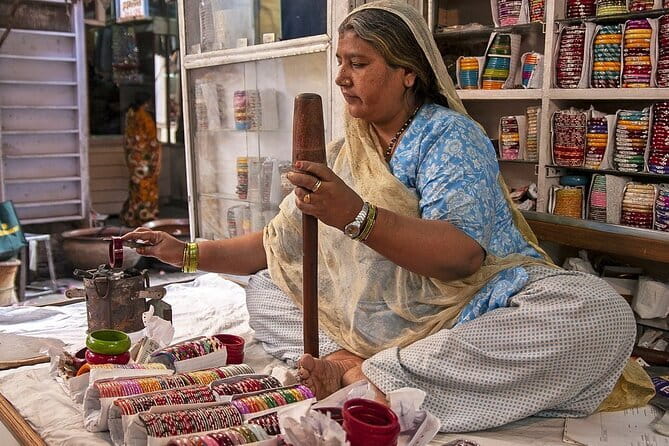
Then you’ll head to Maniharo Ka Rasta, famous for traditional jewelry shops—especially Rajasthani bangles and silver ornaments. This is where Jaipur’s jewelry traditions become visual instead of abstract. In a short stop, you can still compare styles, materials, and what feels most special to you.
Practical tip: keep your purchases grouped in your head. If you want textiles plus jewelry, try not to buy everything in the first lane. Browse a bit, then go back later with your clearer preferences.
Isarlat Tower and Tripolia’s royal mausoleum stops
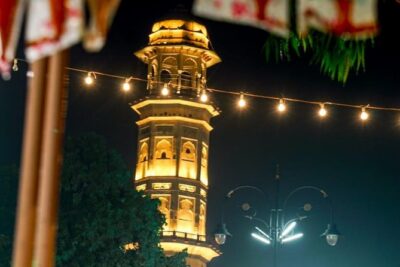
After the market-heavy first half, the tour gives you a break with two history-and-views stops. Isarlat (Tower) is an 18th-century victory memorial built by Maharaja Jai Singh II. It’s a photography-friendly stop, and it’s described as offering panoramic views of Jaipur and the surrounding areas—plus a calmer vibe compared to the trade lanes.
Just know that Isarlat Tower’s entry isn’t included. If you want the full experience—views from up there—factor in an extra ticket cost. If you’re short on budget, you can still enjoy the exterior stop and the skyline moments the tour is designed around.
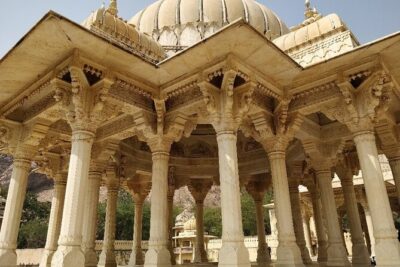
Tripolia Bazar is centered on Tripolia Mazar, a mausoleum near Tripolia Gate. It’s noted as the final resting place of royal family members of Jaipur, and the structure is described as featuring intricate carving. This is a good place to switch gears from shopping surfaces to stone details and design.
These two stops work well because they help you balance the day. Markets can blur together fast, especially if you’re comparing patterns and metals. A tower viewpoint and an ornate mausoleum give you a different kind of “Jaipur fix.”
Albert Hall Museum: short time, big building, decide if you go in

Albert Hall Museum is one of Jaipur’s most recognizable buildings, built in 1876 in Indo-Saracenic style. Originally designed as a concert hall, it now houses collections including art, artifacts, sculptures, textiles, and coins. That range matters because it connects to what you’ll see in the market later—especially textiles and craft materials.
The catch: Albert Hall Museum admission isn’t included, and the stop time is about 30 minutes. So you shouldn’t plan on a slow museum day. Instead, treat it like a decision point.
If you’re a museum person, you can use the short timing to focus on a few sections only—think: textiles and objects that explain the craft world you’ve been shopping in. If you’re not, you can still appreciate the building and save your energy for the next markets and craft demos.
The reason I like including this stop on a shopping tour is simple: it gives context. When you see Jaipur’s craft traditions in a museum setting, the market objects stop feeling random. They feel like part of a bigger system—design, materials, and workmanship passed down over time.
Deeper into old-town Jaipur
Johri Bazaar and Hawa Mahal: landmark views and serious shopping energy
Johri Bazaar is where the shopping focus sharpens. It’s known for Rajasthani handicrafts and includes textiles, jewelry, pottery, spices, and leather goods. The description also points out bandhni, block prints, and silver jewelry—exactly the kind of categories that match the craft demos later in the day.
You’ll have about 30 minutes here, and that’s enough time to hunt for gifts without drifting. This is also the stop where you can look for things that match your interest level:
- Textiles and prints if you like color and pattern
- Silver jewelry if you want Jaipur’s signature metalwork styles
- Pottery or decor items if you’re shopping for home
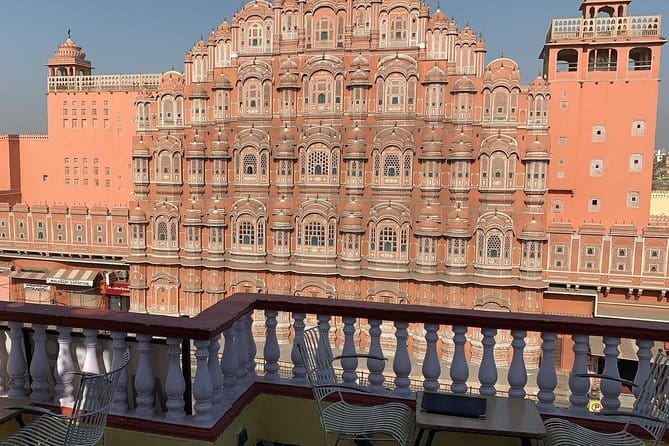
After Johri Bazaar, the tour heads to Hawa Mahal (Palace of Winds). This is one of Jaipur’s most famous sights for a reason. It features a honeycomb-like facade with 953 small windows, built in 1799 by Maharaja Sawai Pratap Singh. The idea was that royal women could view street life discreetly.
Hawa Mahal’s strength here is timing. You get a photo-ready stop with a clear explanation of why the building looks the way it does. It’s also a great break from shopping—just enough time to enjoy the structure and then get back to your day.
If you’re thinking about buying souvenirs afterward, you’ll appreciate this stop more. You’ll have a landmark memory to anchor all your shopping later.
Blue pottery and block printing: watch the process before you buy
This tour’s craft demos are short on paper (10–15 minutes) but useful in real life. You’ll visit the Jaipur Blue Pottery Art Centre for a demo where skilled artisans work with the techniques behind Jaipur’s blue hues and patterns. You’re not just looking at finished items—you’re seeing how the design language comes to life.
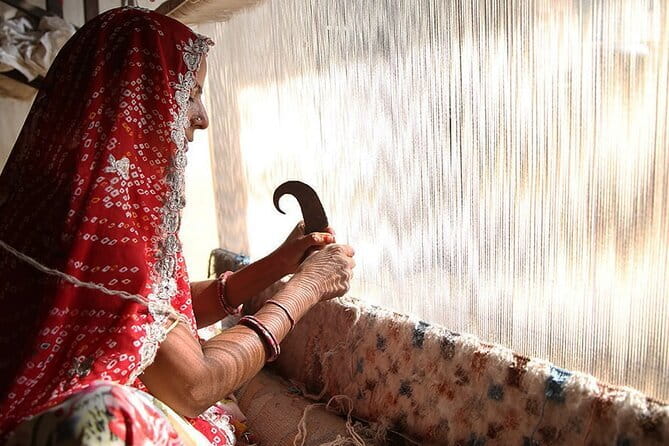
Then you’ll head to Satguru’s the Textile World, a textile factory setting where women and artisans craft carpets and rugs. This stop also includes a block printing experience. You’ll see traditional block printing and learn how intricate patterns are made by hand on fabric.
These two stops are worth real attention because they change how you shop. Instead of asking, Is this pretty or not? you start asking, Is the pattern work precise? Does the print look consistent? Are the details sharp? That’s the difference between impulse buying and buying something you’ll actually like.
There’s also an important social angle built into the experience. The tour highlights women’s craftsmanship and empowerment through these traditional trades. Even if you don’t plan to read every detail, you’ll still notice the focus on craft roles and skill.
If you want souvenirs that feel meaningful—not just mass-produced—this is where the tour quietly earns its price.
Is this tour worth $16 for a half-day in Jaipur?
At $16 for about five hours, this tour is priced like a steal—especially because it includes hotel pickup and drop-off, bottled water, and transport in a private vehicle with a local expert driver. For a market-and-crafts day, that’s strong value.
That said, you should plan your budget beyond the ticket. Isarlat Tower and Albert Hall Museum entry aren’t included, and meals aren’t included. So if you want to go inside the museum or climb for views at Isarlat, expect some extra spending. Also, your biggest personal expense will come from whatever you decide to buy in the bazaars.
What makes it good value, though, is that the day reduces risk. When a guide helps you move between the right specialty lanes, you spend less time wandering aimlessly. You also get short demos that improve your ability to judge what’s worth paying for.
One more note from real experience: the tour seems best for crafts and shopping rather than a tea-and-spice hunt. If your main goal is spices and teas specifically, don’t assume the focus will match that. Johri Bazaar does include spices in its offerings, but the demo-and-craft emphasis is the core.
Mr Rauf Khan: the style that keeps the day comfortable and safe
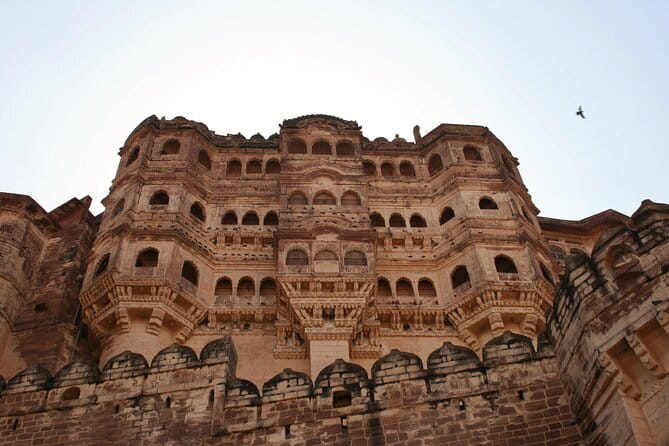
A big reason people recommend this tour is the way Mr Rauf Khan handles the day. The common theme in the praise is that he keeps you feeling safe and happy while you move through busy market areas, and he’s attentive throughout.
Another standout is tailoring. When you want a more local shopping feel instead of only tourist shops, Mr Rauf Khan can adjust the day to match your preferences. That matters because “shopping tour” can mean anything—from hard-selling to aimless driving. Here, it tends to feel guided and practical.
People also mention his energy and friendliness, and that he helps with practical choices like finding good places to eat based on what you want. Even if food isn’t included on the tour, having a guide who points you toward a solid restaurant is part of the real value.
This is also a tour where you’ll likely want to talk. Ask questions about materials, prints, and how items are made. The point isn’t to become an expert overnight. It’s to shop with a little more confidence.
Should you book this Jaipur heritage and old market shopping tour?
Book it if you want:
- A half-day route that strings together Jaipur’s key markets and major landmarks
- Short craft demos for blue pottery and block printing (plus jewelry making)
- Hotel pickup, bottled water, and a private vehicle so you can focus on shopping and photos
Skip it (or be cautious with expectations) if you want:
- Long museum time or deep indoor monument visits
- A tour centered specifically on tea and spice shopping as the main event
If you’re budget-minded, this tour is hard to ignore at $16. Just keep a little extra money for Isarlat and Albert Hall entry, and be ready to shop with intention rather than buying everything you see.
FAQ
FAQ
How long is the Jaipur Heritage and Old Market Shopping Tour?
It runs for about 5 hours.
What’s included in the price?
Pickup and drop-off from your hotel, a private vehicle with a friendly local expert driver, bottled water, and a guided mix of heritage-site viewing and traditional markets.
Is entry included for Isarlat Tower and Albert Hall Museum?
No. The tour notes that admission isn’t included for Isarlat Tower and Albert Hall Museum.
Are meals included?
No. Food and drinks aren’t included.
Is this tour private?
Yes. It’s a private tour/activity, so only your group participates.
What craft demos are part of the experience?
You’ll get short 10–15 minute demos related to block printing, blue pottery, and jewelry making.
Are the monuments viewed from outside or inside?
The tour states that monuments will be viewed from the outside.
Do you get bottled water during the tour?
Yes, bottled water is included.
Can I cancel for a full refund?
Yes. Cancellation is free up to 24 hours in advance for a full refund. If you cancel less than 24 hours before the start time, the amount paid isn’t refunded.
Old Jaipur, Toured Properly
- Heritage Walk & Street Food Tasting in Jaipur★ 5.0 · 158 reviews
- Private Full-Day Sightseeing Tour of Jaipur’s Heritage by Car★ 5.0 · 110 reviews
- Jaipur Heritage Walk with Rickshaw Ride★ 5.0 · 105 reviews
- Jaipur Heritage Evening Walk – The Twilight Magic of Pink City★ 5.0 · 93 reviews
- Nahargarh Water Walk – Guided 2-Hour Heritage Tour in Jaipur★ 5.0 · 89 reviews
- Jaipur Heritage Walking Tour – Local life, Havelis and Temples★ 5.0 · 72 reviews
More Jaipur Tours to Compare
- Jaipur: Private Full Day Sightseeing Tour By Car with Guide★ 4.9 · 1,839 reviews
- 3-Hour Morning Bike Tour of Jaipur★ 5.0 · 1,253 reviews
- Jaipur: Private Sightseeing Day Tour with Guide by Car★ 4.8 · 773 reviews
- Jaipur: Full-Day City Tour with Car, Guide & Skip-the-Line★ 4.8 · 512 reviews
- Full-Day Jaipur Private Sightseeing Tour by Car with Guide★ 5.0 · 472 reviews
- Pink City Cooking Class★ 5.0 · 452 reviews
More Bazaar Mornings in Jaipur
- Jaipur Bazaar & Food Walking Tour★ 5.0 · 281 reviews
- Full Day Old City Private Tour with Local Market visit in Jaipur★ 5.0 · 151 reviews
- Private Shopping Tour in Jaipur★ 5.0 · 135 reviews
- Jaipur Tuk-Tuk Tour with Flower Market Visit★ 5.0 · 124 reviews
- Jaipur Tour by Tuk-Tuk or Car with Flower Market★ 5.0 · 120 reviews
- Jaipur: Half-Day Guided Sightseeing Tour with Flower Market★ 4.9 · 119 reviews
Newly Added Jaipur Reviews



More from Jaipur Bazaars & Shopping.
 ★ 5.0Jaipur Bazaar & Food Walking TourFrom $37281 reviews
 ★ 5.0Full Day Old City Private Tour with Local Market visit in JaipurFrom $55151 reviews
 ★ 5.0Private Shopping Tour in JaipurFrom $16135 reviews
 ★ 5.0Jaipur Tuk-Tuk Tour with Flower Market VisitFrom $6124 reviews
 ★ 5.0Jaipur Tour by Tuk-Tuk or Car with Flower MarketFrom $6120 reviews
 ★ 4.9Half-Day Guided Sightseeing Tour with Flower MarketFrom $4119 reviews
 ★ 5.0Jaipur Market Tour & Vegetarian Rajasthani Home Cooking ClassFrom $60113 reviews
 ★ 5.0Half or Full Day Sightseeing Tour with Flower MarketFrom $794 reviews
This tour also appears in