

Reviewed · PINK CITY WALKS
“Jaipur Cultural Walk: Explore life behind the pink walls”
Pink walls hide daily life. This Jaipur Cultural Walk lets you step behind the pink façades of Jaipur’s Old City, on a small-group walking route with Kumar guiding up to eight people.
I especially like the Tripolia Bazar stop, where you can watch artisans make lacquer bangles and brass or metal vessels, and you can take photos. Chhoti Chaupar’s tea break with masala chai and hot snacks, plus the Badi Chaupar sweet tasting from milk-based curd, cheese, and sweets, makes the walk feel practical and delicious.
One heads-up: it’s about 3 hours of walking and expects a moderate fitness level, and there’s no hotel pickup—so you’ll want to plan how you’ll reach the meeting point and return.
In This Review
- Key highlights at a glance
- Behind the pink walls: why a 3-hour walk beats a bus tour
- Tripolia Bazar: photographing lacquer bangles and metal vessels
- Chhoti Chaupar lanes: masala chai, incense, and candle sellers
- Badi Chaupar sweet factory and the milk-to-sweets story
- Kumar’s guide style: why it feels personal, not performative
- Price and logistics: what $30 really covers
- Who should book this walk (and who might prefer something else)
- Should you book the Jaipur Cultural Walk?
- FAQ
- How long is the Jaipur Cultural Walk?
- How much does the Jaipur Cultural Walk cost?
- What group size is it?
- What’s included in the price?
- Is hotel pickup and drop-off included?
- Where do I meet the guide?
- Do I need a certain fitness level?
Key highlights at a glance
- Up to 8 people keeps the pace human and makes questions easy
- Walking through old lanes helps you see more than the main streets
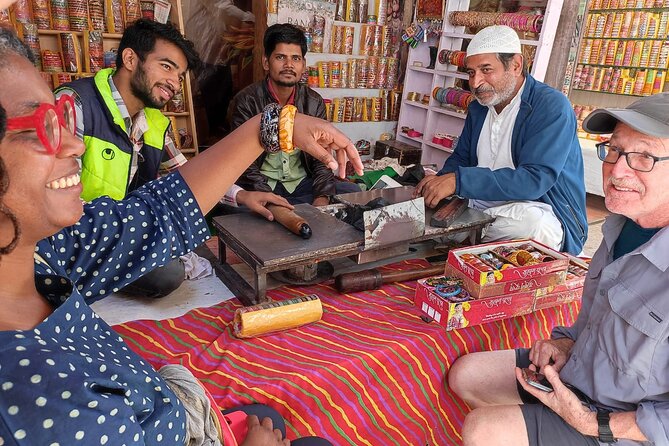
- Tripolia Bazar crafts stop includes lacquer bangles and brass/metal vessels, with photo permission
- Chhoti Chaupar tea break means masala chai plus freshly cooked hot snacks
- Badi Chaupar tasting includes milk products like curd and cheese along with sweets
- Included water and coffee/tea keeps you comfortable for the full stroll
Deeper into the walled city on foot
- Pink City Cooking Class
★ 5.0 · 452 reviews - Private Jaipur Full One Day Tour In Pink City With Guide
★ 5.0 · 322 reviews - Heritage Walk & Street Food Tasting in Jaipur
★ 5.0 · 158 reviews - Full Day Old City Private Tour with Local Market visit in Jaipur
★ 5.0 · 151 reviews
Behind the pink walls: why a 3-hour walk beats a bus tour
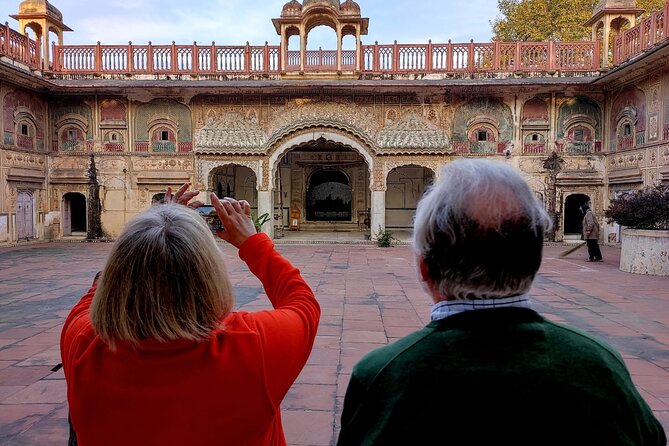
Jaipur looks famous from a distance, but it feels real up close—on sidewalks, in alleys, and inside the places where people actually make and sell things. This tour is built for that. You spend roughly 3 hours walking with a small group (maximum 8), which means you’re not stuck listening through traffic or herding along behind dozens of people.
I like the pace because it matches how Jaipur works. The guide can stop you when something matters—an artisan at work, a street ritual setup, a shopfront you’d never notice from a car window. And since you’re walking, you get the slow, street-level version of Jaipur instead of a checklist version.
You’ll also get a few simple comfort items that make the tour feel thoughtfully planned: bottled water, and coffee or tea with snacks. That matters because you’re not just looking—you’re tasting and watching, then moving on before you get exhausted.
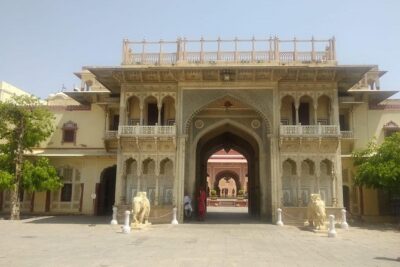
Two practical notes for you: this is for people with moderate physical fitness, and it depends on good weather. If it’s rainy or too hot, the plan may change or get canceled and refunded or rebooked. Finally, there’s no hotel pickup or drop-off in a group tour, so you’ll need to get to the meeting point on your own and finish at the end area near City Palace parking.
Tripolia Bazar: photographing lacquer bangles and metal vessels
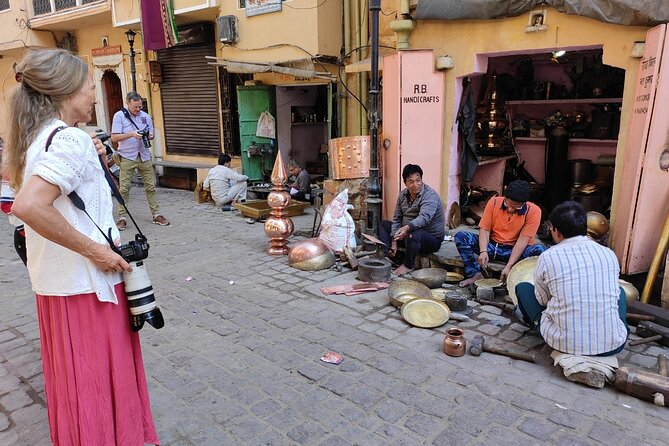
Tripolia Bazar is the kind of stop that makes a city feel like a workshop, not a museum. You go through designated downtown areas where local artisans and handicraft makers work their trades. The focus here is hands-on production: you’ll see lacquer bangles being made, along with brass and other metal vessels.
Photography is allowed at this stop, which is great because Jaipur craft details are genuinely photo-worthy. You’ll likely want to take your time looking at texture and finishing—colors on lacquer items, and how metal gets shaped and handled before it becomes a finished product.
Why this stop is valuable isn’t just because crafts look pretty on a screen. It’s because you’re seeing labor in progress. A guide can point out what you’re actually looking at—what part of the process creates the final look, and how these workshops fit into everyday commerce in the Old City.
A small downside to know: you’ll be walking during most of the tour, so keep your camera use realistic. Stop, shoot, and move—don’t expect this to be a long sit-down viewing session. But that’s part of the charm. You’re part of the street flow, not parked in one spot.
Chhoti Chaupar lanes: masala chai, incense, and candle sellers
Chhoti Chaupar is where the tour leans into senses—smell, warmth, and the quiet choreography of small shops. The visit includes a short tea break with masala chai and freshly cooked hot snacks. It’s timed well: you get a reset halfway through the walking, when your feet start negotiating with your plans.
After tea, you’ll head down alleyways to find a spread of incense and candles, plus wall decorative strings. It’s not just scenery. This kind of shopfront tells you how religion and daily life overlap in Jaipur. Even if you’re not shopping, you learn the purpose behind what you see—how these items support home worship, rituals, and festival prep.
The drawback here is also the most “real” part: alleyways can be tight and busy. In a small group, it’s easier to keep your balance and move with the guide, but you still want comfortable shoes and a calm pace. If you tend to get stressed in crowds or narrow lanes, this stop might take a bit of mental prep.
If you want to get the most out of it, watch for the details that change from shop to shop: the way items are arranged, the range of fragrances and candle types, and how sellers describe what they carry. Kumar’s style (more on that next) is usually excellent for connecting those details to traditions you’ll recognize once you know what to look for.
Badi Chaupar sweet factory and the milk-to-sweets story
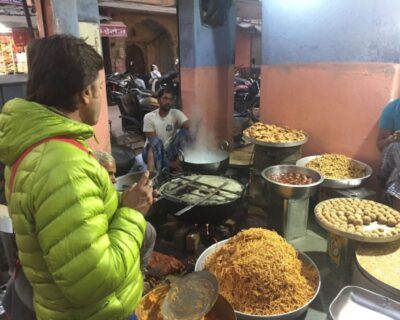
Badi Chaupar turns the focus to food—specifically what’s made, not just what’s sold. You’ll visit a small factory where confectioners make curd, cheese, and sweets from milk. Then you get to enjoy freshly cooked sweets.
That factory element is a big deal for value. A lot of food stops are about grabbing something quick. Here, you see the input (milk products) and the transformation (into sweets). You’re tasting with context, and that makes the flavors feel more connected to local production than random street snacking.
Since dairy products are part of the tasting (curd, cheese, and milk sweets), keep your own dietary needs in mind before you go. If you have lactose intolerance or a dairy allergy, this is the moment to decide how you’ll handle it—because the tasting is central to the experience.
After the sweet stop, you’ll be guided through the spice bazaar and flower areas. Even without making this a full market shopping spree, the guided part helps you avoid getting lost. You’ll learn how the bazaar is organized and why certain stalls matter to everyday cooking and decoration.
A small consideration: this isn’t a “sit and eat” experience. Expect you’ll taste and then keep walking. If you’re the type who likes long meal breaks, you might find it fast—just plan to treat snacks as your main calories for the tour window rather than expecting a full sit-down lunch.
On foot through the old Jaipur lanes
Kumar’s guide style: why it feels personal, not performative
One of the strongest themes in the experience is the guide—Kumar. The overall vibe is respectful and attentive, with explanations that connect what you see to why it exists. That’s what makes a walking tour work. It’s not only the route; it’s the way the route gets interpreted.
In practice, this means you’ll get taken through back streets and alleyways rather than staying on the safest, most obvious tourist lines. You’re still in the real city, and the guide can point out architecture and street patterns as you pass them. It’s the difference between seeing a wall and understanding what that wall is part of in the local story.
I also like that the tour doesn’t treat street life like a spectacle. Instead, it reads like you’re learning the logic of Jaipur—how people work, how they shop, and how they handle daily rituals. If you’re curious about Hindu traditions, this kind of guided linking helps those traditions feel less abstract.
Because the group is capped at 8, Kumar can adjust the flow. If someone wants extra time at a craft station or has questions about a food stop, it’s easier to accommodate. That’s one reason this tour tends to land well: it gives you structure without turning you into a passenger.
Price and logistics: what $30 really covers
At $30 per person, the value is tied to what you get during the walk. You’re not just paying for a guide’s time. You’re also getting coffee or tea, snacks, and bottled water—basic items that keep the experience comfortable for a 3-hour stroll.
You’re also stepping into multiple meaningful stops where admissions are listed as free. That means your money goes mainly toward guiding, tastings, and the time spent in craft-and-food environments rather than ticket fees.
Two things not included are important for planning: hotel pickup and drop-off. So if you’re staying far from the meeting point, you’ll want to budget for getting there and back by your own transport (or take advantage of nearby public transit).
The tour also uses a mobile ticket, which is usually a relief in a place where physical paperwork can be one more hassle. And since confirmation is received at booking and the tour requires good weather, it’s smart to book with flexibility in mind.
Overall, this is a good deal if you like markets, artisan work, and street food you can eat without feeling rushed. If you’re looking for only major monuments, you might find this more of a “feel the city” experience than a “collect icons” one.
Who should book this walk (and who might prefer something else)
This Jaipur Cultural Walk fits best if you want a city tour that feels like everyday life. You’ll enjoy it if you’re the type who likes to watch crafts happen, take photos when it’s allowed, and snack along the way. The included chai break and the milk-sweets tasting make it especially appealing if you’re comfortable trying food in a guided setting.
It’s also a strong choice for you if you prefer walking over riding. On foot, the Old City makes sense faster, because you’re learning landmarks by sight and by street layout rather than by big-road landmarks.
You might want to choose another option if:
- you don’t want to walk for about 3 hours
- you need hotel pickup/drop-off
- weather is unpredictable for your dates, since the experience expects good conditions
For packing, aim for comfortable footwear and plan your day around the walking time. Also, bring a realistic mindset about markets: you’ll be among shops and people, not in a quiet gallery.
Should you book the Jaipur Cultural Walk?
If your goal is to see the Old City as people experience it—craft workshops, incense-and-candle lanes, and milk-based sweets—then yes, I’d book it. The small group size (up to 8) and the focus on food and artisans make the tour feel more personal than the usual “stops-and-snapshots” format.
Book it especially if you’re curious and you want explanations you can act on while you’re walking. Kumar’s approach—street-level, traditions-linked, and not stuck only in obvious sights—is exactly the kind of guidance that turns a route into a real understanding.
Skip it only if you strongly need a monument-heavy itinerary or you can’t manage a few hours of walking without breaks. And if the weather looks rough, remember the experience depends on good conditions—so plan dates with flexibility.
FAQ
How long is the Jaipur Cultural Walk?
The tour lasts about 3 hours.
How much does the Jaipur Cultural Walk cost?
It costs $30.00 per person.
What group size is it?
The tour has a maximum of 8 travelers.
What’s included in the price?
Coffee and/or tea, snacks, and bottled water are included.
Is hotel pickup and drop-off included?
No. Hotel pickup and drop-off are excluded in a group tour.
Where do I meet the guide?
The start is at Government Maharaja Public Library on Chaura Rasta Rd, opposite Tripolia Gate (near Bapu Bazar).
Do I need a certain fitness level?
The tour requires a moderate physical fitness level since it is a walking tour.
Jaipur on Foot: More Walks
- Jaipur Bazaar & Food Walking Tour★ 5.0 · 281 reviews
- Heritage Walk & Street Food Tasting in Jaipur★ 5.0 · 158 reviews
- Magical Walk of Jaipur★ 5.0 · 121 reviews
- Cultural Walk and Food Tasting In Jaipur★ 5.0 · 118 reviews
- Jaipur Heritage Walk with Rickshaw Ride★ 5.0 · 105 reviews
- Jaipur Heritage Evening Walk – The Twilight Magic of Pink City★ 5.0 · 93 reviews
More Jaipur Tours to Compare
- Jaipur: Private Full Day Sightseeing Tour By Car with Guide★ 4.9 · 1,839 reviews
- 3-Hour Morning Bike Tour of Jaipur★ 5.0 · 1,253 reviews
- Jaipur: Private Sightseeing Day Tour with Guide by Car★ 4.8 · 773 reviews
- Jaipur: Full-Day City Tour with Car, Guide & Skip-the-Line★ 4.8 · 512 reviews
- Full-Day Jaipur Private Sightseeing Tour by Car with Guide★ 5.0 · 472 reviews
- Pink City Cooking Class★ 5.0 · 452 reviews
The Pink City on Foot, Continued
- Pink City Cooking Class★ 5.0 · 452 reviews
- Private Jaipur Full One Day Tour In Pink City With Guide★ 5.0 · 322 reviews
- Heritage Walk & Street Food Tasting in Jaipur★ 5.0 · 158 reviews
- Full Day Old City Private Tour with Local Market visit in Jaipur★ 5.0 · 151 reviews
- Magical Walk of Jaipur★ 5.0 · 121 reviews
- Cultural Walk and Food Tasting In Jaipur★ 5.0 · 118 reviews
Newly Added Jaipur Reviews




More from Pink City Walks.
 ★ 5.0Pink City Cooking ClassFrom $27452 reviews
 ★ 5.0Private Jaipur Full One Day Tour In Pink City With GuideFrom $16322 reviews
 ★ 5.0Heritage Walk & Street Food Tasting in JaipurFrom $21158 reviews
 ★ 5.0Full Day Old City Private Tour with Local Market visit in JaipurFrom $55151 reviews
 ★ 5.0Magical Walk of JaipurFrom $10121 reviews
 ★ 5.0Cultural Walk and Food Tasting In JaipurFrom $22118 reviews
Jaipur Heritage Walk with Rickshaw RideFrom $11105 reviews
★ 5.0Cultural Walk and Food Tasting In JaipurFrom $22118 reviews
Jaipur Heritage Walk with Rickshaw RideFrom $11105 reviews
 ★ 5.0Private Jaipur Pink City Tour by Car & Driver with a Tour GuideFrom $17104 reviews
This tour also appears in