
Reviewed · JAIPUR PHOTOSHOOT & INSTAGRAM TOURS
Jaipur: Instagram Tour of The Top Photography Spots
Jaipur is made for camera people, and this tour is built around that. You hit the big-photo landmarks fast, with a private chauffeur handling the driving so you can focus on angles, light, and details. It’s especially strong if your priority is getting iconic shots without spending your day figuring out logistics.
I like two things most. First, the route stacks the best “Instagram-ready” stops close together—Hawa Mahal, the Pink City, and the fort area are all part of the day. Second, the guides seem to take photography seriously, not just sightseeing. People like Khalid, Neeraj, Baba, and Salman are praised for framing ideas, patience, and good English, which makes a huge difference when you only have one day.
One consideration: this is a packed 8-hour day and you’re doing multiple photo walks. If you want a slow, museum-by-museum pace with lots of downtime, you might feel a bit rushed, especially around the busiest photo viewpoints.
In This Review
- Key Highlights I’d Not Skip
- How This Jaipur Photo Day Works (And Why It Feels Efficient)
- Patrika Gate and Jawahar Circle Park: Colorful Entry, Easy First Frames
- Birla Mandir Inside the Pink City: Calm Contrast for Better Photos
- Albert Hall Museum and Ram Niwas Garden: Indo-Saracenic Backdrops
- Hawa Mahal and Jharokhas: The Palace of the Winds for Layered Light
- Pink City Photo Walk: Turning Streets Into Story Shots
- Jantar Mantar and City Palace Courtyards: Geometry Meets Royal Scale
- Jal Mahal Water Palace: The Roadside View That Looks Like a Postcard
- Amber Fort and the Fort Area: When the Day Turns Into Big Views
- Stepwell and Village Stops: Smaller Moments With Strong Photo Payoff
- Car, Chauffeur, and Timing: The Real Value for a One-Day Shoot
- Price and Value: What $30 Really Covers for 8 Hours
- Who This Tour Suits Best (And Who Might Want a Different Style)
- Should You Book This Jaipur Instagram Photo Tour?
- FAQ
- How long is the Jaipur photography tour?
- What is the price per person?
- Is hotel pickup and drop-off included?
- Do you get an air-conditioned car and chauffeur?
- Is the tour private?
- Are meals and entrance fees included?
Key Highlights I’d Not Skip
- Photo-first routing through Jaipur’s top landmarks: you bounce from gateways and temples to palaces and courtyards designed for memorable backdrops.
- Private air-conditioned car with a chauffeur: it cuts down travel stress and helps you keep your energy for photography.
- Guides who suggest framing ideas: several named guides are specifically praised for helping people get the shot, not just telling facts.
- Iconic architectural variety: jharokhas at Hawa Mahal, astronomical geometry at Jantar Mantar, and fort views near Amber.
- Built-in pauses for shopping and lunch: you get free time in the middle so the day doesn’t feel like nonstop standing.
The most photogenic corners, framed for you
- Jaipur Instagram Tour of Photogenic Spots
★ 5.0 · 30 reviews - Private Tour of Instagrammable Photogenic Spots in Jaipur
★ 5.0 · 22 reviews - Jaipur: Instagram Tour of The Top Photography Spots
★ 4.6 · 19 reviews - Jaipur: Private Tour for Instagram and Photography Lovers
★ 5.0 · 12 reviews
How This Jaipur Photo Day Works (And Why It Feels Efficient)
This tour is designed around movement and timing. You’re picked up in Jaipur and transported by a private, air-conditioned vehicle with a chauffeur, which is a big deal in Rajasthan heat and traffic. Instead of bouncing between places by yourself, you’re basically handed a ready-made plan where each stop has clear “why here” moments for photos.
You also get a chauffeur and English-speaking driver included, plus bottled water. That doesn’t sound glamorous, but it keeps your day smooth. When you’re chasing good light, you don’t want the stress of directions, parking hunts, or figuring out where to stand for the right angle.
The best fit is anyone who wants a high-impact photo itinerary without the planning overhead. It’s less ideal if you want long stays at fewer places, or if you’re not interested in architecture and landmark shots.
Patrika Gate and Jawahar Circle Park: Colorful Entry, Easy First Frames
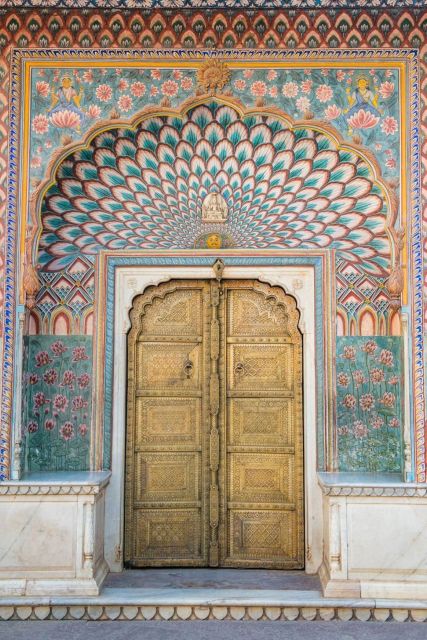
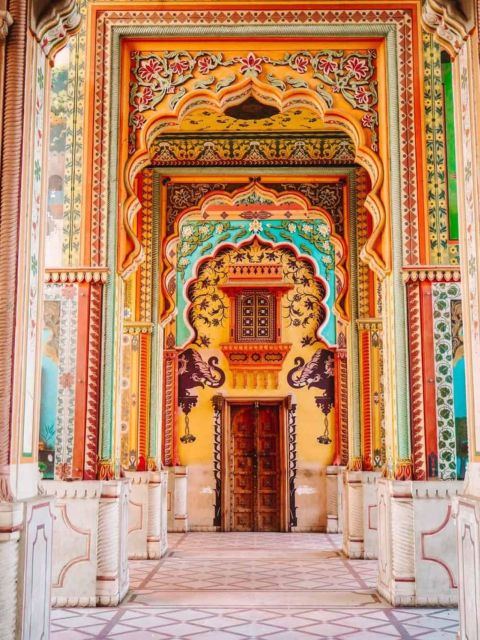
Your day starts with Patrika Gate, the entrance area for Jawahar Circle Park. This is one of those locations where the structure does most of the work for your photos. The gate is known for intricate carvings and a strong Rajasthani theme, so you can get detailed close-ups and wider shots from the same general area.
What I like about this first stop is the easy win factor. You’re not deep into planning or ticket logistics yet. You get time to walk around, settle into the day, and start building momentum with frames that look like postcards.
Possible drawback: it’s a popular photo spot. If you’re sensitive to crowds, you’ll want to move steadily, take a few composed shots early, and then shift positions for variety instead of standing in one place too long.
Birla Mandir Inside the Pink City: Calm Contrast for Better Photos
After the gate, you head to Birla Mandir in the heart of the Pink City. This stop gives you a change of pace from the more “architectural spectacle” style of Patrika Gate. The setting supports cleaner compositions and calmer moments, especially if you want to balance the day with something more sacred and less crowded-looking.
For photography, places like this often reward you for slowing down. Try a slightly wider frame that includes nearby streets or architecture, then follow with a tighter shot that highlights the temple details. It’s the kind of contrast that makes your overall photo set feel intentional, not just like a checklist.
Practical note: you’ll do a guided experience here, so you’ll spend some time learning what you’re seeing instead of only chasing angles.
Albert Hall Museum and Ram Niwas Garden: Indo-Saracenic Backdrops
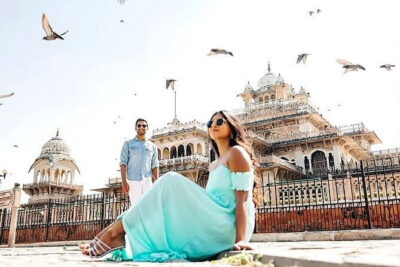
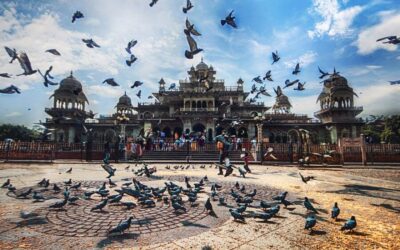
Next up is Albert Hall Museum. It’s the oldest museum in the state and functions as Rajasthan’s state museum, set in the Ram Niwas garden area outside the city wall. Architecturally, it’s an Indo-Saracenic-style landmark, which means the building offers lots of lines, arches, and texture for strong photo backgrounds.
This is a great place to work on “portrait framing” for buildings. Stand at a comfortable distance, get the full structure first, then step in for facade details. The Ram Niwas Garden also gives you an outdoor breathing space, so you’re not just stuck taking photos in one hard, sun-baked corner.
One possible consideration: museum areas can have rules on where you can stand or what you can photograph. If you care about specific angles, ask your guide to point out the best photo positions early so you don’t waste time later.
More frames from around Jaipur
Hawa Mahal and Jharokhas: The Palace of the Winds for Layered Light
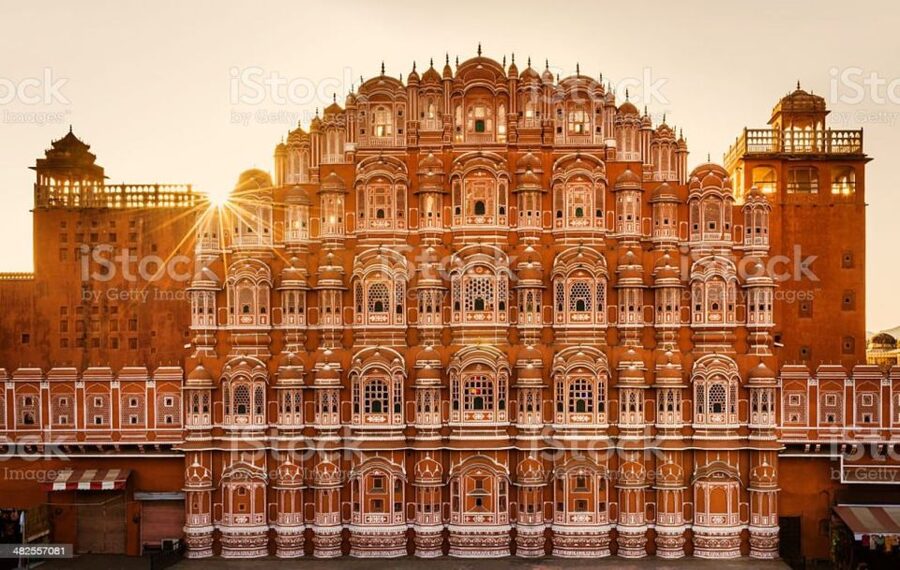
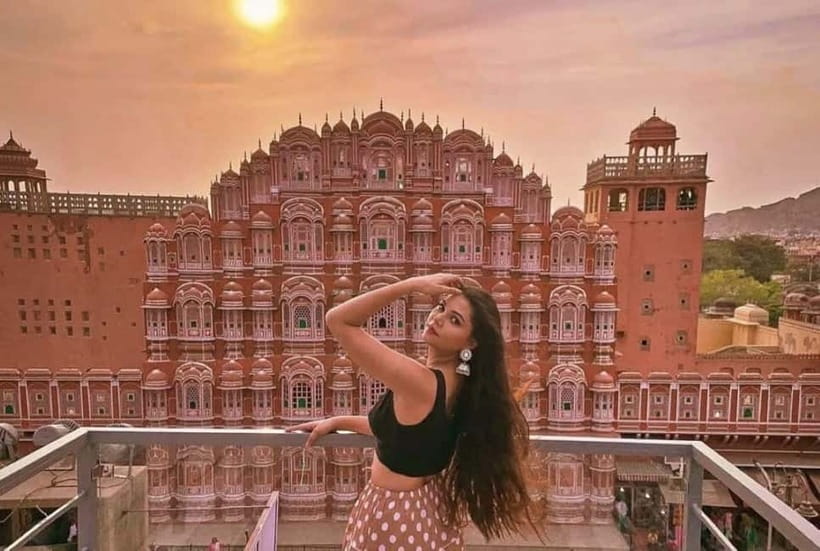
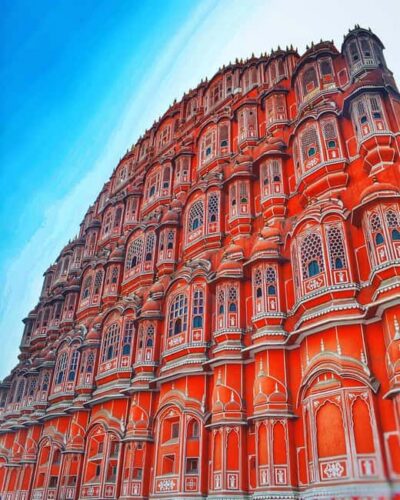
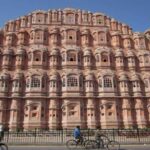
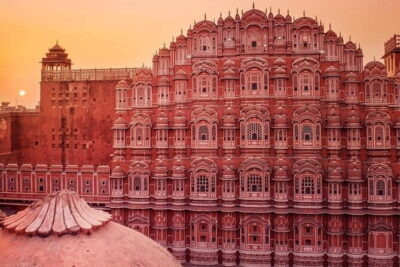
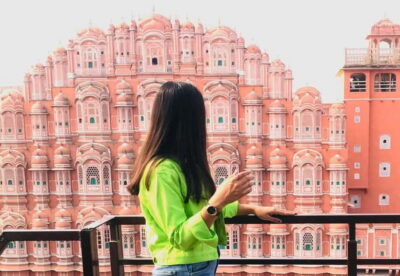
Then comes the stop that most people think of when Jaipur comes up: Hawa Mahal. Built in the 18th century by Rajput King Sawai Pratap Singh and known as the Palace of the Winds, it’s famous for its jharokhas—those small, carved window balconies that create repeating patterns across the facade.
This is where the tour really pays off for photographers. The stop offers multiple opportunities to shoot:
- close detail shots of the facade carvings
- wider shots showing the full facade
- light-and-shadow effects as you move along the front
If you want variety, don’t treat it like one photo moment. Walk around, reposition, and let the different angles change your frame. Jharokhas can turn a single building into ten different looks, depending on where the sun hits and what’s in your background.
Crowd reality: it’s one of Rajasthan’s most popular landmarks. If you’re patient and ready to reposition, you’ll get plenty. If you hate lines and shoulder-to-shoulder moments, plan for a calmer shot cycle: quick wide, quick detail, then move on.
Pink City Photo Walk: Turning Streets Into Story Shots
After Hawa Mahal, you move through the Pink City area. This is where your photos shift from “stand in front of the landmark” to “use the surrounding city fabric.” The Pink City look comes from the cohesive color scheme across buildings, and that makes streets look more graphic in photos than they might on a normal travel day.
Your guide and walkthrough time help here. Instead of you trying to guess where the best street angles are, you’re guided through a photo-rewarding loop with enough time to stop, frame, and keep moving.
Possible drawback: Pink City photo walking can be slower than you expect if you’re stopping for shots every few minutes. If you know you’re going to do a lot of close-up photography, keep an eye on the overall flow of the day so you still reach the later stops without feeling rushed.
Jantar Mantar and City Palace Courtyards: Geometry Meets Royal Scale
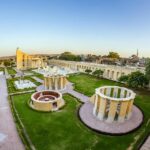
Next on the arc is Jantar Mantar, the astronomical observatory built by Maharaja Jai Singh of Jaipur in 1724. This is one of the best stops on a photo tour for people who like clean shapes. The structures are designed for measuring celestial phenomena, and those practical purposes show up visually as angles, arcs, and repeating forms.
Then you head to the City Palace complex, which includes multiple buildings, courtyards, galleries, and spaces connected to the Museum Trust, plus restaurants and offices within the broader area. For photos, think “layers.” You’re not photographing one building; you’re photographing a whole system of courtyards and passages.
What I like about pairing Jantar Mantar with City Palace is the contrast in visuals. One is geometry-heavy and “scientific” looking, the other is royal and architectural, with more texture and human-scale details.
One consideration: both areas can involve time in and around crowds. If you want the cleanest angles, aim to get your widest frames early, then come back for tighter compositions once you’ve seen the flow.
Jal Mahal Water Palace: The Roadside View That Looks Like a Postcard
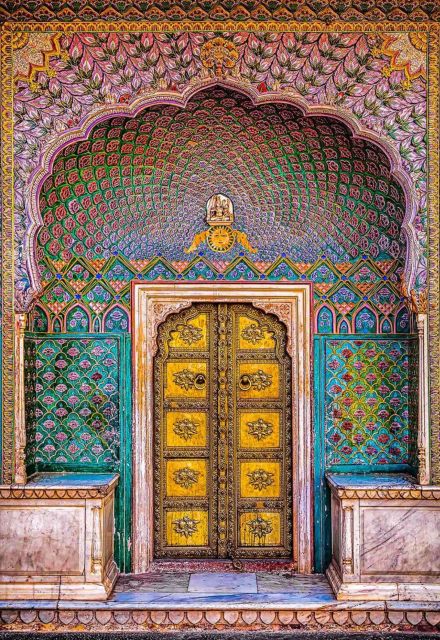
You end up at Jal Mahal, the Water Palace, located in the middle of Man Sagar Lake. The best part here for photographers is that you can get striking images from the staying point at the side of the road, with the palace set against the lake and the hills.
It’s a classic “wow” stop because you get a layered shot: water foreground, palace middle-ground, and terrain behind it. Even if you’re not a professional, this is the kind of place where your photos naturally look more cinematic.
Practical note: you’re shooting from a specific view area, so plan to take your frames efficiently. Don’t overthink it—move your position slightly, adjust your angle, and work the background hills and lake reflection.
Amber Fort and the Fort Area: When the Day Turns Into Big Views
Amber Fort is the big finale stop in this tour flow, with a photo stop plus guided visit and sightseeing time. This is where Jaipur shifts from “pretty facades” to “monumental views.” Fort photography often works best when you shoot in layers: the fort walls and gates in wide frames, then details in tighter shots.
You’ll also have time for walking and the guided experience, which matters because forts can feel like just another big structure unless you understand what you’re looking at. The best photos come from knowing where to look for design details and how the fort fits into the broader landscape.
One possible drawback: forts involve walking and uneven ground. Wear comfortable shoes and keep your pace steady. Your chauffeur and route help, but your feet are still doing the work.
Stepwell and Village Stops: Smaller Moments With Strong Photo Payoff
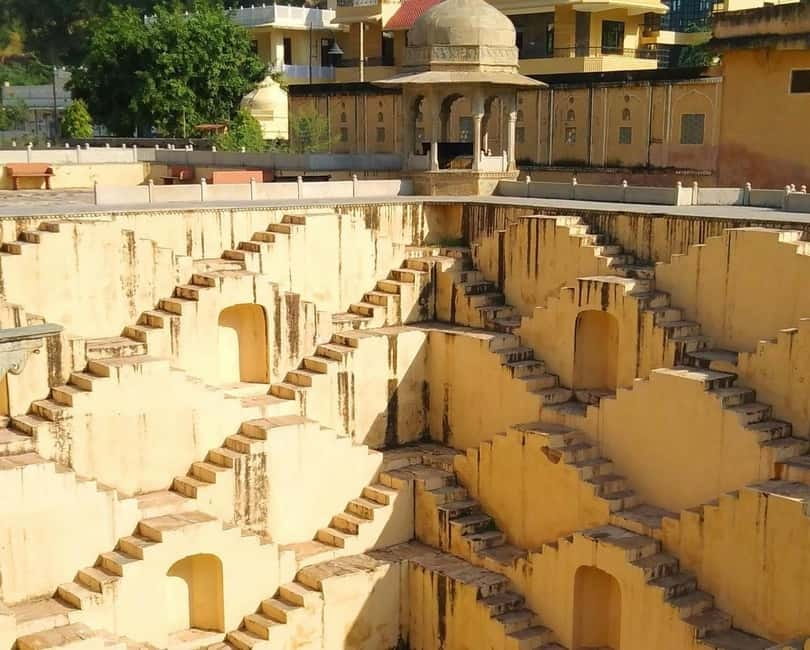
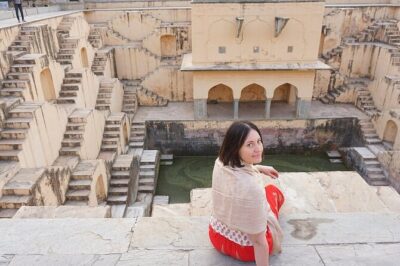
After Amber, the day includes Panna Meena ka Kund, a short 15-minute stop. Stepwells are made for photography because the architecture creates strong repetition: lines, depth, and texture. Even with limited time, you can usually get a few solid angles if you move quickly and keep your framing simple.
Then there’s Hathi Gaon, a longer visit with time to explore (about an hour). This stop tends to add a different vibe to the day. It’s not just a royal monument; it’s more of an in-between cultural stop that rounds out the photo set with something less “single-building landmark” and more “place with atmosphere.”
If you like your photos to show variety—royal power, scientific geometry, water views, and human-scale corners—these stops help your final gallery feel more like Jaipur and less like a sightseeing circuit.
Car, Chauffeur, and Timing: The Real Value for a One-Day Shoot
The air-conditioned private car with a chauffeur isn’t just comfort. It’s time management. When you’re hopping between places like Patrika Gate, Hawa Mahal, City Palace, and Amber Fort, transport choices determine whether your day feels smooth or stressful.
This setup also gives your guide more freedom. With less time lost to driving decisions, your schedule can pack in key stops that are good for photography. Plus, you get bottled water, which helps you stay alert and not rushed when you’re waiting for the best light.
Your driver being English-speaking matters too, especially when you’re trying to understand what each place offers visually. Named guides in the experience have been praised for their patience and helpful photo ideas, which means you’re more likely to get results even if you don’t speak local languages.
Price and Value: What $30 Really Covers for 8 Hours
At about $30 per person for an 8-hour private tour, the value depends on what you’re comparing it to.
You’re getting:
- pickup and drop-off from your accommodation (or airport/railway station if arranged)
- a private air-conditioned vehicle with chauffeur
- fuel, parking, tolls, and taxes
- bottled water
- government taxes including GST
- skip-the-ticket-line support (where applicable in the included flow)
What’s not included:
- meals
- entrance fees at places not included
- souvenir photos
- any travel to and from Jaipur
So if you were going to hire a car anyway, pay multiple tickets, and still fight traffic and parking, this is a practical deal—especially for a short stay. If you plan to eat only in between stops and don’t mind paying some entrance fees separately, the overall cost stays predictable.
Who This Tour Suits Best (And Who Might Want a Different Style)
This tour is ideal if you:
- want a photo-focused Jaipur day with a high concentration of major landmarks
- prefer planning-light travel with pickup and drop-off handled
- enjoy architecture, palaces, temples, and structured viewpoints
- like having a guide help with shot ideas (and not just talking history)
You might choose something else if you:
- want a slow pace with longer time at fewer sites
- feel stressed by crowds at top landmarks like Hawa Mahal
- are primarily interested in deep museum time rather than landmark photos
Should You Book This Jaipur Instagram Photo Tour?
If your goal is to leave Jaipur with a strong photo set and minimal hassle, I think this is a smart booking. The route hits iconic places like Hawa Mahal, Jantar Mantar, City Palace, Jal Mahal, and Amber Fort in one day, and the private chauffeur setup makes it workable.
The deciding factor is your comfort with a packed schedule. If you can handle a busy day of walking and photo stops, you’ll likely love how the pieces fit together into one cohesive visual story. If you want breathing room and long sits, consider a slower format.
FAQ
How long is the Jaipur photography tour?
It runs for 8 hours.
What is the price per person?
The price is listed as $30 per person.
Is hotel pickup and drop-off included?
Yes. Pickup and drop-off are included from your hotel (and pickup from airport/railway station can be arranged).
Do you get an air-conditioned car and chauffeur?
Yes. You’ll have a private vehicle with air conditioning and a chauffeur for sightseeing.
Is the tour private?
Yes, it’s a private group tour.
Are meals and entrance fees included?
Meals are not covered, and entrance fees at places not included in the package may need to be paid separately.
Sharper Shots of Jaipur
- Jaipur: Private Tour for Instagram and Photography Lovers★ 5.0 · 12 reviews
- Jaipur Instagram Photoshoot By Local Professionals★ 5.0 · 9 reviews
- Jaipur: Private Instagram Tour of Top Photography Spots★ 4.8 · 8 reviews
- Rajasthan Photography Tour with Visual Anthropologist★ 5.0 · 5 reviews
- Jaipur: Full Day Sightseeing with Professional Photographer★ 5.0 · 4 reviews
More Jaipur Tours to Compare
- Jaipur: Private Full Day Sightseeing Tour By Car with Guide★ 4.9 · 1,839 reviews
- 3-Hour Morning Bike Tour of Jaipur★ 5.0 · 1,253 reviews
- Jaipur: Private Sightseeing Day Tour with Guide by Car★ 4.8 · 773 reviews
- Jaipur: Full-Day City Tour with Car, Guide & Skip-the-Line★ 4.8 · 512 reviews
- Full-Day Jaipur Private Sightseeing Tour by Car with Guide★ 5.0 · 472 reviews
- Pink City Cooking Class★ 5.0 · 452 reviews
The Photogenic Side of Jaipur
- Private Tour of Jaipur’s Most Instagrammable & Photogenic Spots★ 5.0 · 182 reviews
- Jaipur Instagram Tour of Photogenic Spots★ 5.0 · 30 reviews
- Private Tour of Instagrammable Photogenic Spots in Jaipur★ 5.0 · 22 reviews
- Jaipur: Private Tour for Instagram and Photography Lovers★ 5.0 · 12 reviews
- Jaipur Instagram Photoshoot By Local Professionals★ 5.0 · 9 reviews
- Jaipur: Private Instagram Tour of Top Photography Spots★ 4.8 · 8 reviews
Newly Added Jaipur Reviews
More from Jaipur Photoshoot & Instagram Tours.
 ★ 5.0Private Tour of Jaipur’s Most Instagrammable & Photogenic SpotsFrom $30182 reviews
 ★ 5.0Jaipur Instagram Tour of Photogenic SpotsFrom $1530 reviews
 ★ 5.0Private Tour of Instagrammable Photogenic Spots in JaipurFrom $2822 reviews
 ★ 5.0Private Tour for Instagram and Photography LoversFrom $1412 reviews
 ★ 5.0Jaipur Instagram Photoshoot By Local ProfessionalsFrom $459 reviews
 ★ 4.8Private Instagram Tour of Top Photography SpotsFrom $98 reviews
Rajasthan Photography Tour with Visual AnthropologistFrom $1075 reviews
★ 4.8Private Instagram Tour of Top Photography SpotsFrom $98 reviews
Rajasthan Photography Tour with Visual AnthropologistFrom $1075 reviews
 ★ 5.0Private Half-Day Instagram Tour with GuideFrom $55 reviews
This tour also appears in