
Reviewed · JAIPUR BLOCK PRINTING & CRAFTS
Hands-on Block Printing Workshop
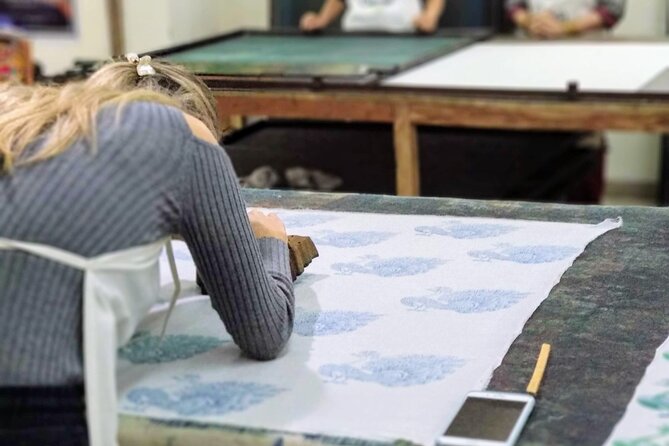
Wood blocks, calm hands, and wearable art. In Rajasthan, this small-group class teaches block printing basics, from carved wooden designs to water-based pigment printing, so you can make something you cannot buy off a shelf.
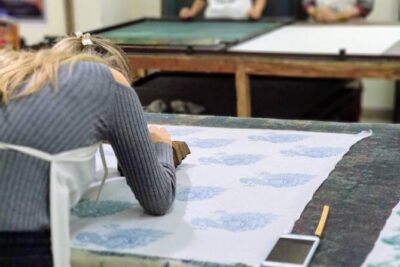
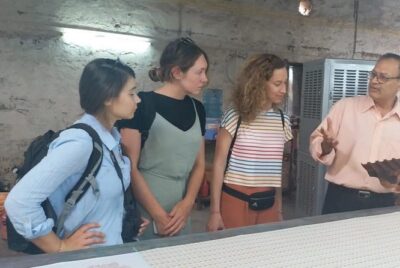
I love how truly hands-on it is. After a brief intro, you pick your pattern and colors and spend the next two hours practicing the repetitive rhythm that turns simple shapes into a wearable textile. Instructors like Mohit, Vivek, and Aftab keep the process clear and patient when you need help.
One possible drawback: two hours is just enough to get results, not enough to perfect everything. You may also feel a little time-pinched if you want to watch every stage of production up close, though there is time to see the pros working nearby.
In This Review
- Key things you’ll notice right away
- Block printing in Rajasthan: why this workshop is more than a craft stop
- Entering the craft: what you learn in the first minutes
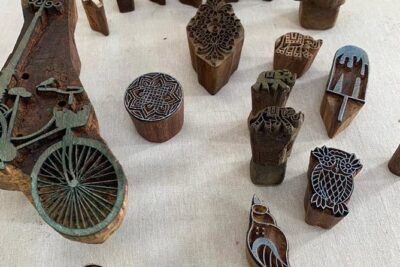
- The wooden blocks: your stamps, your patience test
- Planning your pattern: Sanganeri-inspired choices you can make your own
- Layering and printing techniques: how patterns actually get made
- The take-home moment: Pico stitch scarf or sarong you made
- Studio logistics that affect your comfort (and your results)
- Price and value: why $24 can make sense here
- Who this workshop suits best
- Should you book this Rajasthan block printing workshop?
- FAQ
- How long is the hands-on block printing workshop?
- How much does the workshop cost?
- What will I make and take home?
- Where is this experience located?
- Is the workshop hands-on, or is it mostly watching?
- What design options will I have?
- What languages are spoken during the class?
- How large is the group?
- What should I bring?
- What is the cancellation policy?
Key things you’ll notice right away
- Small group limits (10 people max) so you get real attention at the blocks, not just a quick demo.
- Design logic you can use: Gad (Ground), Rekh (Outline), Datte (Filler) makes patterns easier to plan.
- Layering with water-based pigments so your scarf or sarong becomes a personal color-and-pattern experiment.
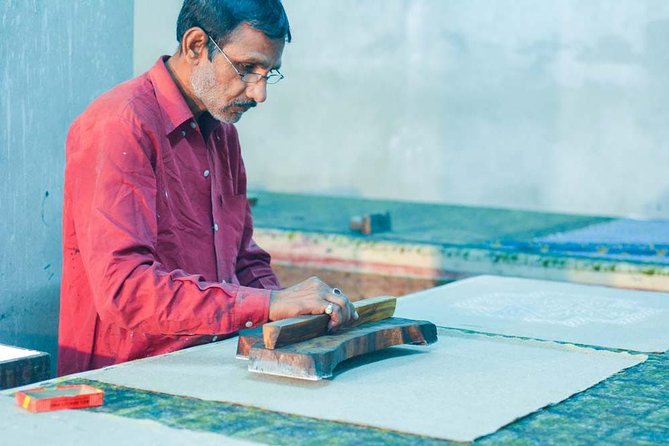
- Hands-on printing with wooden blocks using carved stamps, not pre-printed fabric.
- Sanganeri-inspired design options plus choices that help you build your own layout.
- A studio next to a small factory, so you can see how professionals work while you learn.
Hands dyed indigo: more Jaipur craft to try
- Private Jaipur Full-Day Tour with Block Printing
★ 5.0 · 206 reviews - Learn Hand Block Printing Techniques & Print Your Own Fabric
★ 5.0 · 95 reviews - Jaipur: Block Printing Workshop and Hands-on Experience
★ 5.0 · 78 reviews - Hands-on Block Printing Workshop
★ 5.0 · 76 reviews
Block printing in Rajasthan: why this workshop is more than a craft stop
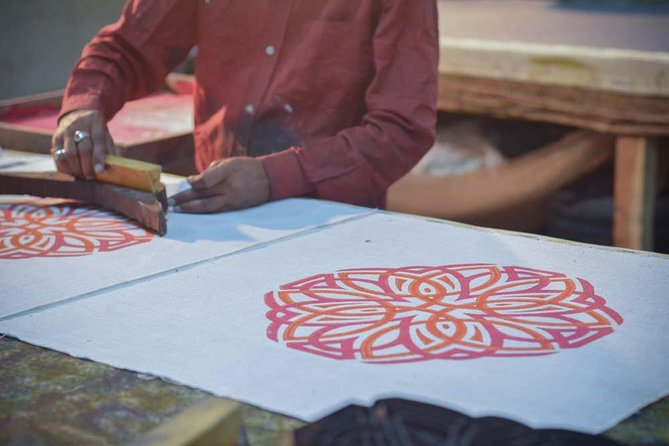
If you want one of those experiences that feels like you stepped into everyday culture instead of ticking a sightseeing box, block printing is a strong pick. The workshop focuses on the practical mechanics: how designs are built, how pigments behave, and how pressure and alignment matter when you’re stamping with carved wooden blocks.
What makes it especially satisfying is that you end up with something you can actually wear or wrap. You are not just making a souvenir you will forget in a drawer. You get a Pico stitch scarf or sarong, and you watch your pattern appear through your own repeated work.
Also, the vibe tends to be calm. People describe it as meditative and rhythmic, which makes sense: once you choose a motif and colors, the process becomes a steady loop of stamp, print, adjust, repeat. You still get guidance, but you’re not being constantly talked at.
And because it’s taught in a small group (up to 10), the instructor can correct issues early, like when your block needs re-inking or your alignment needs a quick reset. That matters more than you’d think, because block printing rewards small corrections.
Entering the craft: what you learn in the first minutes
The workshop starts with an intro to block printing and why it matters in the region. You get the cultural context and the basic tools and materials, so the craft doesn’t feel like random craft-class activity. It’s explained in a way that helps you understand what you are doing, not just copy what you’re shown.
Then you move into the “how it’s designed” part. You’re introduced to three design categories that help explain why Sanganeri-style patterns look the way they do:
- Gad (Ground)
- Rekh (Outline)
- Datte (Filler)
This is more than trivia. When you know that some elements act like the foundation, some create the main lines, and some fill the spaces, you can plan your own printing sequence with more confidence.
You also learn about the materials you’ll use: carved wooden blocks, pigments, and the fabric you’ll print on. Since the pigments are water-based, you’re working in a more controlled, classroom-friendly way than some other textile dye methods. Still, you’ll want to treat it like you’re doing messy work with purpose.
The wooden blocks: your stamps, your patience test
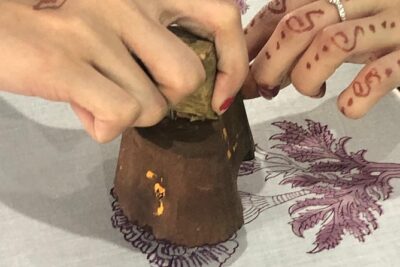
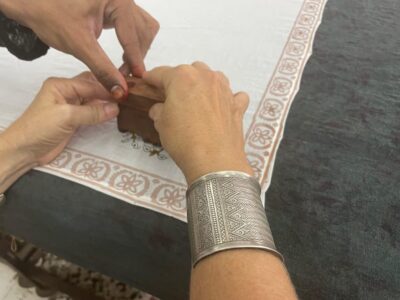
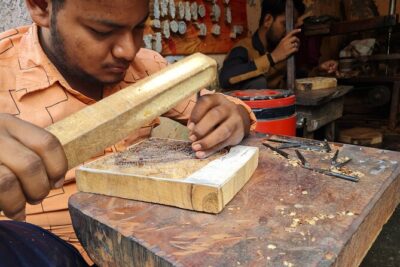
The core of the workshop is printing with wooden blocks you actually handle. That sounds simple, but it’s where you learn the real discipline of block printing: even with good instructions, your prints depend on consistent inking and steady placement.
Here’s the part I think most people underestimate. It’s not just about liking the design. You have to coordinate three things at once:
- ink or pigment coverage on the block
- the pressure you apply
- where you place the stamp on the fabric
That’s why having a patient instructor matters. In this class, instructors such as Mohit and Vivek guide you through the process, and Aftab is described as especially patient when fixing mistakes. That kind of hands-on help can save you from spending the whole session fighting alignment.
Also, the studio setup helps. People note it’s organized and supportive, which makes a difference when you’re working with carved edges and fine lines. You’re not left to figure it out alone, but you also aren’t doing everything for you.
Planning your pattern: Sanganeri-inspired choices you can make your own
Once the basics are clear, you get to choose your pattern and colors. The designs are inspired by Sanganeri prints, which is a well-known style connected to block printing traditions. You’ll work from a range of intricate options, and you can build something that looks intentional rather than accidental.
What I like about having choice here is that it turns the class into personal creativity. You can lean into one strong motif and repeat it, or you can choose an all-over design feel. Either way, you’re making decisions that affect the final look.
The workshop also teaches layering. In plain terms, layering means you don’t just print one flat image. You stack design elements, often using different blocks and colors, to build up pattern density and movement.
If your booking includes access to a signature fabric collection, you may also have more fabric options to choose from. If it doesn’t, you still get the fabric the workshop uses for your project, and you can still make a distinct result through your motif and color choices.
A shortlist worth scanning before you book:
Layering and printing techniques: how patterns actually get made
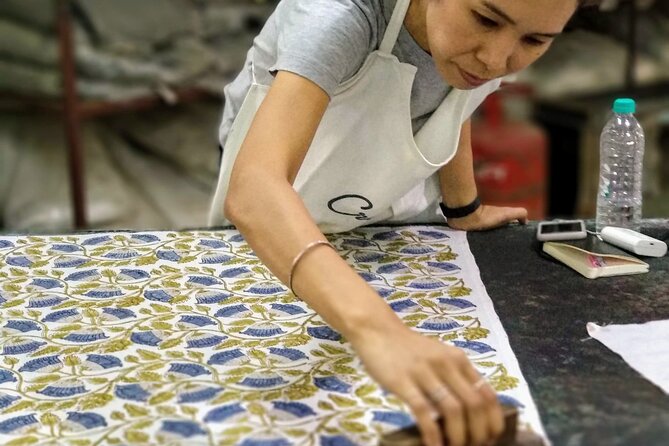
This is where the class becomes more than a stamping exercise. You’re taught to layer a motive design or create an all-over design using water-based pigments. That sounds technical, but it’s presented in a way that you can apply quickly.
You’ll practice:
- layering a motive (a focal repeat that creates the main rhythm)
- printing an all-over pattern (more consistent coverage across the fabric)
- mixing and matching colors to create dynamic effects
People often think color mixing is just picking shades you like. In block printing, it’s also about contrast. Outline elements (Rekh) need to show up clearly, ground elements (Gad) set the fill tone, and filler elements (Datte) add spacing, texture, and detail.
As you print, you’ll start to notice how small changes matter:
- a lighter pigment can make an outline feel sharper
- a darker ground can make filler shapes pop
- repeating the same placement helps the whole pattern look balanced
Even if your first few stamps aren’t perfect, the instruction and gentle correction help you adjust without losing momentum.
The take-home moment: Pico stitch scarf or sarong you made
The included result is a Pico stitch scarf or sarong. That matters because it frames the workshop as a finished-output class, not a raw materials demo.
A scarf or sarong is also a practical format for block printing. You can wear it, wrap it, and show the pattern off in real life. If you’re planning outfits around your trip, this is one of the easiest souvenir types to use instantly.
Also, the act of making something wearable tends to stick with you. People describe a sense of satisfaction because you can trace the craft logic: you understand why the pattern looks the way it does. That is a better souvenir than just buying a printed textile, because you’ve lived the process.
And if you’re thinking about gifting, a handmade wearable piece feels personal fast. You’re not just giving something pretty. You can explain what each layer did and why you picked your colors.
Studio logistics that affect your comfort (and your results)
This is a two-hour workshop in Rajasthan, designed as a small-group activity limited to 10 participants. With that group size, you can ask questions and get help without waiting for a long turn.
Languages are English and Hindi. If you only speak one of those, you’re still likely to be able to follow what’s happening. Having instructors who can switch languages is a real comfort, especially when you’re trying to describe what feels wrong with your stamp placement.
The workshop includes all necessary materials: the wooden blocks, pigments, and fabric. That means you don’t have to source anything before you arrive.
What you should bring is simple: comfortable clothing suitable for a hands-on workshop. Because you’re working with pigments, I’d treat this as a chance to wear something you can handle getting a little color on it, even if the process is controlled.
Price and value: why $24 can make sense here
At $24 per person for a two-hour class, this is priced like an experience, not just a craft demo. The value comes from three things you cannot replicate easily on your own:
- Expert, hands-on guidance while you print with carved blocks
- Materials supplied (blocks, pigments, fabric)
- A take-home Pico stitch wearable piece
If you’ve ever bought handmade textiles in India, you know the pricing can be high, especially for pieces that look detailed and labor-intensive. Even if you cannot compare exact market prices here, you can compare outcomes. For this money, you’re not only learning. You’re producing.
Also, the presence of production nearby adds value in a subtle way. People note the studio is next to a small factory where you can watch pros work. That makes the workshop feel connected to real production, not just a staged teaching moment.
In short: you’re paying for instruction plus output. That’s usually where these classes feel worth it.
Who this workshop suits best
This workshop is a great fit if you want:
- a creative activity that still feels culturally grounded
- a wearable item you can use after the class
- a calm, focused session where you learn a repeatable craft method
It’s also a strong option for solo travelers because the class format pushes interaction naturally. Small groups make it easy to chat, but the work stays central, so you’re not stuck awkwardly waiting for other people to catch up.
If you’re the kind of traveler who likes to see how things are made, the nearby factory viewing helps connect the dots. You get to understand what artisan work looks like when it’s happening in the same general area.
Should you book this Rajasthan block printing workshop?
You should book if you want a short, hands-on creative experience with a clear craft structure, a small group, and a take-home result you’ll actually wear. I’d especially recommend it if you enjoy slow, repetitive making and you’re curious about the logic behind pattern design.
You might skip it if you’re looking for a long, deep production immersion or if you want a class that turns into a full master-level practice session. Two hours moves fast. But for most people, that timing is the point: learn enough to create a solid wearable piece and walk away with real respect for the craft.
FAQ
How long is the hands-on block printing workshop?
The workshop duration is 2 hours.
How much does the workshop cost?
The price is $24 per person.
What will I make and take home?
You’ll make a Pico stitch scarf or sarong, and that finished item is included.
Where is this experience located?
It takes place in Rajasthan, India.
Is the workshop hands-on, or is it mostly watching?
It’s hands-on. You practice printing with wooden blocks and experiment with colors and layering to create your own piece.
What design options will I have?
You can choose from a range of intricate designs inspired by Sanganeri prints, and you’ll also have signature fabric collection options depending on your booking.
What languages are spoken during the class?
The instructor supports English and Hindi.
How large is the group?
The group is limited to 10 participants.
What should I bring?
Wear comfortable clothing suitable for a hands-on workshop.
What is the cancellation policy?
You can cancel up to 24 hours in advance for a full refund.
Make a Little Rajasthan to Take Home
- Pink City Cooking Class★ 5.0 · 452 reviews
- Jaipur Market Tour & Vegetarian Rajasthani Home Cooking Class★ 5.0 · 113 reviews
- Cooking Class in Jaipur – Family Experience with Meal & Transport★ 5.0 · 101 reviews
- Interactive Cooking Class with a Local Family in Jaipur★ 5.0 · 90 reviews
- Jaipur: Block Printing Workshop and Hands-on Experience★ 5.0 · 78 reviews
- Hands-on Block Printing Workshop★ 5.0 · 76 reviews
More Jaipur Tours to Compare
- Jaipur: Private Full Day Sightseeing Tour By Car with Guide★ 4.9 · 1,839 reviews
- 3-Hour Morning Bike Tour of Jaipur★ 5.0 · 1,253 reviews
- Jaipur: Private Sightseeing Day Tour with Guide by Car★ 4.8 · 773 reviews
- Jaipur: Full-Day City Tour with Car, Guide & Skip-the-Line★ 4.8 · 512 reviews
- Full-Day Jaipur Private Sightseeing Tour by Car with Guide★ 5.0 · 472 reviews
- Pink City Cooking Class★ 5.0 · 452 reviews
Block, Dye and Print: More Craft
- Private Jaipur Full-Day Tour with Block Printing★ 5.0 · 206 reviews
- Learn Hand Block Printing Techniques & Print Your Own Fabric★ 5.0 · 95 reviews
- Jaipur: Block Printing Workshop and Hands-on Experience★ 5.0 · 78 reviews
- Hands-on Block Printing Workshop★ 5.0 · 76 reviews
- Block Printing & Village Stories: Discover Bagru’s Craft Legacy★ 5.0 · 42 reviews
- Block Printing Workshop in Jaipur! (including lunch)★ 5.0 · 34 reviews
Newly Added Jaipur Reviews


More from Jaipur Block Printing & Crafts.
 ★ 5.0Private Jaipur Full-Day Tour with Block PrintingFrom $13206 reviews
 ★ 5.0Learn Hand Block Printing Techniques & Print Your Own FabricFrom $3595 reviews
 ★ 5.0Block Printing Workshop and Hands-on ExperienceFrom $3578 reviews
 ★ 5.0Hands-on Block Printing WorkshopFrom $2576 reviews
 ★ 5.0Block Printing & Village Stories: Discover Bagru’s Craft LegacyFrom $5842 reviews
 ★ 5.0Block Printing Workshop in Jaipur! (including lunch)From $5634 reviews
 ★ 4.5Wheel Pottery WorkshopFrom $3019 reviews
 ★ 5.0Print your own fabricFrom $3612 reviews
This tour also appears in