
Reviewed · JAIPUR TUK-TUK TOURS
Private Tuk-Tuk Tour of Jaipur with Guide
Jaipur by tuk-tuk is a very smart way to see the big names fast, without feeling rushed. I love the private setup for up to three people, and I love that hotel pickup and drop-off keeps your day simple. You’ll also get a licensed guide who can explain what you’re seeing across Jaipur’s royal sights and astronomy monuments, with language choices including English, French, and German.
The main thing to plan for is extra cost at the gate: the combined monument entry fees are not included in the price, and that can change your total depending on what you want to enter fully.
In This Review
- Key things to know before you ride
- Why a private tuk-tuk is ideal for Jaipur’s must-sees
- Price math: $8.99 per group plus the real monument total
- How the 8-hour day actually feels (pickup, pacing, and timing)
- Hawa Mahal: the Palace of Breeze, best for quick context and photos
- Jantar Mantar: Jaipur’s giant instruments for time, stars, and shadow tricks
- City Palace: royal residence, museum-style viewing, and the layers you can spot
- Jal Mahal: quick water-palace views and a photo-friendly pause
- Royal Gaitor Tumbas: the 18th-century carvings you might not expect
- Amer: the hilltop fort-and-palace stop that anchors the day
- Panna Meena ka Kund: stepwell geometry you can actually count
- Jaipur crafts and the art scene your guide can point out
- Who this tour suits best (and who should consider alternatives)
- Should you book this Jaipur private tuk-tuk day?
- FAQ
- How long is the private tuk-tuk tour of Jaipur?
- Is this tour private, and how many people can join?
- What’s included in the price?
- Are monument entrance fees included?
- Which languages are available for the guide?
- What are the main stops on the itinerary?
- What is the cancellation policy?
Key things to know before you ride
- Private tuk-tuk for up to 3 people means a flexible pace and no waiting around for other groups.
- 8 hours total gives you time for both the royal center and the Amer area.
- Fuel, parking, and GST included makes the “all-in” part easier to budget.
- Mobile ticket + bottled water helps you start smoothly and stay comfortable.
- Some stops are short (like the 15-minute Jal Mahal pause), so set your expectations for quick looks.
- Entrance fees are extra for several top sights, even though some stops are free.
Buzz the Pink City by auto, more routes
- Private Full Day Jaipur Sightseeing Tour By Tuk Tuk
★ 5.0 · 382 reviews - Jaipur: Full-Day Private Sightseeing Tour by Tuk Tuk
★ 4.9 · 166 reviews - Jaipur Sightseeing by Tuk-Tuk
★ 5.0 · 145 reviews - Jaipur Tuk-Tuk Tour with Flower Market Visit
★ 5.0 · 124 reviews
Why a private tuk-tuk is ideal for Jaipur’s must-sees

Jaipur spreads out more than you expect. A tuk-tuk day solves the main travel headache: you don’t have to constantly figure out transport, timing, or how to chain sights together. With a private vehicle and a guide working to your rhythm, you can keep the day moving while still having actual time at the places that matter.
This tour also makes a good choice if you care about context. You’re not just snapping photos of Hawa Mahal, Jantar Mantar, and City Palace. A guide can connect the dots between royal life, astronomy, and how Jaipur’s city plan grew. And from the vibe of the reviews, the guide-driver team tends to handle the practical parts—where to stand, when to walk, and how to keep you moving at a comfortable pace.
Price math: $8.99 per group plus the real monument total
Here’s how the money works, straight and simple.
You pay $8.99 per group (up to 3). That group price includes fuel surcharge, parking fees, and GST, plus the essentials like bottled water and pickup/drop-off. So the vehicle day is covered.
What isn’t covered is entrances. The tour lists a combined entry fee of about $25 per person for Jaipur’s popular monuments, and tips and food are also extra. Some stops are marked free in the route (like Jal Mahal, Amer, and Panna Meena ka Kund), but several of the big-ticket sights are still paid.
If you’re traveling as a couple or small group, the group pricing is the real value. Compare that to hiring separate transport or paying for an all-day private car where the base price is much higher. The day’s cost advantage is that you’re buying one vehicle experience with a guide, not a buffet of separate tickets and add-ons.
How the 8-hour day actually feels (pickup, pacing, and timing)
This is an 8-hour full-day tour with hotel/airport/railway station pickup and drop-off, and it runs on a schedule that’s designed to cover multiple areas in one go. It’s also a private experience, so you’re not stuck behind a line of strangers or squeezed into someone else’s itinerary.
A couple of practical things to keep in mind:
- Some stops are planned for deeper time (like City Palace at 2 hours and Amer at about 2 hours).
- Others are intentionally quick looks (like Jal Mahal at 15 minutes and Panna Meena ka Kund at 30 minutes).
- The tour requires good weather, and if it’s canceled for weather reasons, you should be offered a different date or a full refund.
If you hate rushing, treat the “short” stops as photo and orientation stops, not museum-length visits. If you like ticking off major sights efficiently, this pacing fits well.
Hawa Mahal: the Palace of Breeze, best for quick context and photos
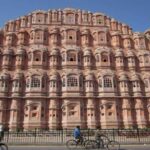
The day starts with Hawa Mahal (Palace of Breeze). This is Jaipur’s most famous landmark, built under Sawai Pratap Singh, and it was designed so the royal household could watch daily city life from behind the windows. Even if you only spend about an hour here, the story matters: this isn’t just a pretty facade, it’s a design for visibility and privacy at the same time.
What I like about this stop on a tuk-tuk itinerary is that it gives you a fast cultural anchor. Once you’ve seen Hawa Mahal, the rest of Jaipur starts to make more sense—royal power, city layout, and the way architecture served everyday needs.
Possible drawback: the time is tight (about 1 hour), and entrance isn’t included. So if you want to go inside extensively, build extra time mentally and plan for the monument fee.
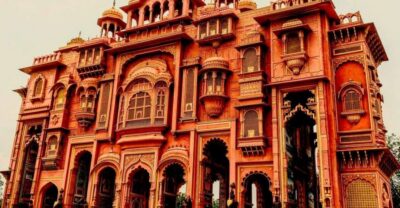
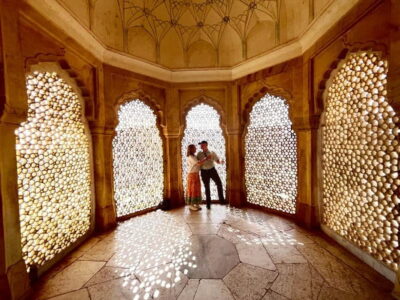
Jantar Mantar: Jaipur’s giant instruments for time, stars, and shadow tricks
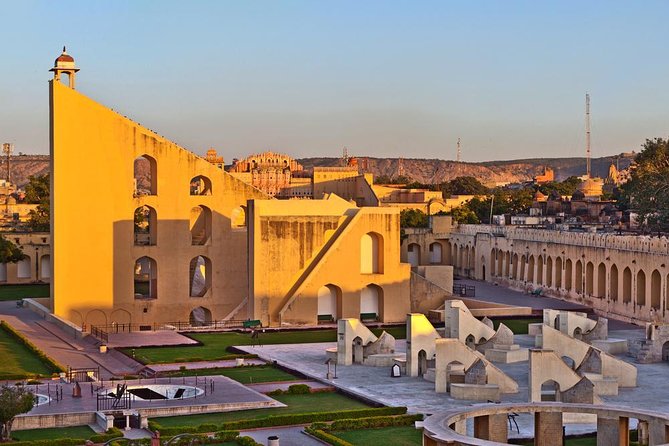
Next up is Jantar Mantar, the collection of nineteen astronomical instruments built under Sawai Jai Singh. This site is famous for the large stone sundial, and it’s UNESCO World Heritage–listed (the tour description flags the UNESCO status).
One hour is enough to do a meaningful sweep if you have a guide who can explain how the instruments work. This isn’t astronomy like modern classrooms. It’s a practical science built from stone geometry—measuring time and celestial movement by tracking shadows and angles.
What you should expect: you’ll walk around, look up, and watch for reference points. If you’re the type who loves technical details, you’ll enjoy how the guide turns “cool rocks” into an actual system.
Drawback: like many top sites, it can feel busy. Also, admission isn’t included, so confirm how much of Jantar Mantar you’ll be able to cover without stressing about the fee.
City Palace: royal residence, museum-style viewing, and the layers you can spot
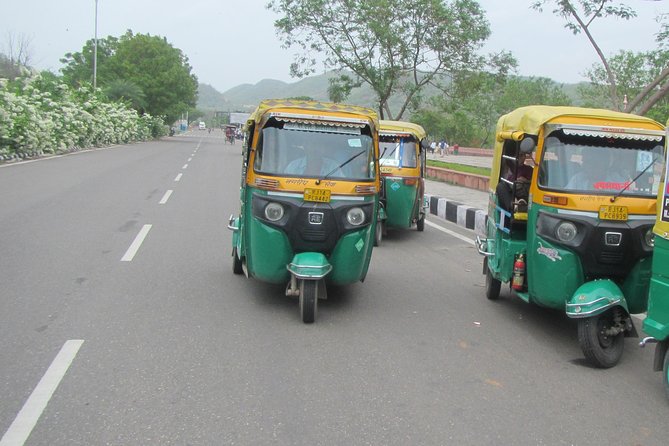
Then you’ll head to City Palace, tied to Maharaja Jai Singh. The palace complex is part royal residence in the past and now part historical site, and it also connects to the broader Jaipur story—especially the way power and planning were tied to culture and learning.
The tour gives you about 2 hours here, which is the right amount for a palace stop. You need time to slow down and actually look—not just at the big highlights, but at the details that show how the royal family lived.
Value for your day: City Palace turns the tour from sightseeing into understanding. After Hawa Mahal’s exterior drama and Jantar Mantar’s science tools, City Palace is where you see the administrative and lifestyle side of Jaipur’s royal world.
Consideration: entrance fees apply here too (admission ticket not included). If you want to enjoy the museum-like areas without feeling pressured, don’t pack this day with extra optional activities before you arrive.
Jal Mahal: quick water-palace views and a photo-friendly pause
Jal Mahal is the “blink and you’ll miss it” stop. It’s the water palace sitting in Man Sagar Lake, and it’s free in the route with about 15 minutes set aside. The structure is a classic example of Rajput design adapted to a landscape of water and reflection.
I like having a short break like this in the middle of a long day. It resets your eyes. Also, it’s one of those places where the view does a lot of the work even if you don’t spend a lot of time walking.
The trade-off is obvious: it’s short, and if you love spending hours at one place, you might wish this were longer. But for a full-day “best of Jaipur” tour, this is a logical pacing choice.
Royal Gaitor Tumbas: the 18th-century carvings you might not expect
Royal Gaitor Tumbas is next, with about 45 minutes. This is a historical complex built in the 18th century, known for intricate carvings, plus temples dedicated to different figures within the complex.
This stop is valuable because it changes the tone. If your day is only palaces and instruments, you miss one of the ways Jaipur represents royalty: through memorial structures and temple spaces that aren’t as famous as Hawa Mahal. The carvings can reward slower looking, and a guide helps you connect what you see to why it was made.
Consideration: it’s not labeled as a free stop, so you’ll want to account for the monument fee structure if you plan to enter fully. Also, because it’s not the biggest name on the route, you’ll get more out of it if you’re open to a less obvious side of the city.
Amer: the hilltop fort-and-palace stop that anchors the day
Now we shift to Amer, about 11 km from Jaipur. The tour frames Amer as the place famous for a grand fort and palace, set atop rugged hills and showing a fusion of Hindu and Muslim architecture. That mix is a huge part of what makes the Amer area visually compelling.
The tour gives you about 2 hours here. That time is important because Amer isn’t just one building—it’s an area. Even if you focus on the top sights, you’ll need room to walk and take in the scale and views.
Why it works: the tuk-tuk model helps you get to Amer without turning your day into a transport puzzle. And once you arrive, Amer is a “wow” moment that justifies the effort of seeing the other royal and science sights first.
One note from the route planning: Amer is marked free in the itinerary, which helps keep the day’s added-cost pressure lower than it would be otherwise. Still, you’ll want to pay attention to how much you can access without additional paid entry areas.
Panna Meena ka Kund: stepwell geometry you can actually count
The day’s stepwell stop is Panna Meena ka Kund. This is described as a 16th-century architectural marvel: an eight-story stepwell about 200 feet deep with 1,800 symmetrical steps. That’s the kind of detail that turns a quick stop into something memorable because you can visualize the scale while you’re standing there.
You’ll spend around 30 minutes, and it’s marked free, which makes it an easy win in the itinerary.
What’s special here is the function behind the form. A stepwell wasn’t just a photo spot. It was a community resource and a solution to water storage—so the architecture makes sense, even if you’re not an architecture nerd.
A practical consideration: because it’s a deep structure, wear shoes you’re comfortable walking in, and be mindful of how crowded it might feel depending on the time of day.
Jaipur crafts and the art scene your guide can point out
One theme from the reviews is that the tour isn’t only about monuments. You’ll have a chance to explore Jaipur’s specialties around Indian art, textile, rugs, and gems. The exact way that shows up can vary by guide and how your day is paced, but the key idea is that your guide can help you look at what you’re seeing with better context—so you’re not just buying on impulse or ignoring local craftsmanship.
If you enjoy shopping with your eyes open, this is a good part of a Jaipur day to use with a guide in your ear. Ask smart questions. Look for materials and weave quality, not just brand names. If you’re not shopping, it’s still useful because it helps you understand what you’re seeing in markets and workshops.
Who this tour suits best (and who should consider alternatives)
This tour is a great fit if you want:
- a full-day overview of Jaipur with minimal logistics
- a private experience for a small group (up to three)
- a route that hits Hawa Mahal, Jantar Mantar, City Palace, Amer, plus extra stops like Jal Mahal and Panna Meena ka Kund
- a guide who helps turn sights into context, not just checkboxes
You might consider a different approach if:
- you prefer long museum-style visits at one or two places
- you hate paying separate entrance fees at multiple stops
- you plan to spend lots of time shopping as a main activity, since this itinerary prioritizes seeing the major sights
Should you book this Jaipur private tuk-tuk day?
If you want an efficient, guided day that covers Jaipur’s biggest hits without the hassle of piecing transport together, I’d say yes. The value is strongest for small groups because the group price includes the vehicle day costs (fuel, parking, GST) and the tour is built around a logical route.
Just go in with two expectations set: plan for the combined monument entry fee around $25 per person, and don’t treat the short stops as deep dives. If you can accept that trade-off, you’ll come away with a strong sense of Jaipur—its royal landmarks, its astronomy roots, and its craft culture—without burning your whole day on transit.
FAQ
How long is the private tuk-tuk tour of Jaipur?
It’s listed as about 8 hours.
Is this tour private, and how many people can join?
It’s a private tour, and the price is for a group of up to 3.
What’s included in the price?
Included items are hotel/airport/railway station pickup and drop-off, a private tuk-tuk, bottled water, and fuel, parking, and all other charges.
Are monument entrance fees included?
No. Entrance fees are listed as not included, with a combined entry fee of about $25 per person for Jaipur’s popular tourist monuments.
Which languages are available for the guide?
You can choose an English, French, or German speaking driver and guide.
What are the main stops on the itinerary?
The route includes Hawa Mahal, Jantar Mantar, City Palace, Jal Mahal, Royal Gaitor Tumbas, Amer, and Panna Meena ka Kund.
What is the cancellation policy?
You can cancel for a full refund up to 24 hours in advance. It also notes that the experience requires good weather, and if canceled due to poor weather, you’ll be offered a different date or a full refund.
More Jaipur Tours to Compare
- Jaipur: Private Full Day Sightseeing Tour By Car with Guide★ 4.9 · 1,839 reviews
- 3-Hour Morning Bike Tour of Jaipur★ 5.0 · 1,253 reviews
- Jaipur: Private Sightseeing Day Tour with Guide by Car★ 4.8 · 773 reviews
- Jaipur: Full-Day City Tour with Car, Guide & Skip-the-Line★ 4.8 · 512 reviews
- Full-Day Jaipur Private Sightseeing Tour by Car with Guide★ 5.0 · 472 reviews
- Pink City Cooking Class★ 5.0 · 452 reviews
Around the Pink City by Auto
- Private Full Day Jaipur Sightseeing Tour By Tuk Tuk★ 5.0 · 382 reviews
- Jaipur: Full-Day Private Sightseeing Tour by Tuk Tuk★ 4.9 · 166 reviews
- Jaipur Sightseeing by Tuk-Tuk★ 5.0 · 145 reviews
- Jaipur Tuk-Tuk Tour with Flower Market Visit★ 5.0 · 124 reviews
- Jaipur Tour by Tuk-Tuk or Car with Flower Market★ 5.0 · 120 reviews
- Jaipur Sightseeing Tuk-Tuk Tour★ 5.0 · 117 reviews
Newly Added Jaipur Reviews


More from Jaipur Tuk-Tuk Tours.
 ★ 5.0Private Full Day Jaipur Sightseeing Tour By Tuk TukFrom $5382 reviews
 ★ 4.9Full-Day Private Sightseeing Tour by Tuk TukFrom $9166 reviews
 ★ 5.0Jaipur Sightseeing by Tuk-TukFrom $4145 reviews
 ★ 5.0Jaipur Tuk-Tuk Tour with Flower Market VisitFrom $6124 reviews
 ★ 5.0Jaipur Tour by Tuk-Tuk or Car with Flower MarketFrom $6120 reviews
 ★ 5.0Jaipur Sightseeing Tuk-Tuk TourFrom $5117 reviews
 ★ 5.0Private Full Day Jaipur Tour by Tuk-TukFrom $6116 reviews
 ★ 5.0Jaipur Tuk Tuk Sightseeing Tour with Monkey Temple Sunset ViewFrom $7108 reviews
This tour also appears in