
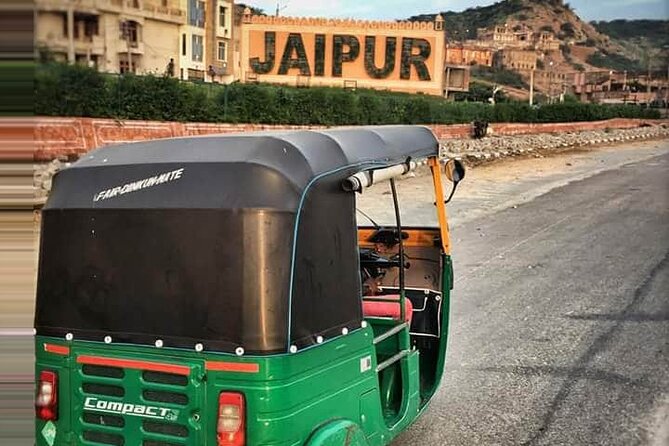
Reviewed · JAIPUR TUK-TUK TOURS
Jaipur Sightseeing by Tuk-Tuk
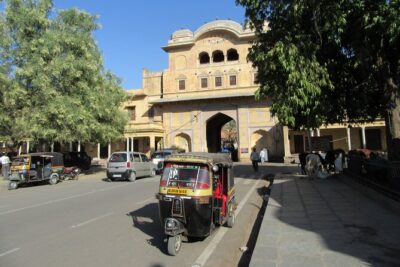
A tuk-tuk makes Jaipur feel close. You get a full-day loop through the city’s headline sights in a small, friendly autorickshaw style setup—so the streets, colors, and storytelling feel immediate. The best part is the private, customizable day plan, built around what you want to see and how long you want at each stop.
I love the hotel pickup and drop-off because it removes most of the hassle of one-day sightseeing. I also like the way the drivers guide the pacing—people I spoke with during the trip described guides such as Khalif, Vinod, Aadil, Nawab Khan, and Shrif offering options at the sites and helping them pick what’s worth extra time, plus keeping the day safe and organized.
One thing to plan for: entry fees and meals cost extra, so the true budget depends on which museums/palaces you choose to go inside (Hawa Mahal, Jantar Mantar, Albert Hall, and parts of City Palace).
In This Review
- Key things to know before you ride
- Why Jaipur on a tuk-tuk beats a big-vehicle day
- Getting around: hotel pickup, timing, and staying efficient
- Amer: the big hill fort stop that anchors the day
- Jal Mahal: a quick stop with a smart payoff
- Royal Gaitor Tumbas: carved stone outside the usual path
- Hawa Mahal: where the pink facade turns into a photo mission
- City Palace: choose your level of entry and don’t rush the Blue Room decision
- Jantar Mantar: the observatory stop that rewards curiosity
- Albert Hall Museum: one ticket, one calmer pace
- Price and value reality check: what you’re actually buying
- How to get the best day: ask your driver the right questions
- Should you book this tuk-tuk Jaipur tour?
- FAQ
- How long is the Jaipur sightseeing tour by tuk-tuk?
- Is hotel pickup and drop-off included?
- What’s included in the tour price?
- What is not included?
- How much are the main entrance fees?
- Is this tour private or shared?
- Do I need to book far in advance?
- What weather conditions does the tour require?
- Is free cancellation available?
- Is the tour suitable for most people?
Key things to know before you ride
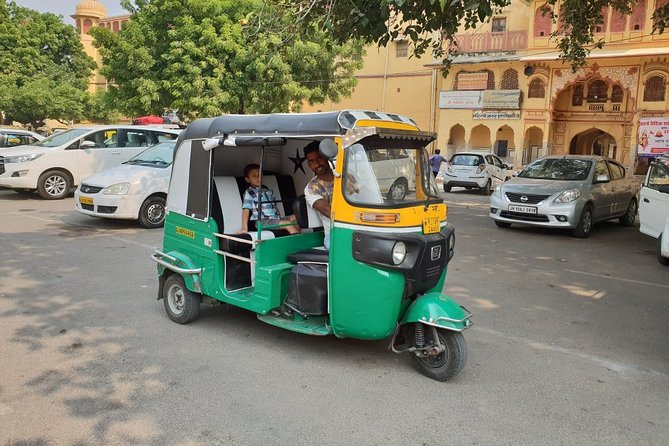
- Private tuk-tuk with hotel transfers saves time and keeps you near the action.
- Drivers tailor the pace and can adjust choices as you go.
- Parking, tolls, and fuel are included, which helps the day run smoothly.
- Entry fees are extra for Hawa Mahal, Jantar Mantar, Albert Hall, City Palace (Blue Room excluded), plus Jaipur Fort/Royal Gaitor.
- Aim for an early start to fit more views in a single day.
Buzz the Pink City by auto, more routes
- Private Full Day Jaipur Sightseeing Tour By Tuk Tuk
★ 5.0 · 382 reviews - Jaipur: Full-Day Private Sightseeing Tour by Tuk Tuk
★ 4.9 · 166 reviews - Jaipur Sightseeing by Tuk-Tuk
★ 5.0 · 145 reviews - Jaipur Tuk-Tuk Tour with Flower Market Visit
★ 5.0 · 124 reviews
Why Jaipur on a tuk-tuk beats a big-vehicle day

There’s a reason a tuk-tuk sightseeing day feels different. You’re lower to the street, closer to the daily motion of Jaipur, and you tend to notice details that disappear when you’re stuck behind glass in a car. It’s also a practical sweet spot: you cover major sights without the stamina drain of long walks between them.
This kind of private tour also changes the vibe. You’re not stuck with a one-size-fits-all group rhythm. Guides can steer you toward the most meaningful photo angles, suggest when to move on, and help you prioritize if your schedule is tight. People like Khalif, Aadil, and Vinod stood out for offering options at each stop—so you can choose between quick looks and slower, more careful exploring.
The other big benefit is logistics. The day includes hotel pickup and drop-off, and the cost covers fuel plus parking and road tolls. That means you spend less time thinking about how to get around and more time seeing Jaipur.
Getting around: hotel pickup, timing, and staying efficient
You’ll start with pickup from your hotel, then you’re dropped back at the end of the day. The tour runs about 8 to 9 hours, and in practice that can mean a full, packed sightseeing block—one visitor even noted a start around 08:30 and finishing near 16:30.
That timing detail matters in Jaipur. Most of the major sights are spread across different parts of the city and its hills, so your day is only as good as the order you visit and how quickly you can reposition. With a tuk-tuk, your guide can keep things moving while still giving you time to pause, take photos, and go inside where you want.
Also, think of this as a driver-day, not just a vehicle rental. Multiple people highlighted how their drivers were punctual and careful about dropping them right at the gates—so you’re not wandering around trying to find the entrance on your own.
Amer: the big hill fort stop that anchors the day
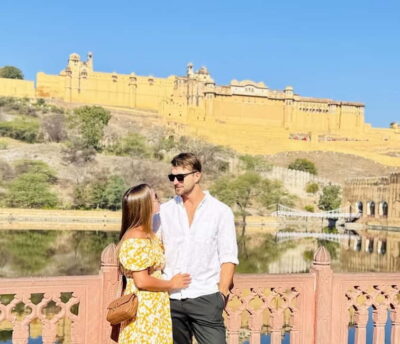
Your first major stop is Amer (Amber Fort), perched up on a hill around 11 km from the main city. Amer is one of Jaipur’s top attractions for a reason: it mixes monumental scale with intricate details, and it looks even more impressive once you’ve seen how the fort dominates the surrounding area.
In this tour plan, you get roughly 2 hours at Amer. That’s a good window if you want to browse at a comfortable pace. If you’re rushing, you can still hit key photo points and walk enough corridors to feel the place. If you like slower exploring, use that time to look closely at textures and ornamentation rather than trying to check every room.
Budget note: the overall tour includes transport and time, but entrance fees are listed as extra (including Jaipur Fort). I’d bring cash and a card you can use onsite, then decide on the fly how much you want to pay for entry versus viewpoint-only time.
Jal Mahal: a quick stop with a smart payoff
Next up is Jal Mahal, the Water Palace sitting in the middle of Man Sagar Lake. You’re not spending hours here. The value is the moment: the palace shape is eye-catching, and it gives your day a break from forts and city monuments.
Plan to treat this as a photo-and-scan stop. Think of it as a visual pause that helps you reset before you head toward the more crowded, ticketed landmarks. Even if you keep it short, it’s the kind of scene that sticks because it’s so different from the rest of Jaipur’s architecture.
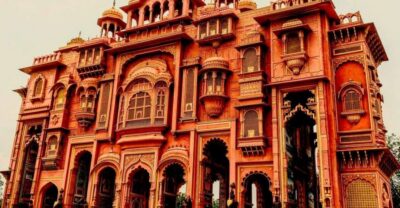
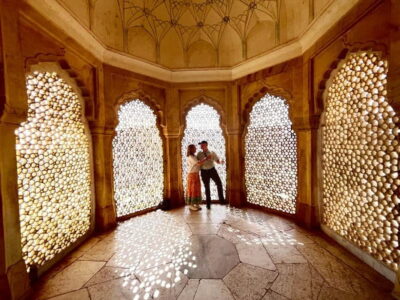
The big Jaipur hits, gathered in one run
Royal Gaitor Tumbas: carved stone outside the usual path
Then you’ll visit Royal Gaitor Tumbas, the royal crematory area outside Jaipur’s walls beneath Nahargarh. This stop can feel surprisingly calm compared with the biggest ticket lines elsewhere. The monuments are carved, stone-heavy, and atmospheric—especially if you like architecture and details.
The time you get here is about 30 minutes. That’s enough for a careful look without eating up too much of your day. If you’re the type who can enjoy smaller sites, this stop is a strong “quiet contrast” between Amer and the more famous city icons.
As with Amer, entrance fees are listed as extra for the Jaipur Fort and Royal Gaitor area. If you want to go all-in here, budget for it. If you just want the feel and some photos, you can keep your spend lower.
Hawa Mahal: where the pink facade turns into a photo mission
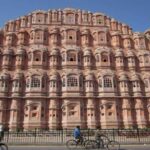
Hawa Mahal, the Palace of Breeze, is Jaipur’s most recognizable landmark. It rises like a honeycombed façade with multiple stories of small windows, and it’s the kind of building that looks good from almost any angle.
You’ll spend about 1 hour here. That’s useful because you can do two things without stress: see the exterior closely, then spend time where your photos and your questions match what you care about (for example, focusing on symmetry, window rows, and how the façade changes with the light).
Entrance is not included in the tour price, and the listed ticket for Hawa Mahal is $9.00 per person. If you’re trying to keep costs down, you can still enjoy the exterior without entering, but if you want the full experience, plan for the ticket.
City Palace: choose your level of entry and don’t rush the Blue Room decision
The City Palace stop is where you get a more complete sense of Jaipur as a royal seat. The tour time here is about 2 hours, which is generous. It lets you see both the big-picture palace setting and the smaller details if you pace yourself.
Here’s the key cost detail: entry to City Palace is $12.00 per person, excluding the Blue Room. So you’re not just deciding whether to enter—you’re deciding what you want from the experience. If you’re especially interested in palace rooms, plan around the additional access rules and costs.
A nice strategy: use the first part of your City Palace time for orientation—courtyards, main viewpoints, and how the complex is laid out—then decide whether the inside areas are worth the extra ticketing for the way you like to travel.
Jantar Mantar: the observatory stop that rewards curiosity
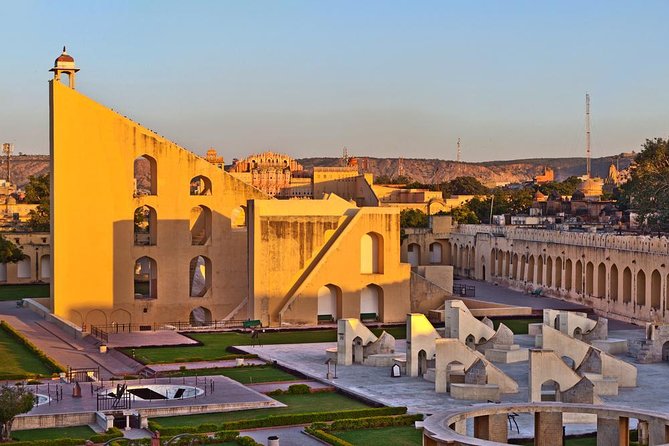
Jantar Mantar is an astronomical observatory built in 1724 under Maharaja Jai Singh. It can look abstract at first glance, but once you understand the purpose—measuring and recording celestial data—it clicks.
You’ll have about 1 hour at Jantar Mantar. That’s enough time to walk the key instruments and take photos without feeling stuck. If you’re not into technical explanations, you can still enjoy the scale and design. If you are curious, your guide can help you focus on what the structures were built to do.
Entrance for Jantar Mantar is not included, and the listed ticket is $9.00 per person. I’d prioritize this stop if you want at least one site in your day that feels different from the palace-and-fort pattern.
Albert Hall Museum: one ticket, one calmer pace
Next is Albert Hall Museum, the oldest museum in Rajasthan. It sits in Ram Niwas Garden outside the city wall opposite New Gate. This stop is a good palate cleanser. After forts and monuments, a museum can feel like a slower, more reflective break.
You’ll have about 1 hour here. That’s enough time to see the main displays without turning it into an all-afternoon commitment. Entrance is extra—listed at $9.00 per person.
If you’re traveling with mixed interests—say one person loves architecture while another prefers indoor pacing—Albert Hall is a practical compromise. You get a structured break plus context for Rajasthan’s culture and artifacts.
Price and value reality check: what you’re actually buying
The listed price is $4.92 per person, which sounds almost unreal for a full-day, private sightseeing setup. Here’s the honest frame: what you’re primarily paying for is the private tuk-tuk driver and transport service—plus fuel, parking, and tolls, and bottled water. Entry tickets and meals are explicitly extra.
Typical additional costs you should budget for (based on the listed prices):
- Hawa Mahal: $9.00 per person
- Jantar Mantar: $9.00 per person
- Albert Hall Museum: $9.00 per person
- City Palace: $12.00 per person, excluding the Blue Room
- Jaipur Fort and Royal Gaitor: $8.00 per person
- Plus tips (recommended) and meals (not included)
So value depends on your style:
- If you plan to enter most major sites, your total spend will be driven by tickets, not the base tour price.
- If you’re selective—enjoying exterior architecture at places like Hawa Mahal—you can keep costs down and still have a strong day.
What makes it feel like good value is that you’re not paying extra every time you move between neighborhoods. Transport friction drops, and the day stays organized.
How to get the best day: ask your driver the right questions
This tour works best when you treat the driver as part guide, part planner. People described guides like Khalif, Shrif, Shahrukh, Nawab Khan, Ali, and Adil as helpful, friendly, and ready to suggest options.
A few practical things to ask or do:
- Start early if you can; it helps you avoid feeling rushed and gives more time at the sights.
- Tell your driver what you care about most: forts, palaces, observatories, photography, or quieter stops.
- When someone offers an extra local experience option, you can decide on the spot. One visitor mentioned stopping for a precious stone workshop (rings and gemstone choices) and a textile workshop where the sales pressure felt stronger. They also noted chai and a monkey temple side idea.
- Plan to carry some cash for tickets and shopping, since entry fees are not included.
Also, bring a tip. The tour clearly recommends gratuities, and drivers who keep you safe, punctual, and flexible often deserve it.
Should you book this tuk-tuk Jaipur tour?
I think this is a strong choice if you want a high-efficiency, street-level Jaipur day without the stress of arranging transport between distant sights. It’s especially good for first-timers who want the big icons—Amer, Hawa Mahal, City Palace, Jantar Mantar—while still having time to slow down and actually look.
You might skip or adjust if you’re trying to keep spending very tight and you plan to enter every paid attraction. Since entry fees and meals add up, the base price alone won’t reflect your final total.
If you like getting local guidance and you’re happy to ride in a small vehicle for several hours, this tour is the kind of plan that turns a one-day visit into a real snapshot of Jaipur.
FAQ
How long is the Jaipur sightseeing tour by tuk-tuk?
It runs about 8 to 9 hours.
Is hotel pickup and drop-off included?
Yes. Pickup and drop-off are included with the private tuk-tuk.
What’s included in the tour price?
A private tuk-tuk vehicle with hotel pickup/drop-off, fuel, parking charges, toll taxes and interstate taxes, and bottled water.
What is not included?
Entrance fees for Hawa Mahal, Jantar Mantar, Albert Hall, and City Palace (Blue Room excluded), plus meals and tips/gratuities.
How much are the main entrance fees?
The listed fees include: Hawa Mahal $9 per person, Jantar Mantar $9 per person, Albert Hall $9 per person, City Palace (excluding Blue Room) $12 per person, and Jaipur Fort and Royal Gaitor $8 per person.
Is this tour private or shared?
It’s private. Only your group participates.
Do I need to book far in advance?
On average it’s booked about 27 days in advance.
What weather conditions does the tour require?
It requires good weather. If it’s canceled due to poor weather, you’ll be offered a different date or a full refund.
Is free cancellation available?
Yes. You can cancel up to 24 hours in advance for a full refund.
Is the tour suitable for most people?
Most travelers can participate. It’s also noted as being near public transportation.
More Jaipur Tours to Compare
- Jaipur: Private Full Day Sightseeing Tour By Car with Guide★ 4.9 · 1,839 reviews
- 3-Hour Morning Bike Tour of Jaipur★ 5.0 · 1,253 reviews
- Jaipur: Private Sightseeing Day Tour with Guide by Car★ 4.8 · 773 reviews
- Jaipur: Full-Day City Tour with Car, Guide & Skip-the-Line★ 4.8 · 512 reviews
- Full-Day Jaipur Private Sightseeing Tour by Car with Guide★ 5.0 · 472 reviews
- Pink City Cooking Class★ 5.0 · 452 reviews
All of Jaipur in a Day
- Jaipur: Private Full Day Sightseeing Tour By Car with Guide★ 4.9 · 1,839 reviews
- Jaipur: Private Sightseeing Day Tour with Guide by Car★ 4.8 · 773 reviews
- Jaipur: Full-Day City Tour with Car, Guide & Skip-the-Line★ 4.8 · 512 reviews
- Full-Day Jaipur Private Sightseeing Tour by Car with Guide★ 5.0 · 472 reviews
- Private Full Day Jaipur Sightseeing Tour By Tuk Tuk★ 5.0 · 382 reviews
- Jaipur: Private Full-Day Guided City Tour★ 4.9 · 308 reviews
Around the Pink City by Auto
- Private Full Day Jaipur Sightseeing Tour By Tuk Tuk★ 5.0 · 382 reviews
- Jaipur: Full-Day Private Sightseeing Tour by Tuk Tuk★ 4.9 · 166 reviews
- Jaipur Tuk-Tuk Tour with Flower Market Visit★ 5.0 · 124 reviews
- Jaipur Tour by Tuk-Tuk or Car with Flower Market★ 5.0 · 120 reviews
- Jaipur Sightseeing Tuk-Tuk Tour★ 5.0 · 117 reviews
- Private Full Day Jaipur Tour by Tuk-Tuk★ 5.0 · 116 reviews
Newly Added Jaipur Reviews


More from Jaipur Tuk-Tuk Tours.
 ★ 5.0Private Full Day Jaipur Sightseeing Tour By Tuk TukFrom $5382 reviews
 ★ 4.9Full-Day Private Sightseeing Tour by Tuk TukFrom $9166 reviews
 ★ 5.0Jaipur Tuk-Tuk Tour with Flower Market VisitFrom $6124 reviews
 ★ 5.0Jaipur Tour by Tuk-Tuk or Car with Flower MarketFrom $6120 reviews
 ★ 5.0Jaipur Sightseeing Tuk-Tuk TourFrom $5117 reviews
 ★ 5.0Private Full Day Jaipur Tour by Tuk-TukFrom $6116 reviews
 ★ 5.0Jaipur Tuk Tuk Sightseeing Tour with Monkey Temple Sunset ViewFrom $7108 reviews
Jaipur Heritage Walk with Rickshaw RideFrom $11105 reviews
★ 5.0Jaipur Tuk Tuk Sightseeing Tour with Monkey Temple Sunset ViewFrom $7108 reviews
Jaipur Heritage Walk with Rickshaw RideFrom $11105 reviews
This tour also appears in