
Reviewed · GALTA JI MONKEY TEMPLE
Jaipur: Full-Day City Tour with Camel Ride and Monkey Temple
Jaipur can feel like a lot at once, but this full-day route keeps it organized. You get Amber Fort grandeur, then a relaxing camel ride near the Water Palace before the day turns into architecture and astronomy at Hawa Mahal and Jantar Mantar. The trade-off: it is a packed 9-hour schedule, and the exact order can shift based on where your hotel is.
I like that the itinerary mixes big-ticket sights with hands-on moments—camel ride time is built in, not treated like an optional extra. I also like the stop at Jantar Mantar, where you see how rulers used math and instruments to track time and planets. One watch-out: the day runs with a live guide, so if your priorities are specific—especially Monkey Temple—ask clearly at the start that you’ll end up there.
This is a great fit if you want maximum Jaipur per day without hiring separate drivers for each site. It’s less ideal if you hate short, moving-between-stops time chunks or if you need a slow pace with long, unbroken viewing.
In This Review
- Key things that make this Jaipur day tour work
- 8 AM pickup and a smart “see-more” route through Jaipur
- Amber Fort: gates, courtyards, and why the design matters
- Jal Mahal (Water Palace) and a camel ride with lake views
- Lunch stop: fueling up before Hawa Mahal and Jantar Mantar
- Hawa Mahal (Air Palace): how 953 windows turn a building into a display
- Jantar Mantar: ancient instruments for time, planets, and position
- Monkey Temple (Galtaji Temple): holy pools, monkeys, and one important reality check
- Shopping and the ride back: use the last hour wisely
- Price and value: is $113 a good deal for this many stops?
- Who this tour suits best (and who should skip it)
- Should you book it? My practical take
- FAQ
- What time is pickup for the Jaipur full-day city tour?
- How long is the tour?
- What are the main stops on the itinerary?
- Do you get a camel ride on this tour?
- Is there an English-speaking guide?
- What is Monkey Temple also called?
- Is lunch included?
- Can I cancel for a full refund?
Key things that make this Jaipur day tour work
- Camel ride at Jal Mahal/Water Palace: you get the classic Jaipur animal experience with a lakeside setting
- Amber Fort layout, not just a photo stop: gates, courtyards, and palace areas each have their own significance
- Hawa Mahal’s 953 windows: the latticework turns the Air Palace into a light-and-shadow story
- Jantar Mantar astronomy instruments: time and planetary study, using real, visible tools
- Galtaji Monkey Temple pools and rituals: holy water pools and a temple complex shared with monkeys
- Built-in lunch plus local shopping time: you’re not left figuring out meals and last-minute souvenirs alone
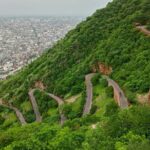
Down the gorge to the temple tanks and the langurs
- Jaipur Tuk Tuk Sightseeing Tour with Monkey Temple Sunset View
★ 5.0 · 108 reviews - Private Full-Day Jaipur Tuk-Tuk Tour with the Monkey Temple
★ 5.0 · 72 reviews - Jaipur Guided Tour with Monkey Temple
★ 5.0 · 55 reviews - Jaipur sightseeing tour with monkey temple (Galta ji temple)
★ 5.0 · 15 reviews
8 AM pickup and a smart “see-more” route through Jaipur
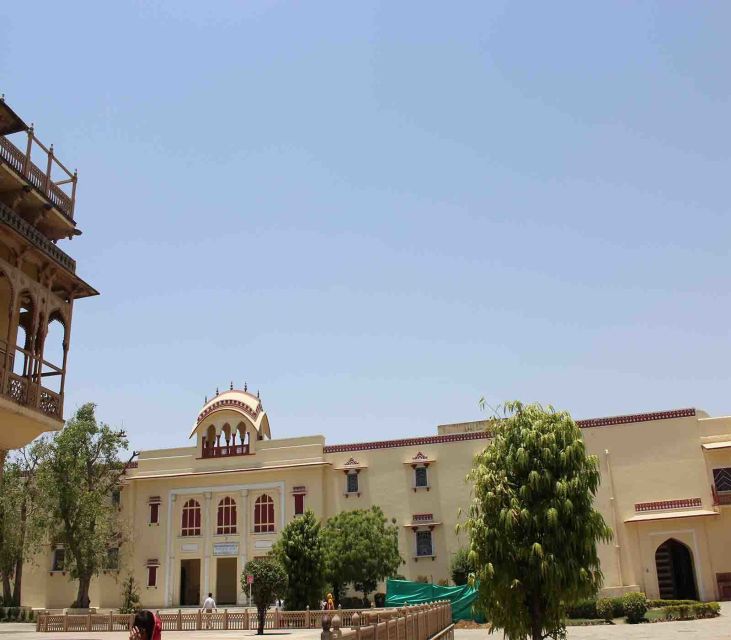
The day starts at 8:00 AM when your driver picks you up from your hotel lobby. From there, you’ll move across key Jaipur sights in a loop that’s designed to reduce backtracking. That matters in Jaipur, where traffic and distance can quietly steal your day.
A practical note: the order of stops can change depending on your hotel location. So if you’re hoping for a very specific sequence, keep your expectations flexible and focus on the full set of sites included. You’ll still hit the core highlights: Amber Fort, Water Palace/Jal Mahal area, Hawa Mahal, Jantar Mantar, Monkey Temple, lunch, and shopping.
This tour runs about 9 hours. That’s enough time for meaningful sightseeing, but it’s not enough time to linger for hours in one place. If you travel at a steady pace and you’re okay with short viewing windows between attractions, this schedule feels efficient instead of rushed.
Amber Fort: gates, courtyards, and why the design matters
Amber Fort is the anchor of the day. It’s huge, and the payoff is in how the complex is laid out: every gate and courtyard connects you to the fort’s defensive logic and royal life. The tour frames Amber Fort through the Man Singh connection—Man Singh was the Rajput king associated with its construction and development—so you’re not just wandering, you’re following the “why” behind the stone.
Here’s what I think you should pay attention to when you’re there:
- The flow of spaces: entrances lead into courtyards, and courtyards lead to palace areas, so the fort reads like a timeline.
- The defensive architecture: protective design is visible even if you’re not a history expert.
- The fort’s scale: you’ll spend time walking through areas that feel like separate mini-worlds.
Amber Fort can also be busy. Wear comfortable shoes and plan for steady walking. If your goal is big photos and quick views only, you may feel the pace. But if you enjoy understanding how the layout works, this stop hits hard.
Jal Mahal (Water Palace) and a camel ride with lake views
Next comes the Jal Mahal, often called the Water Palace, located in the middle of Man Sagar Lake in Jaipur. Even though it’s not the easiest place to “tour around,” the setting does something important: it breaks up the fort-and-temple intensity with open water, light, and a slower feel.
This is also where your camel ride happens. A camel ride near the lake is the kind of Jaipur experience that’s hard to replicate on your own without planning. It’s short enough to fit into the day, but it adds a memorable sensory moment—movement, height, and those lake views that you don’t get from street level.
After the ride, you’ll see exhibitions at the Water Palace area. The highlights include:
- weapons
- royal costumes
- Mughal miniatures
- antiques and paintings
This is a good balance point in the itinerary. The earlier stop (Amber Fort) is about architecture and fortification. The exhibitions are more “objects and stories,” so your brain gets a different type of input for a while.
Lunch stop: fueling up before Hawa Mahal and Jantar Mantar
Lunch is included at a local restaurant. In a day like this, that’s a big value piece. Jaipur sightseeing is long, and when you’re moving between sites, “finding something good” can become a time sink.
The tour doesn’t promise a specific restaurant name in the details you provided, so I’d treat lunch as a practical refuel rather than a culinary destination. If you have dietary needs, confirm them with your guide or operator ahead of time. You’ll want energy for Hawa Mahal’s fine details and for Jantar Mantar’s open-space instrument displays.
Out into the dunes on a camel
Hawa Mahal (Air Palace): how 953 windows turn a building into a display
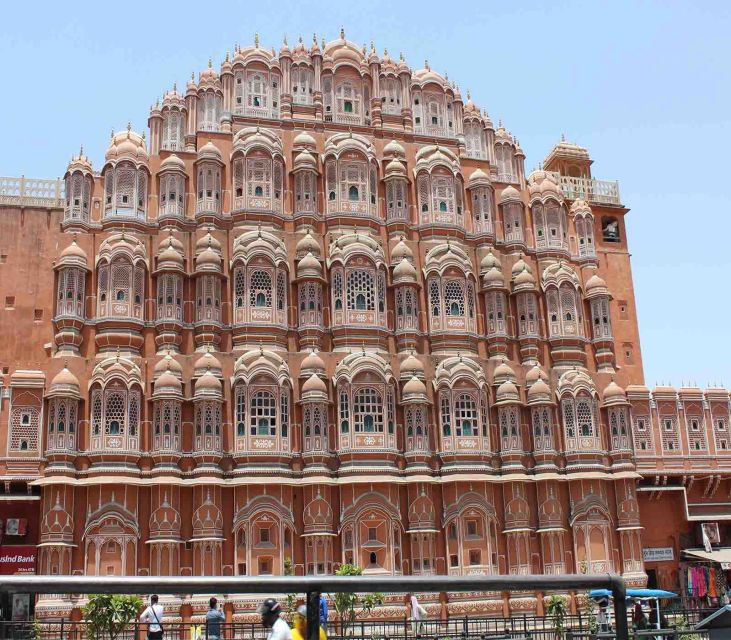
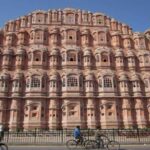
Then you’ll head to Hawa Mahal, the Air Palace built by Maharaja Sawai Pratap Singh, part of the Kachwaha rulers of Jaipur. The signature feature is the 953 small windows, decorated with latticework. That lattice pattern is not just decorative. It changes how light behaves, and it helps explain why the palace is both ornate and functional in spirit.
When you’re there, don’t rush straight to the “look, windows” moment. Spend a few minutes at multiple angles and heights. The crisscross latticework creates different shadow patterns as the light changes. Even if you’re not a design nerd, you’ll feel the difference.
One reason this stop works in a city tour: Hawa Mahal is a visual reset. You’re leaving thick fort stone and lake-related calm, and you’re getting a façade that feels like a living screen.
Jantar Mantar: ancient instruments for time, planets, and position
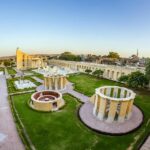
Jantar Mantar is next on the list, the astronomical observation site built by Maharaja Jai Singh II. The real value here is that you’re not just hearing about “ancient science.” You’re seeing tools created to track astronomy, time, planets, and other celestial bodies.
It helps to approach this stop with a mindset shift:
- Instead of thinking of astronomy as abstract, think of it as measurement.
- Instead of looking for one perfect view, look for the instrument logic—how devices relate to tracking time and position.
Even if you only take a few minutes to understand the purpose of what you’re seeing, the experience sticks. It also gives your day a different rhythm: open space, visual forms, and a mental break from climbing and dense corridors.
Monkey Temple (Galtaji Temple): holy pools, monkeys, and one important reality check
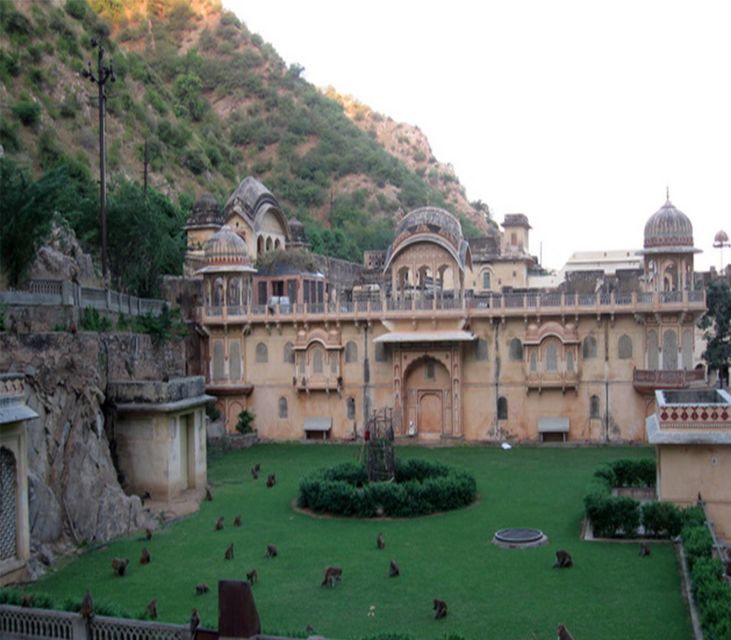
The final major sight is the Monkey Temple, also known as Galtaji Temple. This is a Hindu temple home to a large number of monkeys and seven water pools filled with holy water. Followers come to bathe and wash away sins in the pools, so this isn’t just a zoo-like stop. It’s a religious place with specific rituals.
Here’s the practical reality: with monkeys in a temple setting, you should be careful and respectful. Keep a close watch on personal belongings, and avoid feeding or provoking behavior. The tour description also places you near areas where visitors can run into monkey activity, and that can affect how long you want to linger.
Also, based on real-world experiences from past days, the Monkey Temple stop can be a sticking point if the guide adjusts the day. One earlier experience reported a mismatch with where the guide took the group when monkey time was expected, while another experience described a stressful moment with monkeys that involved food and a steep approach. That’s not something to ignore.
So here’s my direct advice:
- At the start of the day, confirm you’re scheduled for Monkey Temple (Galtaji Temple) specifically.
- Plan for the possibility that crowds and monkey behavior may limit how long you want to stay in any one area.
- Keep expectations realistic: this is a live environment, not a quiet museum.
Shopping and the ride back: use the last hour wisely
The tour wraps up with shopping time at local shops, then returns you to your hotel. Shopping is a classic Jaipur add-on, but it only helps if you use the time efficiently.
If you like souvenirs, set your priorities before you arrive—textiles, small crafts, or jewelry-style gifts. Decide what kind of item you want, what budget range makes sense, and whether you’re okay negotiating. With a day tour, you don’t want to wander into decision fatigue.
Once the day is done, you’ll be back at your hotel after a full 9 hours. This is the kind of day where tired feet are the most common souvenir.
Price and value: is $113 a good deal for this many stops?
At $113 per person for a 9-hour tour, the value comes from the combination of:
- multiple major sights in one day
- a live English guide
- included lunch
- camel ride time
- driver transport between distant sites
The cost feels easier to justify if you’re not planning to arrange separate transport for each stop and if you want a guided explanation for places like Jantar Mantar. It feels less compelling if you prefer slow travel or if you only care about one or two landmarks. In that case, a smaller, more focused tour—or even a different self-planned approach—might suit better.
The review range you’ve got also hints at why value depends on execution. When the guide is flexible and the stops match expectations, the day feels like a win. When itinerary adjustments happen without alignment to your priorities, it can feel like you paid for something you didn’t fully get. So treat the price as “worth it with the right guidance,” not automatic.
Who this tour suits best (and who should skip it)
This tour is ideal if:
- you want to hit the big Jaipur highlights in one day
- you like guided context for sites like Amber Fort and Jantar Mantar
- you’re interested in the camel ride experience near Jal Mahal
- you don’t mind a packed schedule and short viewing windows
You might want to skip or switch tours if:
- you need a relaxed pace with lots of time at fewer stops
- you’re sensitive to monkey activity in temple environments
- you have very specific must-see priorities and don’t want any chance of re-ordering
If you’re traveling as a couple or small group, this kind of full-day structure often feels efficient. If you’re traveling with mobility limits, the walking within forts and temple areas could be a challenge, and the details provided don’t spell out accessibility help.
Should you book it? My practical take
Book this tour if your goal is simple: a well-rounded Jaipur day covering forts, palace windows, science instruments, and a temple with holy pools, plus a camel ride and lunch. It’s the best choice when you want direction and you’d rather spend time looking at the sights than planning logistics.
Think twice before booking if Monkey Temple is your top priority and you’re the type who gets stressed by changes. Your best move is straightforward: confirm at pickup that your itinerary includes Monkey Temple (Galtaji Temple) as listed, and ask how the day order may shift based on your hotel.
If you’re okay staying flexible and you go in with respectful monkey- and crowd-aware expectations, this is the kind of day trip that makes Jaipur feel connected, not random.
FAQ
What time is pickup for the Jaipur full-day city tour?
Pickup starts at 8:00 AM from your hotel lobby.
How long is the tour?
The duration is about 9 hours.
What are the main stops on the itinerary?
You’ll visit Amber Fort, the Water Palace/Jal Mahal area (with exhibitions), Hawa Mahal (Air Palace), Jantar Mantar, and Monkey Temple (Galtaji Temple), with lunch and shopping time included.
Do you get a camel ride on this tour?
Yes. The tour includes a camel ride at the Water Palace (Jal Mahal) area.
Is there an English-speaking guide?
Yes. The tour includes a live guide who speaks English.
What is Monkey Temple also called?
Monkey Temple is also known as Galtaji Temple.
Is lunch included?
Yes. The itinerary includes lunch at a local restaurant.
Can I cancel for a full refund?
You can cancel up to 24 hours in advance for a full refund.
All of Jaipur in a Day
- Jaipur: Private Full Day Sightseeing Tour By Car with Guide★ 4.9 · 1,839 reviews
- Jaipur: Private Sightseeing Day Tour with Guide by Car★ 4.8 · 773 reviews
- Jaipur: Full-Day City Tour with Car, Guide & Skip-the-Line★ 4.8 · 512 reviews
- Full-Day Jaipur Private Sightseeing Tour by Car with Guide★ 5.0 · 472 reviews
- Private Full Day Jaipur Sightseeing Tour By Tuk Tuk★ 5.0 · 382 reviews
- Jaipur: Private Full-Day Guided City Tour★ 4.9 · 308 reviews
Into the Dunes by Camel
- Jaipur: Ajmer & Pushkar Day Trip with Lunch & Camel ride★ 4.3 · 3 reviews
Down to the Galta Ji Tanks
- Jaipur Tuk Tuk Sightseeing Tour with Monkey Temple Sunset View★ 5.0 · 108 reviews
- Private Full-Day Jaipur Tuk-Tuk Tour with the Monkey Temple★ 5.0 · 72 reviews
- Jaipur Guided Tour with Monkey Temple★ 5.0 · 55 reviews
- Jaipur: Private Evening Tour with Monkey Temple Sunset★ 4.6 · 27 reviews
- Jaipur sightseeing tour with monkey temple (Galta ji temple)★ 5.0 · 15 reviews
- Abhaneri & Bhangarh Day Trip – Car, Guide, Lunch & Monkey Temple★ 5.0 · 12 reviews
Newly Added Jaipur Reviews

More from Galta Ji Monkey Temple.
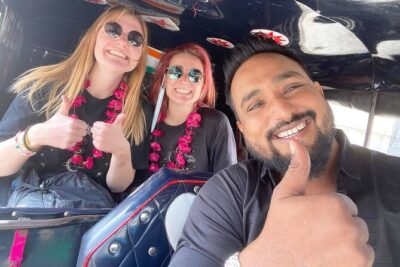 ★ 5.0Jaipur Tuk Tuk Sightseeing Tour with Monkey Temple Sunset ViewFrom $7108 reviews
 ★ 5.0Private Full-Day Jaipur Tuk-Tuk Tour with the Monkey TempleFrom $772 reviews
 ★ 5.0Jaipur Guided Tour with Monkey TempleFrom $1355 reviews
 ★ 4.6Private Evening Tour with Monkey Temple SunsetFrom $627 reviews
 ★ 5.0Jaipur sightseeing tour with monkey temple (Galta ji temple)From $2415 reviews
 ★ 5.0Abhaneri & Bhangarh Day Trip – Car, Guide, Lunch & Monkey TempleFrom $4512 reviews
 ★ 5.0Private Full-Day Jaipur Guided Tour with Monkey TempleFrom $1311 reviews
 ★ 4.9Tour with Nahargarh Sunrise or Monkey Temple SunsetFrom $298 reviews
This tour also appears in