
Reviewed · RANTHAMBORE SAFARIS
golden triangle tour with ranthambore by Car
Car travel makes India click. This Golden Triangle plus Ranthambore route strings together professional guide insight and an AC private vehicle from Delhi to Agra, into Ranthambore for a tiger safari, and onward to Jaipur. You’ll also hit major sights at useful times, including Taj Mahal at sunset, without having to juggle daily transport. One catch to plan for: monument entrance fees aren’t included, so you’ll need extra cash for tickets on the spot.
I like that the pace is “organized, not rushed,” and the group is kept small (up to 4 travelers). You also get practical coverage like bottled water plus fuel, tolls, and parking in the cost. In past trips connected to Sumit Rajasthan Travel, guides and drivers have included names like Randhir Singh, Dinesh, and Anil, and some vehicles were described as comfortable with Wi‑Fi.
In This Review
- Key highlights you’ll feel right away
- Why this Golden Triangle + Ranthambore-by-car route makes sense
- Day 1: Delhi arrival to Agra Fort, Baby Taj, then sunset Taj Mahal
- Day 2: Fatehpur Sikri and Chand Baori before Ranthambore
- Day 3: Early tiger safari in Ranthambore National Park, then on to Jaipur
- Day 4: Amber Fort (optional elephant ride) plus Jaipur’s key sights
- Day 5: Drive back to Delhi with a chance at local home-style lunch
- Day 6: Old Delhi and New Delhi city tour
- Day 7: Airport drop after your Delhi morning
- Price ($220 per person): what you’re really paying for
- Comfort, timing, and the small-group advantage (max 4)
- How to enjoy Taj Mahal and the safari without stress
- Who this tour is best for
- Should you book this Golden Triangle + Ranthambore by car?
- FAQ
- How long is the tour?
- Which cities does the tour cover?
- What is included in the price?
- Are hotel accommodations included?
- Are monument entrance fees included?
- Does the tour include a tiger safari in Ranthambore?
- Is pickup and drop-off offered?
- What time does the tour start?
- What is the maximum group size?
- Can I request a vegetarian option?
Key highlights you’ll feel right away
- AC private vehicle all the way for long drives between cities
- A pro guide to explain what you’re seeing (not just point at it)
- Sunset Taj Mahal timing plus an Agra Fort and Baby Taj combo on Day 1
- Real Ranthambore morning safari after an efficient route via Fatehpur Sikri
- Small group size (max 4) so days stay flexible when needed
- Mobile ticket + door-to-door pickup/drop from hotel, airport, or railway station
Delhi, Agra and Jaipur strung together
- From Delhi: Private 3-Day Golden Triangle Tour with Hotels
★ 4.9 · 339 reviews - From Delhi: Private 5-Day Golden Triangle Tour
★ 4.9 · 208 reviews - Golden Triangle Tour – Delhi-Agra-Jaipur
★ 5.0 · 73 reviews - 3-Days Golden Triangle’s Private Tour
★ 5.0 · 69 reviews
Why this Golden Triangle + Ranthambore-by-car route makes sense
The Golden Triangle (Delhi–Agra–Jaipur) is busy by nature. Add Ranthambore and you’re suddenly managing two very different styles of travel: grand monuments one day, wild nature the next. Doing it by private car is the difference-maker. You avoid airport hassles, reduce transfer stress, and keep your schedule under your control.
I also like that this isn’t only about “big-ticket photos.” The day-by-day plan threads in places that many people skip. You get Fatehpur Sikri, Abhaneri’s Chand Baori stepwell, and a quick stop at the “monkey temple” en route to Jaipur. That’s a nice way to build variety without adding extra travel time.
The itinerary is set for a mostly smooth flow: early start for the tiger safari, sunset for the Taj Mahal, and city sightseeing in concentrated blocks. Still, remember this is India. Traffic and local conditions can shift timing, even with a professional driver.
Day 1: Delhi arrival to Agra Fort, Baby Taj, then sunset Taj Mahal
You start with pickup and then the drive from Delhi to Agra. In the afternoon, the plan focuses on Agra Fort and Baby Taj Mahal. This is a smart lead-in because Agra Fort helps you understand how the city worked and why it mattered, while Baby Taj gives you a smaller taste of marble beauty before the main event.
Then comes the big one: Taj Mahal at sunset. Sunset is popular for a reason. The light softens stone, shadows stretch, and the crowds often thin a bit compared to midday heat. If you’re sensitive to long walks in warm weather, you’ll be glad the day isn’t built around constant running between sites.
Practical note: monument entrance fees are not included, so you’ll likely purchase those once you arrive at each paid site. The tour includes bottled water and the guiding, so the extra cost is mostly about tickets.
Day 2: Fatehpur Sikri and Chand Baori before Ranthambore
After breakfast, the drive moves toward Ranthambore. On the way, you visit Fatehpur Sikri and Abhaneri (Chand Baori step well).
Fatehpur Sikri is one of those places where it’s helpful to have a guide. Even when you know the headline story, you’ll miss smaller details without someone explaining what you’re looking at—courtyards, layouts, and the way the site functioned. The guide component matters here, because this is not a “drive-by” stop; it’s a whole chunk of history and architecture.
Then you hit Chand Baori, the dramatic stepwell. The scale is the point. The repeating geometric steps can look unreal at first glance. It’s also a nice break from the more monumental palace-and-temple style you’ll see elsewhere on the trip.
By the end of the day, you overnight in the Ranthambore area so you’re not wasting time transferring right before your safari. That matters because tiger safari days work on tight timing.
Day 3: Early tiger safari in Ranthambore National Park, then on to Jaipur
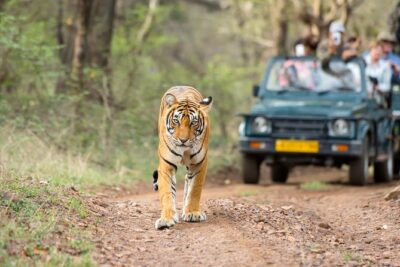
This is the day most people plan for: an early morning tiger safari in Ranthambore National Park. Early is key for wildlife viewing because animals tend to be more active when the temperature is lower. Even if you’ve done safaris elsewhere, the rhythm here is straightforward: get up, get into position, and be patient.
What I like about building Ranthambore into a multi-day route is that the rest of the day doesn’t feel wasted. After the safari, you drive to Jaipur and stop at the monkey temple on the way. That gives you a change of scenery and a quick “stretch your legs” break without derailing the schedule.
You overnight in Jaipur, so you can transition from jungle-time to city-time without trying to do everything in one marathon day.
Tiger country: more Ranthambore mornings
Day 4: Amber Fort (optional elephant ride) plus Jaipur’s key sights
Jaipur day is where the tour becomes more “classic city sightseeing,” but it’s still organized well.
You start with Amber Fort. The plan includes the option to go up to the fort by elephant. That’s a common option in Amber, but it’s also something you should think about based on your preferences. If you’re not comfortable with animal rides, you can still visit the fort area without choosing that option (just plan your time accordingly).
After Amber, you move into the Jaipur city circuit, including Palace of the Winds, Water Palace, City Palace, Jantar Mantar, and a museum. That’s a lot of named places, so don’t expect equal time at everything. The guide helps you decide what to prioritize and what to skim so you don’t end the day exhausted.
This is also a good day for smart pacing: do the photo stops you care about, but keep space for quieter moments. Jaipur’s value is in how the buildings and layouts connect—look for the way courtyards and stairways change what you see as you walk.
Day 5: Drive back to Delhi with a chance at local home-style lunch
On the way back to Delhi, the plan includes an interesting personal touch: a local lunch invitation described as happening at the provider’s home for Indian food. If you want something beyond standard restaurant meals, it’s worth asking about timing and availability.
It’s also a good day for practical sanity. After Jaipur sightseeing, you’re ready for the “sit back and watch the scenery” phase. You’ll still be moving, but the schedule isn’t trying to cram in another major sightseeing block before you reach Delhi.
Overnight in Delhi sets you up for the next day’s mix of old and new city exploration.
Day 6: Old Delhi and New Delhi city tour
New Delhi and Old Delhi are different worlds. The tour keeps it focused: a city tour of New Delhi and Old Delhi and then overnight in Delhi.
Old Delhi is usually about lanes, markets, and street energy. New Delhi tends to feel more planned and spread out. Doing both in one day is efficient, but you’ll want comfortable shoes and a realistic attitude toward walking time. The guide can help you decide where to linger and where to move on.
Since monument entrance fees aren’t included, you might encounter a few paid stops depending on how the guide times the route. If you’re trying to stick to a budget, ask the guide which items will cost extra that day.
Day 7: Airport drop after your Delhi morning
The final day is simple: after breakfast, there’s pickup from your hotel and drop-off to the airport for your flight.
This ending matters more than people expect. When tours end well, you avoid last-minute taxi hunting and stress about timing. The tour includes airport/railway/hotel pickup and drop, so your departure day stays clean.
Price ($220 per person): what you’re really paying for
At $220 per person, this can be good value because the cost covers the parts that usually get expensive on your own: chauffeur-driven A/C private vehicle, fuel, tolls, parking, and a professional guide. It also includes bottled water and pickup/drop.
But there are two big budgeting notes:
- Hotel accommodation isn’t included. Your lodging choice will shape your total trip cost.
- Entrance fees aren’t included. Taj Mahal, Agra Fort, Fatehpur Sikri, Jantar Mantar, and others typically require separate tickets.
So the $220 price is best understood as a “transport + guidance + key planning” package. If you already know your hotel budget and you’re comfortable paying for monuments directly, the deal can feel smooth. If you want everything bundled, you might find yourself adding costs quickly once you start sightseeing.
Comfort, timing, and the small-group advantage (max 4)
One of the underrated benefits here is the max group size: up to 4 travelers. That matters on road trips. With a larger group, you lose control to the slowest pace and the group’s photo priorities. With a smaller group, the guide can keep timing tight and still give you room to ask questions.
The tour also starts at 8:00 am, which is great for days that rely on early movement—like the safari day and the long drive days.
Also, kids must be accompanied by an adult. Since you’re doing early mornings and long drives, it’s smart to consider whether your child can handle that rhythm.
If you care about comfort, note that in some cases the vehicle was described as spacious and equipped with Wi‑Fi. That’s not guaranteed for every trip, but it’s a helpful signal that comfort is taken seriously.
How to enjoy Taj Mahal and the safari without stress
Here’s the practical game plan I’d use:
For Taj Mahal at sunset, arrive with enough time that you’re not rushing. Sunset photos are addictive, and you’ll want a moment where you can just look—no phone, no checklist, just the scene. Since entrance tickets are separate, budget and keep your schedule calm.
For the tiger safari, sleep is your best gear. Plan for an early start, keep water handy (the tour includes bottled water), and treat the safari as a wildlife hunt, not a guaranteed sighting. You’re doing a morning drive into nature, and the payoff is about being patient and present.
In cities afterward—Agra, Jaipur, Delhi—don’t overpack your expectations. Aim to see the main sights, ask questions from your guide, and leave space for a coffee stop, a short rest, and a slower walk.
Who this tour is best for
This tour fits you if you want:
- One guided car plan connecting multiple cities without transfers
- A balanced mix of monuments, architecture, and a genuine wildlife day
- A small group pace that stays manageable for 6 days
It’s especially suitable for first-time visitors who don’t want to build a transportation puzzle themselves. If you’re the kind of traveler who likes to understand what you’re seeing, the professional guide will add real value.
If you hate car time, or if you prefer self-paced travel with lots of independent detours, you might find the structure limiting. But for many people, the structure is the point: it keeps the trip from turning into “where do we go next?”
Should you book this Golden Triangle + Ranthambore by car?
I’d lean yes if you want a guided, car-based route that covers the big classics (Delhi, Agra, Jaipur) and still gives you a serious Ranthambore morning safari. The included chauffeur, A/C vehicle, and professional guide make it easier to enjoy the trip without daily logistics headaches.
I’d lean cautious if your priority is fully bundled pricing, because entrance fees and hotels are not included. Also, if you’re expecting a relaxed week with no early mornings, the safari day changes the tone.
If you book, do it with a simple plan: lock in your hotel budget, set aside money for monument tickets, and decide ahead of time what you’re comfortable doing at Amber Fort (like the elephant option). Then you’ll get more out of every day—and you’ll spend less time worrying about what comes next.
FAQ
How long is the tour?
The tour runs for about 6 days, typically described as a 6-night/7-day plan.
Which cities does the tour cover?
It covers Delhi, Agra, Ranthambore, Jaipur, and returns to Delhi.
What is included in the price?
Included items are hotel/airport/railway station pickup and drop, a chauffeur-driven A/C private vehicle, fuel, parking, tolls and interstate taxes, a professional guide, and bottled water.
Are hotel accommodations included?
No. Hotel accommodation is not included.
Are monument entrance fees included?
No. Monument entrance fees are not included.
Does the tour include a tiger safari in Ranthambore?
Yes. You go for an early morning tiger safari in Ranthambore National Park.
Is pickup and drop-off offered?
Yes. Pickup and drop are offered from the hotel and also from the airport or railway station.
What time does the tour start?
The start time is 8:00 am.
What is the maximum group size?
The group size is limited to a maximum of 4 travelers.
Can I request a vegetarian option?
Yes. A vegetarian option is available if you advise at the time of booking.
More Jaipur Tours to Compare
- Jaipur: Private Full Day Sightseeing Tour By Car with Guide★ 4.9 · 1,839 reviews
- 3-Hour Morning Bike Tour of Jaipur★ 5.0 · 1,253 reviews
- Jaipur: Private Sightseeing Day Tour with Guide by Car★ 4.8 · 773 reviews
- Jaipur: Full-Day City Tour with Car, Guide & Skip-the-Line★ 4.8 · 512 reviews
- Full-Day Jaipur Private Sightseeing Tour by Car with Guide★ 5.0 · 472 reviews
- Pink City Cooking Class★ 5.0 · 452 reviews
Tiger Trails: More Ranthambore
- Golden Triangle & Ranthambore: 4-Day Private Tour from Delhi★ 5.0 · 355 reviews
- From Jaipur: Ranthambore National Park Day Trip with Safari★ 4.6 · 244 reviews
- Jhalana Panther Safari Park Tour in Jaipur★ 4.5 · 127 reviews
- SkyWaltz Hot Air Balloon Safari★ 5.0 · 117 reviews
- Jaipur: Jhalana Amagarh Leopard Reserve 4×4 Jeep Safari★ 4.5 · 97 reviews
- Ranthambore Tiger Safari from Jaipur – 1 or 2 Days★ 5.0 · 88 reviews
The Golden Triangle, End to End
- Golden Triangle & Ranthambore: 4-Day Private Tour from Delhi★ 5.0 · 355 reviews
- From Delhi: Private 3-Day Golden Triangle Tour with Hotels★ 4.9 · 339 reviews
- From Delhi: Private 5-Day Golden Triangle Tour★ 4.9 · 208 reviews
- Golden Triangle Tour – Delhi-Agra-Jaipur★ 5.0 · 73 reviews
- 3-Days Golden Triangle’s Private Tour★ 5.0 · 69 reviews
- Private 6-Day Golden Triangle Tour: Delhi, Agra, Jaipur by Car★ 5.0 · 60 reviews
Newly Added Jaipur Reviews


More from Ranthambore Safaris.
 ★ 5.0Golden Triangle & Ranthambore: 4-Day Private Tour from DelhiFrom $215355 reviews
 ★ 4.6From Jaipur: Ranthambore National Park Day Trip with SafariFrom $85244 reviews
 ★ 4.5Jhalana Panther Safari Park Tour in JaipurFrom $45127 reviews
 ★ 5.0SkyWaltz Hot Air Balloon SafariFrom $325117 reviews
 ★ 4.5Jhalana Amagarh Leopard Reserve 4×4 Jeep SafariFrom $6097 reviews
 ★ 5.0Ranthambore Tiger Safari from Jaipur – 1 or 2 DaysFrom $3388 reviews
 ★ 4.5Ranthambore Tiger Safari Day trip from Jaipur – All InclusiveFrom $4387 reviews
 ★ 3.7From Jaipur: One Day Trip to Ranthambore Tiger SafariFrom $10054 reviews
This tour also appears in