Reviewed · JAIPUR
Take in the Beauty of an Early Morning with Fresh Flowers
Morning in Jaipur smells like flowers. You get a short, focused 1.5-hour walk that starts at Hawa Mahal and quickly turns into flower-scented street scenes at Jaipur’s oldest wholesale market, where you can see the day’s blooms show up before the city gets busy. The best part is how practical it feels—this isn’t just sightseeing, it’s watching how Jaipur actually wakes up. The one drawback to plan around is simple: it’s an early start and you’ll spend most of the time on foot, so comfortable shoes matter.
I also like that the tour keeps things human-sized. The group max is 15, and the guides (I’ve seen names like Harshit and Monty come up) are the type who make you feel at ease, even if you’re going solo. Plus, you get a included break for masala chai at a local tea shop, which is exactly what you want when you’ve been taking in colors and smells for 90 minutes.
For the price—$35 per person—you’re not just paying for a walk. You’re covering all fees and taxes, you get the tea, and the Govind Devji Temple admission is included. The main thing to know upfront is that private transportation isn’t included, so plan to reach the meeting point on your own.
In This Review
- Key highlights worth waking up for
- Why an early-morning flower market beats daytime sightseeing
- Hawa Mahal first: quick stop, best light, no traffic headache
- Walking into the oldest wholesale flower market of Jaipur
- Govind Devji Temple: devotion after the flower chaos
- The tea break: masala chai grounds the senses
- Group size and guide style: why it feels easy
- Price and value: what $35 buys you in practical terms
- What to expect with timing and walking
- Who this tour suits best (and who might skip it)
- Quick practical tips to make it better
- Should you book this Jaipur flower market tour?
- FAQ
- FAQ
- How long is the flower market tour in Jaipur?
- Where does the tour start and end?
- Is Hawa Mahal admission included?
- What’s included in the price?
- What will I see at the flower market?
- How many people are in a group?
- Is private transportation included?
- What happens if I need to cancel?
Key highlights worth waking up for
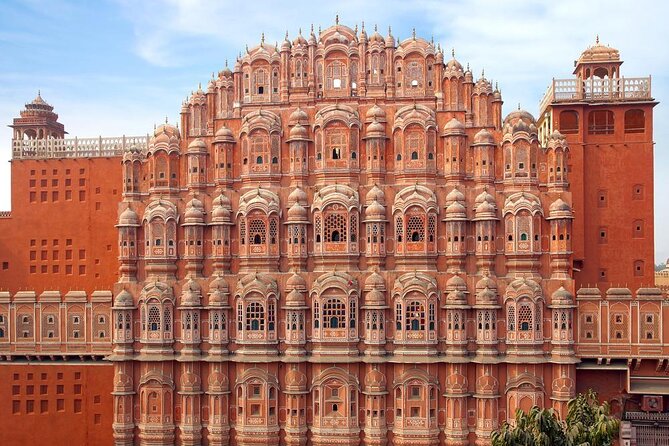
- Hawa Mahal in soft morning light, when traffic is lighter and it’s less crowded for photos
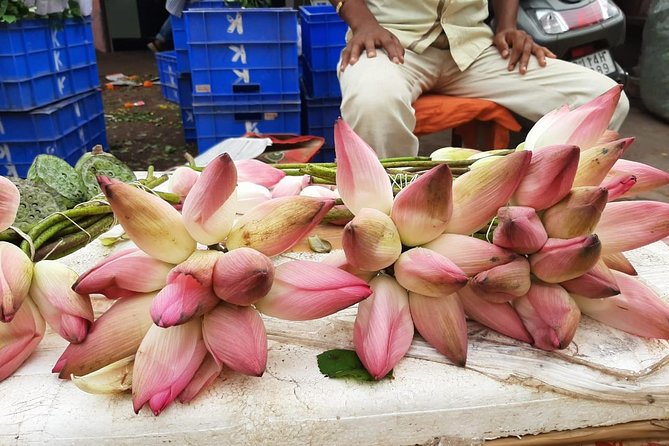
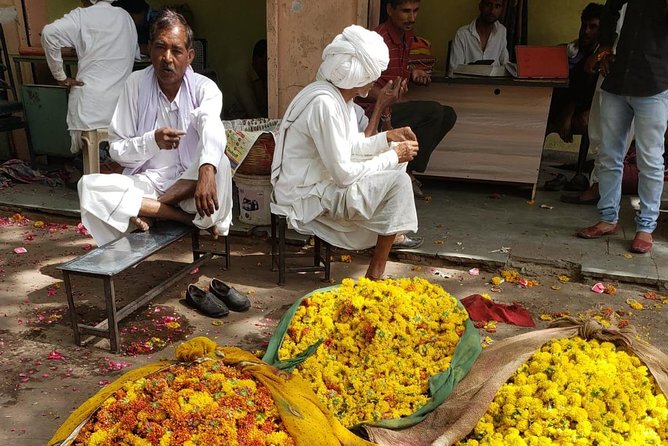
- Jaipur’s oldest wholesale flower market, with flowers, bouquets, and loose petals everywhere
- Farmers and vendors in the morning flow, selling flower necklaces and arrangements right off the street
- Govind Devji Temple stop after the market, tying devotion to the daily flower trade
- Small group size (max 15), so the walk stays easy to manage
- Included masala chai at a local tea shop to reset your senses
Still deciding? Line this one up against a few Pink City regulars.
- Jaipur: Private Full Day Sightseeing Tour By Car with Guide
★ 4.9 · 1,839 reviews - 3-Hour Morning Bike Tour of Jaipur
★ 5.0 · 1,253 reviews - Jaipur: Private Sightseeing Day Tour with Guide by Car
★ 4.8 · 773 reviews - Jaipur: Full-Day City Tour with Car, Guide & Skip-the-Line
★ 4.8 · 512 reviews
Why an early-morning flower market beats daytime sightseeing
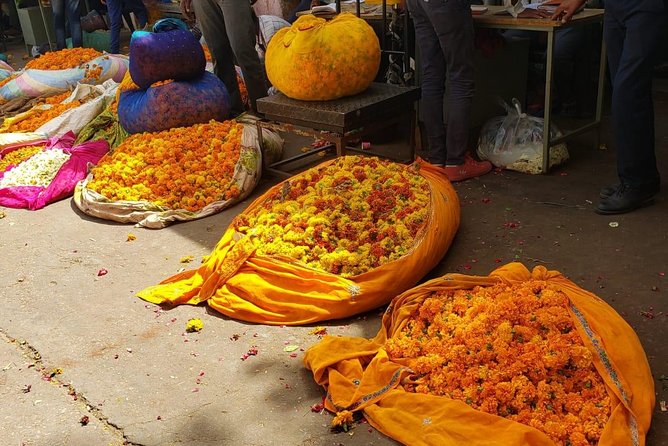
Daytime in Jaipur is great, but mornings do something different: they slow the city down. When you start early, you catch the market before it becomes fully about shopping and before the streets get swallowed by later-day traffic. You get a front-row view of the trade—where flowers are stacked, sorted, and sold with purpose.
This tour works because it’s built around the smells and the rhythm, not just landmarks. The flower market is where your senses do the heavy lifting: you’ll notice the aroma as soon as you’re near the entrance area, and the colors feel more vivid because the light is still clean and gentle. Even if you’re not a “market person,” you’ll come away with that quick, memorable sense of how everyday life functions in Jaipur.
Hawa Mahal first: quick stop, best light, no traffic headache

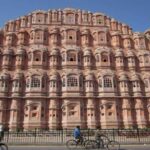
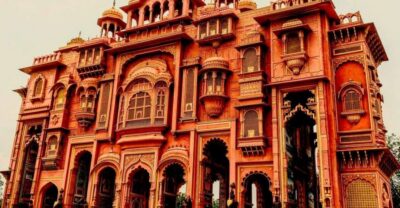
You begin at Hawa Mahal, the famous red-and-pink sandstone facade often called the Palace of Winds. The smart move here is timing. In the morning, you tend to get better conditions for photos: less traffic, fewer people crowding in, and that early light that makes the building look extra crisp.
This is a short stop—about 15 minutes—and that’s a plus. You don’t get stuck in a long, slow waiting game. You get in, you frame your shots, and then you’re walking toward the market while the day is still fresh.
Practical tip: if photography is your thing, use this time to capture wide shots first, then come back for tighter angles as the light shifts. Morning changes fast around sandstone, and you’ll feel that difference even within those 15 minutes.
Walking into the oldest wholesale flower market of Jaipur
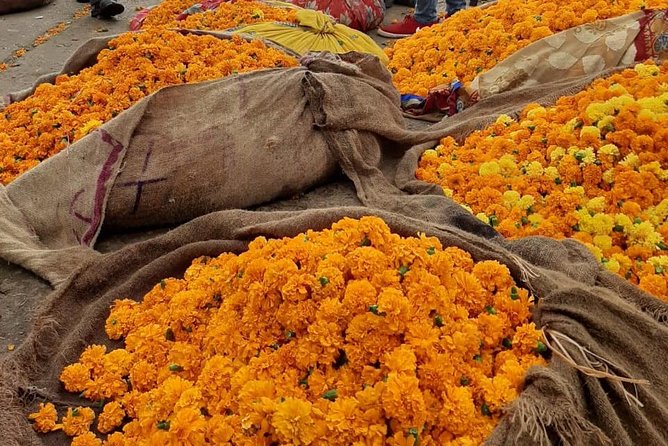
From Hawa Mahal, you walk over toward Jaipur’s oldest wholesale flower market. This part is the heart of the experience. The walk helps you build context—passing heritage buildings, temples, and gates on the way—so the market feels connected to the city, not like a separate stop.
Once you’re at the entrance, the market atmosphere hits right away. You’ll see vendors and farmers set up along the sides of the street. It’s not just loose flowers on the ground; it’s also flower necklaces, bouquets, and arrangements that show up in bright clusters. The early sun adds to the look, making everything feel slightly more cinematic than a typical market.
The time here is about 50 minutes, which is enough to:
- Get a feel for how the selling happens
- Photograph the textures and colors
- Pause without rushing into the next thing
One detail I love about this setup is that it’s not framed like a museum tour. The market is active. Farmers coming in from smaller villages bring the day’s supply, and you’re watching that handoff happen in real time. If you like authentic moments—especially ones that don’t need heavy explanation—this is the section to savor.
Govind Devji Temple: devotion after the flower chaos
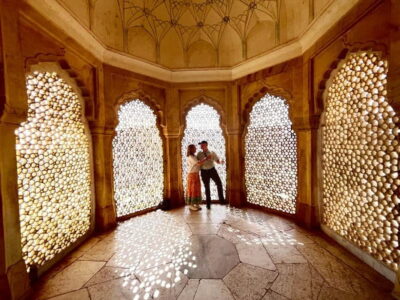
After the wholesale market, you head to Govind Devji Temple. This stop gives the morning a second layer: flowers in motion, then devotion in stillness.
The visit is about 25 minutes, and admission is included. That matters because it keeps the pacing smooth. You’re not juggling extra questions or suddenly calculating separate entry costs mid-tour.
What this temple stop adds: it reminds you that flowers in India aren’t just decoration. They’re part of worship and daily ritual. Going from the market—where you see bouquets and loose petals in volume—to a place where those same flowers can take on meaning is a satisfying contrast. It makes the morning feel more complete, like the tour is connecting production to purpose.


The tea break: masala chai grounds the senses
Markets can be sensory overload—in a good way. Included in the tour is masala chai at a local tea shop. This is a smart pacing tool. After you’ve been looking closely at colors and smelling the flowers, you get a warm pause that resets you.
In the real-world experience of guides, this chai stop isn’t only about getting a drink. People have highlighted that guides know good chai stalls and pair it with local Rajasthani snacks. Even if you just drink the tea and skip extra bites, this break still helps you keep your energy up for the rest of the walk.
If you’re the kind of person who photographs constantly, plan to use this stop intentionally: lower your phone for a minute, drink something warm, and let your eyes adjust. You’ll come back out with better focus for the final stretch.
Group size and guide style: why it feels easy
The tour caps at 15 people, which keeps the walk from turning into a noisy parade. That small size also helps you ask questions. Guides like Harshit and Monty are repeatedly mentioned as friendly and attentive, and the vibe tends to be comfortable even for solo visitors.
That matters in markets. These streets can be visually crowded—bright displays, quick transactions, lots happening at once. With a guide, you’re not stuck trying to figure out where to stand or when to move. You can focus on what you actually came for: the sights, the smells, and the small stories that make the place click.
If you want a morning activity that doesn’t require a lot of planning on your part, this is one of those rare tours where the structure makes the experience smoother.
Price and value: what $35 buys you in practical terms
At $35 per person, this tour looks modest on paper, but the value comes from what’s included:
- All fees and taxes are included
- Masala chai is included
- Temple admission for Govind Devji Temple is included
- Hawa Mahal’s admission is free for this stop (based on the tour’s structure)
So you’re paying mostly for guided time plus the included experiences. You’re not paying extra for entry surprises, and you’re getting a morning itinerary that strings together the best parts without long gaps.
One cost consideration: private transportation isn’t included. That doesn’t make the tour expensive—it just means you should plan how you’ll get to the meeting point near Hawa Mahal Road. If you’re already in that area, it’s a great fit. If you’re staying far away, factor in your own local transport time.
What to expect with timing and walking
The tour is about 1 hour 30 minutes. The stop breakdown is roughly:
- Hawa Mahal: 15 minutes
- Flower market: 50 minutes
- Govind Devji Temple: 25 minutes
That adds up neatly. You’ll spend the majority of the time moving through the market and surrounding streets, with short pauses for photos and temple viewing.
If you have limited stamina, the good news is it’s not a multi-hour trek. The “moving” is still real, though. I’d treat this as a walking-friendly morning plan, not a sit-and-watch activity.
Who this tour suits best (and who might skip it)
This is a strong match for:
- Photographers and content creators who want morning lighting and colorful scenes
- People who love sensory travel—smell, color, and everyday life
- First-time visitors to Jaipur who want one experience that explains the city through daily routines
- Solo visitors who want a guided morning that keeps you feeling supported
It’s less ideal if:
- You dislike early mornings (the whole point is getting there before the day gets crowded)
- You’re looking for a deep, long-form lesson at every stop (this is more about motion and atmosphere than long lectures)
If you want one morning plan that gives you a “Jaipur in miniature” feeling—architecture, market life, and devotion—this does that well.
Quick practical tips to make it better
- Wear comfortable shoes. The tour is mostly walking, and market streets are the kind you notice underfoot.
- Bring a camera plan. Use Hawa Mahal for your wide shots early, then switch to details in the flower market.
- Expect strong scents. If you’re sensitive to fragrance, be ready for that at close range near the entrance area.
- Go with curiosity. The best photos and best moments usually come when you pause and watch how vendors arrange necklaces and bouquets.
Also, keep an eye on weather. The experience requires good weather, so if it’s not cooperating, you’ll need to be flexible with dates.
Should you book this Jaipur flower market tour?
I’d book it if you want an early-morning experience that feels authentic and immediate, not staged. For the money, you get real market energy, a smooth temple add-on, and included masala chai without hidden entry costs. It’s also a smart choice for a first visit, because it gives you a clear snapshot of how flowers move from farmers to the street to devotion.
I’d hesitate if early starts punish you, or if you prefer fully seated experiences. But if mornings are your thing, this one is hard to beat. Your reward is simple: a Jaipur morning that looks great on camera and feels real in your hands.
FAQ
FAQ
How long is the flower market tour in Jaipur?
The tour is approximately 1 hour 30 minutes.
Where does the tour start and end?
It starts at Hawa Mahal Rd, Badi Choupad, J.D.A. Market, Kanwar Nagar, Jaipur, Rajasthan 302002, India. It ends at Kala hanuman ji mandir Amer Rd, near Jal Mahal, Indrapuri, Parasrampuri, Jaipur, Rajasthan 302002, India.
Is Hawa Mahal admission included?
Yes. The tour structure lists Hawa Mahal admission ticket as free for that stop.
What’s included in the price?
All fees and taxes are included, and you also get masala chai at a local tea shop. Admission for Govind Devji Temple is included.
What will I see at the flower market?
You’ll visit Jaipur’s oldest flower market area where farmers and vendors sell flower necklaces, bouquets, and loose petals, with fresh flower aroma and bright morning light.
How many people are in a group?
The tour has a maximum of 15 travelers.
Is private transportation included?
No. Private transportation is not included.
What happens if I need to cancel?
You can cancel for free up to 24 hours before the experience starts for a full refund. If you cancel less than 24 hours before, the amount paid is not refunded. The experience also requires good weather, and if it’s canceled due to poor weather, you’ll be offered a different date or a full refund.
More Jaipur Tours to Compare
- Jaipur: Private Full Day Sightseeing Tour By Car with Guide★ 4.9 · 1,839 reviews
- 3-Hour Morning Bike Tour of Jaipur★ 5.0 · 1,253 reviews
- Jaipur: Private Sightseeing Day Tour with Guide by Car★ 4.8 · 773 reviews
- Jaipur: Full-Day City Tour with Car, Guide & Skip-the-Line★ 4.8 · 512 reviews
- Full-Day Jaipur Private Sightseeing Tour by Car with Guide★ 5.0 · 472 reviews
- Pink City Cooking Class★ 5.0 · 452 reviews