
Reviewed · JAIPUR SIGHTSEEING TOURS
Full–Day Jaipur Sightseeing Tour
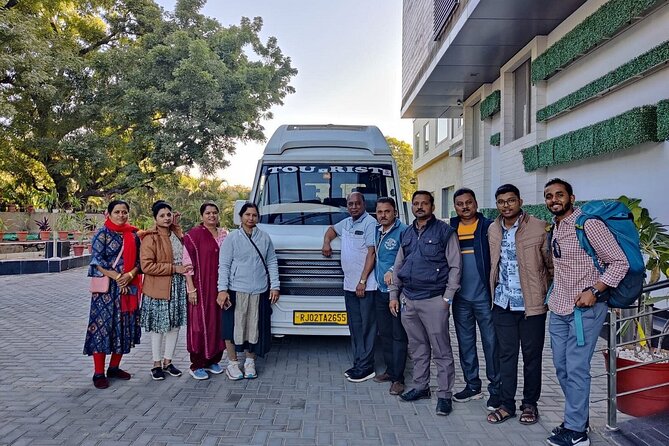
Jaipur packs a lot into one long morning. This private, full-day Jaipur tour links big-name sights like Hawa Mahal, Jantar Mantar, and the City Palace zone with a stepwell, the Water Palace look at Jal Mahal, and a museum stop, all wrapped into one efficient route with pickup and a real guide to connect the dots.
I love how the tour keeps you moving without making you think about logistics, and I especially like the included bottled water plus kulhad lassi or masala tea that make the day feel civilized instead of rushed. One thing to keep in mind: several major monuments have separate admission fees for foreigners, so budget a little extra on top of the tour price.
In This Review
- Key things that make this Jaipur day tour worth your time
- Sanganeer Airport to Pink City icons: how the timing works
- Hawa Mahal’s honeycomb façade: what you should notice first
- Jantar Mantar and the astronomy lesson behind the stones
- City Palace: the Rajput-Mughal mix you can actually see
- Panna Meena ka Kund stepwell: why the free stop feels special
- Gaitore Ki Chhatriyan: cenotaphs under Nahargarh, and why it’s worth skipping the crowds
- Jal Mahal on Man Sagar Lake: the Water Palace you can appreciate from the outside
- Albert Hall Museum: when Jaipur shows its museum side
- Price and value: what $39.59 covers, and what you might still pay
- Drivers who make the day smoother: what to ask your guide or driver
- Should you book this Jaipur full-day tour?
- FAQ
- What time does the Jaipur sightseeing tour start?
- Where does the tour start and end?
- Is this a private tour?
- What is included in the tour price?
- Are admission tickets included for the main attractions?
- Which stops are free?
- How long is the tour?
- Can I cancel for a full refund?
Key things that make this Jaipur day tour worth your time
- A private tour with airport start and end: it begins at Sanganeer Airport and returns you there, so you can build your trip around it.
- A guide who can explain what you are seeing: history and symbolism are the point, not just photo stops.
- Classic Jaipur in one tight route: palaces, astronomy, a stepwell, royal cenotaphs, and a museum.
- Some stops are free: you get admission-free time at Panna Meena ka Kund and Jal Mahal.
- Included refreshment: bottled water plus kulhad lassi or masala tea keep the long day comfortable.
The big Jaipur hits, gathered in one run
- Jaipur: Private Full Day Sightseeing Tour By Car with Guide
★ 4.9 · 1,839 reviews - Jaipur: Private Sightseeing Day Tour with Guide by Car
★ 4.8 · 773 reviews - Jaipur: Full-Day City Tour with Car, Guide & Skip-the-Line
★ 4.8 · 512 reviews - Full-Day Jaipur Private Sightseeing Tour by Car with Guide
★ 5.0 · 472 reviews
Sanganeer Airport to Pink City icons: how the timing works
This is the kind of Jaipur tour that helps you get your bearings fast. It starts at 9:00 am from Sanganeer Airport and runs about 8 hours 30 minutes, including travel time. That matters because Jaipur is busy, and distances between sights add up quickly if you are on your own.
Also, it is a private tour, meaning you are not forced to pace with strangers. Your guide and driver can adjust a bit if a stop takes longer than expected, or if you want extra time to read details on a façade before moving on.
One practical note: the day includes both shaded indoor stops and outdoor monuments. In Jaipur, morning light can be great for photos, but midday sun can be intense—so plan for sunscreen and a hat, and wear comfortable shoes even if you think you will only do short walks.
Hawa Mahal’s honeycomb façade: what you should notice first
Hawa Mahal (Palace of Wind) is one of those Jaipur sights that looks like a postcard until you start paying attention. It was built in 1798 under Maharaja Sawai Pratap Singh and designed as a five-story extension with a honeycomb-like pattern. The headline detail is the 953 small windows, called jharokhas, all decorated with intricate latticework.
Why this stop is so valuable on a day tour: it gives you a visual “key” to Jaipur’s royal architecture. Once you’ve seen the jharokhas up close, a lot of other buildings in the city start to make more sense—texture, privacy, airflow, and a kind of controlled theatricality.
What to expect with this format: you get about one hour here, which is enough time to walk the exterior view lines and let the building’s rhythm sink in. Admission is not included, and for foreigners it is listed as INR 200 (Indians: INR 50). If you want fewer ticket lines, bring your passport if you can and keep a bit of cash ready.
Jantar Mantar and the astronomy lesson behind the stones
Then you head to Jantar Mantar, the UNESCO-listed astronomical observatory in Jaipur. This is not a museum of artifacts behind glass; it is science made into architecture. Maharaja Sawai Jai Singh is credited with building it, and the site is known for a set of astronomical instruments meant for studying the sky.
In practice, this stop works best if you let your guide set the scene. The instruments can look like quirky sculptures until someone explains what each structure was designed to measure. Even if you are not a science person, you will likely appreciate the ambition: this was built as the largest of several observatories in India.
You get about one hour here. Admission is not included, listed as INR 200 for foreigners and INR 50 for Indians. If you arrive and immediately rush to the next stop, you miss what makes Jantar Mantar interesting—slow down for a few minutes to compare instrument shapes and how they relate to viewing the sky.
City Palace: the Rajput-Mughal mix you can actually see
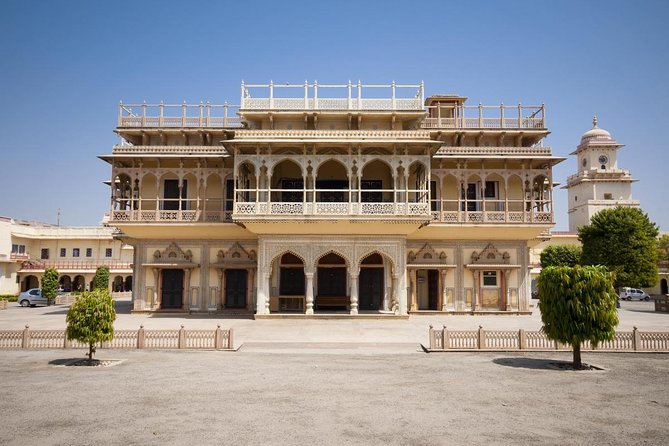
In the heart of Jaipur sits the City Palace of Jaipur, and it is one of the best stops for understanding how power and style blended over time. The palace complex is surrounded by impounding walls and is known for a fusion of Rajput and Mughal architectural styles.
You get around two hours at this stop, which is ideal because City Palace rewards reading. It is not just one building—it is a whole royal environment where you can spot how design choices shift between Rajput and Mughal influences. Your guide’s job here is huge: history and symbolism can turn “pretty palace walls” into something you remember after you leave Jaipur.
Admission is not included, listed as INR 700 for foreigners and INR 200 for Indians. If you are trying to keep the day lean on extra costs, City Palace is one of the biggest ticket items, so decide before you arrive how much you want to spend versus how many photos you want to take.
Panna Meena ka Kund stepwell: why the free stop feels special
If you want one stop that surprises people, it is Panna Meena ka Kund, also known as Panna Meena ki Baori. This one is free, and that is a rare gift on a day packed with paid monuments.
This stepwell dates to the 16th century and was built as a water source. The architecture is what makes it unforgettable: recessed doorways, octagonal gazebos, and crisscross stair patterns that run through the space. The description also highlights an eight-story feel, which is exactly the kind of scale that makes you want to look longer than your initial “one quick glance.”
Because it is a stepwell, you should expect uneven stairs and a bit of walking inside the complex. Wear shoes you trust. You will likely spend about one hour here, and honestly, it is time well spent because this is a different side of Jaipur—less about royal display, more about how people built for everyday life.
Gaitore Ki Chhatriyan: cenotaphs under Nahargarh, and why it’s worth skipping the crowds
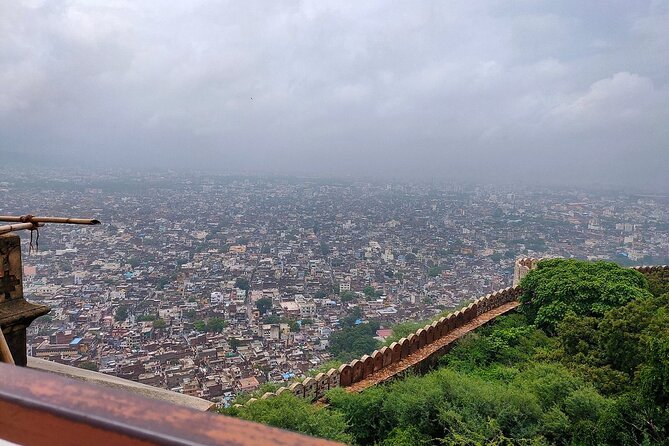
Below Nahargarh Fort sits Gaitore Ki Chhatriyan, a complex of cenotaphs for Jaipur’s royal family. If City Palace is about the grand life, Gaitore is about memory, marble craft, and the quieter ways power is honored.
This is a lesser-known stop compared to the headline monuments, and that can be a good thing. The complex includes cenotaphs of former rulers such as Maharaja Madho Singh II, Maharaja Jai Singh II, and Pratap Singh. You also get the kind of architectural detail that feels effortless once you notice it: marble domes and carved pillars.
You get about one hour. Admission is not included: listed as INR 100 for foreigners and INR 30 for Indians. If your schedule is tight, this is still manageable. The payoff is that you are not stuck only with the most famous buildings—you are getting a more complete picture of royal architecture styles.
Jal Mahal on Man Sagar Lake: the Water Palace you can appreciate from the outside
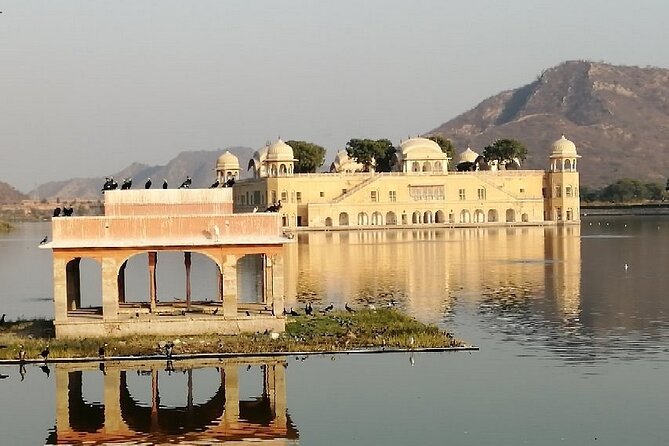
Jal Mahal, also called the Water Palace, sits in the middle of Man Sagar Lake. It is a classic blend of Mughal and Rajput style, built of red sandstone, and described as a five-story structure.
Here’s the reality check: Jal Mahal is impressive, but this kind of stop is about the view and the setting. You get about one hour, and since admission is listed as free, you can spend time just absorbing the location and the silhouette without worrying about extra ticket logistics.
The fact that it is free matters for value. Many tours fill the day with paid stops; this one gives you at least one chance to enjoy a famous building without paying another monument fee.
Albert Hall Museum: when Jaipur shows its museum side
To wrap the day with something indoors and different, the tour includes Albert Hall Museum. It is known for its collection of artifacts and for its architecture. If you like buildings that look like they belong to a different era, this museum stop is worth it even if you do not plan to read every label.
You get about one hour here. Admission is not included, listed as INR 300 for foreigners and INR 40 for Indians. The way this fits into the route is smart: after palaces and outdoor monuments, the museum gives your eyes a break while still keeping the theme of Jaipur’s past.
If you are museum-curious, spend a few minutes with the architecture first. Then, when you look at the artifacts, you will connect the building’s style to the kinds of collections it houses.
Price and value: what $39.59 covers, and what you might still pay
The tour price is listed at $39.59 per person and includes key comforts that make a long day easier: pickup, bottled water, kulhad lassi or masala tea, and a professional in-person guide. It also includes a mobile ticket, and the tour is private, meaning you are paying for a dedicated experience rather than shared wandering.
Where the value can swing is admission. Several stops charge foreigners, and the list matters:
- Hawa Mahal: INR 200 (foreigners) / INR 50 (Indians)
- Jantar Mantar: INR 200 / INR 50
- City Palace: INR 700 / INR 200
- Gatore ki Chhatriyan: INR 100 / INR 30
- Albert Hall Museum: INR 300 / INR 40
- Free stops: Panna Meena ka Kund and Jal Mahal
So yes, the ticket costs are real. But the way I see it, the admissions are paying for entry into major heritage sites, while your tour price pays for the guide, the transport time you save, and the fact that you will not be trying to stitch together a complicated route while navigating traffic.
If you are a first-time visitor, that guide time is the difference between collecting photos and collecting understanding.
Drivers who make the day smoother: what to ask your guide or driver
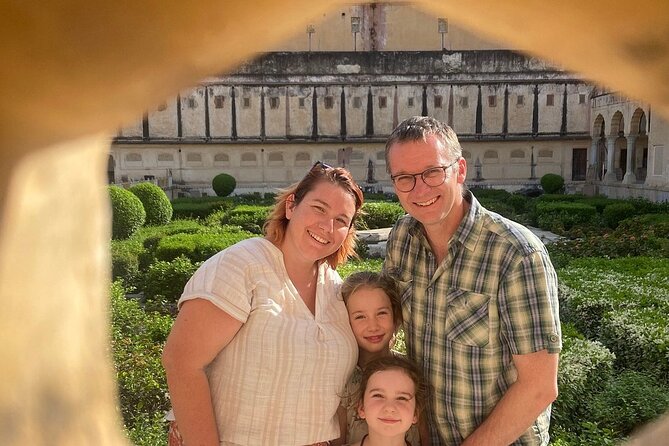
I noticed a pattern in the experience descriptions tied to this tour style: the drivers are often praised for being punctual and for good route planning. Names that come up include Sharif Khan, Irfan, Rafik, Mohammed Jakir, Bhavani Singh, Rashidh, and Narender—and multiple people describe them as polite, helpful, and good at guiding through the day.
If your driver speaks good English, you will likely get quicker explanations in the car, especially when you pass between neighborhoods. And if the driver is the type who understands the timing, you will feel it: less waiting around, smoother transitions, and fewer moments where you wonder why you are late.
Also, if you want a little extra control over how your time gets used, ask your guide during the day. Some guides and drivers are able to recommend places for shopping or dining that fit your preferences, instead of forcing you into a one-size-fits-all plan.
Should you book this Jaipur full-day tour?
Book it if you want a guided, efficient circuit of Jaipur’s most important landmarks in one day, starting right at Sanganeer Airport. It is a strong fit for first-timers, for people short on time, and for anyone who prefers to spend energy on the sights instead of navigating logistics.
Skip or reconsider if you already know Jaipur well and you want to roam slowly without ticket-driven stops, or if you are very budget-sensitive about admissions. In that case, you might choose only the free sights or pick a smaller set of paid monuments.
One last practical thought: plan your cash for the major admission sites listed above, wear comfortable shoes for stair-heavy spots like the stepwell, and bring sun protection. Do that, and this becomes the kind of day where the city feels connected instead of scattered.
FAQ
What time does the Jaipur sightseeing tour start?
It starts at 9:00 am.
Where does the tour start and end?
It starts at Sanganeer Airport, Jaipur and ends back at the meeting point.
Is this a private tour?
Yes. It is private, so only your group participates.
What is included in the tour price?
Included items are bottled water, kulhad lassi or masala tea, and a professional in-person guide.
Are admission tickets included for the main attractions?
No. Admission is not included for Hawa Mahal, Jantar Mantar, City Palace, Gatore ki Chhatriya, and Albert Hall Museum.
Which stops are free?
Panna Meena ka Kund and Jal Mahal are listed as free (admission ticket free).
How long is the tour?
The duration is about 8 hours 30 minutes.
Can I cancel for a full refund?
Yes. Free cancellation is available up to 24 hours in advance of the experience start time for a full refund.
More Jaipur Tours to Compare
- Jaipur: Private Full Day Sightseeing Tour By Car with Guide★ 4.9 · 1,839 reviews
- 3-Hour Morning Bike Tour of Jaipur★ 5.0 · 1,253 reviews
- Jaipur: Private Sightseeing Day Tour with Guide by Car★ 4.8 · 773 reviews
- Jaipur: Full-Day City Tour with Car, Guide & Skip-the-Line★ 4.8 · 512 reviews
- Full-Day Jaipur Private Sightseeing Tour by Car with Guide★ 5.0 · 472 reviews
- Pink City Cooking Class★ 5.0 · 452 reviews
All of Jaipur in a Day
- Jaipur: Private Full Day Sightseeing Tour By Car with Guide★ 4.9 · 1,839 reviews
- Jaipur: Private Sightseeing Day Tour with Guide by Car★ 4.8 · 773 reviews
- Jaipur: Full-Day City Tour with Car, Guide & Skip-the-Line★ 4.8 · 512 reviews
- Full-Day Jaipur Private Sightseeing Tour by Car with Guide★ 5.0 · 472 reviews
- Private Full Day Jaipur Sightseeing Tour By Tuk Tuk★ 5.0 · 382 reviews
- Jaipur: Private Full-Day Guided City Tour★ 4.9 · 308 reviews
Newly Added Jaipur Reviews


More from Jaipur Sightseeing Tours.
 ★ 4.9Private Full Day Sightseeing Tour By Car with GuideFrom $41,839 reviews
 ★ 4.8Private Sightseeing Day Tour with Guide by CarFrom $5773 reviews
 ★ 4.8Full-Day City Tour with Car, Guide & Skip-the-LineFrom $9512 reviews
 ★ 5.0Full-Day Jaipur Private Sightseeing Tour by Car with GuideFrom $11472 reviews
 ★ 5.0Private Full Day Jaipur Sightseeing Tour By Tuk TukFrom $5382 reviews
 ★ 4.9Private Full-Day Guided City TourFrom $22308 reviews
★ 5.0Full-day Jaipur Private Sightseeing Tour by Car with GuideFrom $75240 reviews
★ 4.9Private Full-Day Guided City TourFrom $22308 reviews
★ 5.0Full-day Jaipur Private Sightseeing Tour by Car with GuideFrom $75240 reviews
 ★ 5.0Private Full Day Jaipur Tour with GuideFrom $5214 reviews
This tour also appears in