
Reviewed · DELHI DAY TRIPS FROM JAIPUR
From New Delhi: Jaipur Tour by Fast Train or by Private Car
Jaipur in one intense day feels like speed-dating. You still get the big sights with a live guide, plus a logistics team that handles pickup, train seats, and your route. It’s a long day, but the payoff is seeing Jaipur’s key monuments without the usual hassle.
I especially love two things. First, the live guide time is built into every stop, so you’re not just taking photos—you’re understanding what you’re looking at. Second, you get proper monument coverage: Amber Fort, Jantar Mantar, City Palace, and Hawa Mahal in one run, with a structured pace and photo-friendly breaks.
The only real drawback is timing. You start around 5 AM, and the schedule is packed, so you’ll want comfortable shoes and a calm attitude toward long drives and crowds.
In This Review
- Key highlights you should care about
- Why do Jaipur in one day from New Delhi?
- Train vs private car: pick the ride that matches your tolerance
- The early pickup plan (and why it matters)
- Amber Fort: courtyards, views, and the Rajput–Mughal blend
- Jal Mahal lake palace: why you only view it from the outside
- Panna Meena Ka Kund stepwell: patterned stairs for the camera
- Jantar Mantar: the observatory that turns time into architecture
- Lunch breaks: plan for hunger, not meals
- City Palace and Chandra Mahal: where Rajput and Mughal meet
- Hawa Mahal: the 953 windows and how the design worked
- Galta Ji Temple (Monkey Temple): worth it if you have time
- Your live guide and driver: the real quality marker
- Price and value: what you’re really paying for
- Practical tips so the day feels smooth (not frantic)
- Who should book this Jaipur day trip?
- Should you book this tour?
- FAQ
- How long is the Jaipur day trip from New Delhi?
- What time does the tour start?
- Do I need to buy train tickets myself?
- Is there a guide at every stop?
- Are meals included?
- Which monuments are included?
- Is Jal Mahal entry allowed?
- Are there accessibility options?
- Is this tour suitable for pregnant women?
Key highlights you should care about
- Fast-train or private-car round trip from New Delhi, with someone helping you with seats and boarding
- Amber Fort with guided time in the courtyards and hilltop fortress views
- Jal Mahal lake-palace exterior photos, since entry is not allowed
- Jantar Mantar UNESCO observatory, explained by a live guide with time/predict-eclipse instruments
- Hawa Mahal and its latticework look-up angle, including the 953-window detail
- Optional Galta Ji Temple (Monkey Temple) if your day has space
North to the capital, more Delhi runs
- Golden Triangle & Ranthambore: 4-Day Private Tour from Delhi
★ 5.0 · 355 reviews - From Delhi: Private 3-Day Golden Triangle Tour with Hotels
★ 4.9 · 339 reviews - From Delhi: Private 5-Day Golden Triangle Tour
★ 4.9 · 208 reviews - Same Day Jaipur Tour from Delhi by Car or Train
★ 5.0 · 87 reviews
Why do Jaipur in one day from New Delhi?
Jaipur is one of those places where a first visit can turn into a photo marathon fast. The trick is making sure your day doesn’t become a blur. This tour’s value is that it strings the most important sights into a logical order, with a guide speaking through what you’re seeing, then moving you on before you lose the light or your energy.
I like that it’s not only monuments-in-name. You’re actually guided at each stop. That matters because places like Jantar Mantar and Hawa Mahal make more sense when someone explains the design purpose, not just the name. And Jaipur’s architecture rewards a guided pace—especially when you’re hopping from hilltop fort angles to lake views to street-facing windows.
You should also know who this is best for. If you want a calm, slow, “linger for hours” day, this isn’t it. If you’re short on time and want a high-return overview with some context, it fits very well.
Train vs private car: pick the ride that matches your tolerance
You basically choose between an early-morning fast train plan or a more flexible private car plan. Both bring you to the same core monuments, with guided stops.
Train option (round-trip):
- Pickup around 5:00 AM in New Delhi (multiple pickup zones exist)
- Driver drops you at New Delhi Railway Station and helps you find the right coach and seats
- Train departs 6:10 AM, arrives Jaipur around 10:45 AM
- Return train: leaves Jaipur around 5:50 PM, arrives Delhi about 10:40 PM
- You’re back at your hotel around the end of the day
This is best when you want fewer road surprises and a more predictable schedule.
Private car option (round-trip):
- Pickup around 5:00 AM from Delhi / Gurugram / Noida / Aerocity / other listed locations
- Arrival in Jaipur around 9:30 AM
- Return drive starts about 5:30 PM, with drop-off at hotels or Delhi airport typically 8–9 PM
This can feel easier if you prefer door-to-door without station navigation. One practical point: the tour notes that you can request toilet breaks during the car transfer.
My take: If you hate stress and want a clean timeline, go train. If you’re traveling in a way that makes station logistics annoying, go car. Either way, start early and bring patience for a full day.
The early pickup plan (and why it matters)
Starting around 5 AM sounds brutal until you realize what it buys you: fewer crowds at the first sights and enough time to hit the big architectural markers before the day gets hot or chaotic.
Pickup is included from within New Delhi city limits (for the train option) and from multiple specified areas (for the car option). After pickup, you’re either driven straight to the station with help getting on the correct coach, or you’re driven to Jaipur with your guide meeting you after arrival.
One underrated detail: you’re not doing this alone in the chaos. The driver supports boarding and seats on the train side, and you get a live guide waiting when you arrive in Jaipur. That’s the difference between having a plan and actually following it.
Amber Fort: courtyards, views, and the Rajput–Mughal blend
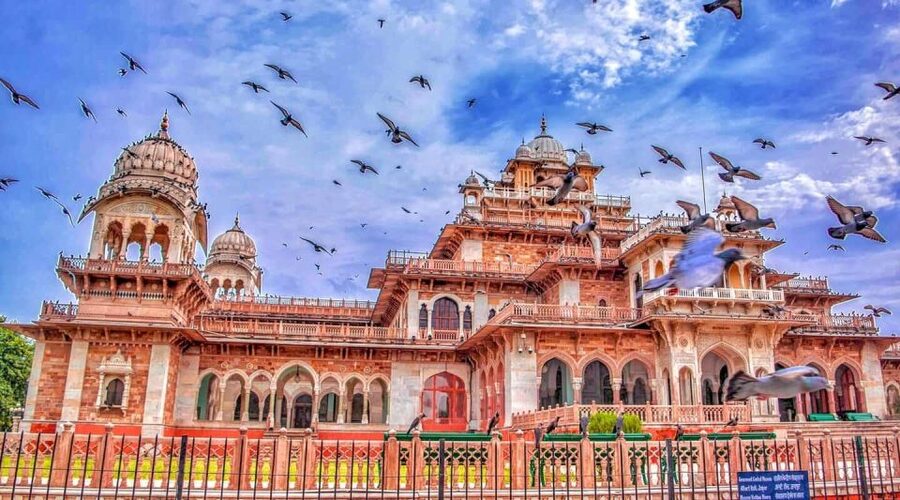
Amber Fort is the anchor stop. You get about 1.5 hours with a guided visit, and that time matters because the fort isn’t one simple courtyard. It’s a layered experience of spaces and viewpoints up on the hill.
What I like about the way this is handled is that you’re guided through what makes Amber Fort famous: splendid Rajput architecture and a Hindu–Mughal influence mix. When you understand that mix, the details stop feeling random. You start noticing how the design tells a story—power, aesthetics, and cultural crossover—without needing a textbook.
Practical tip: wear comfortable shoes. Fort spaces can include uneven surfaces, and you’ll be standing for photos as the guide points out angles. Also, sunrise-ish departure helps here; Amber is easier to enjoy earlier than later.
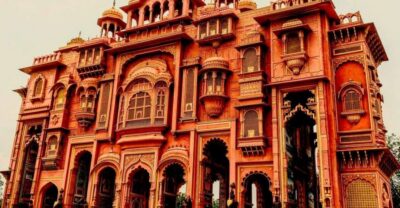
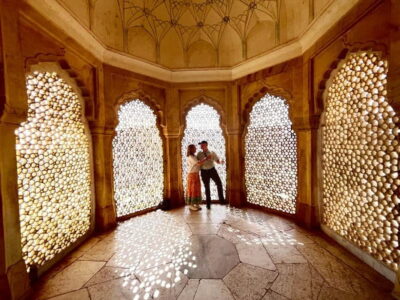
The big Jaipur hits, gathered in one run

Jal Mahal lake palace: why you only view it from the outside
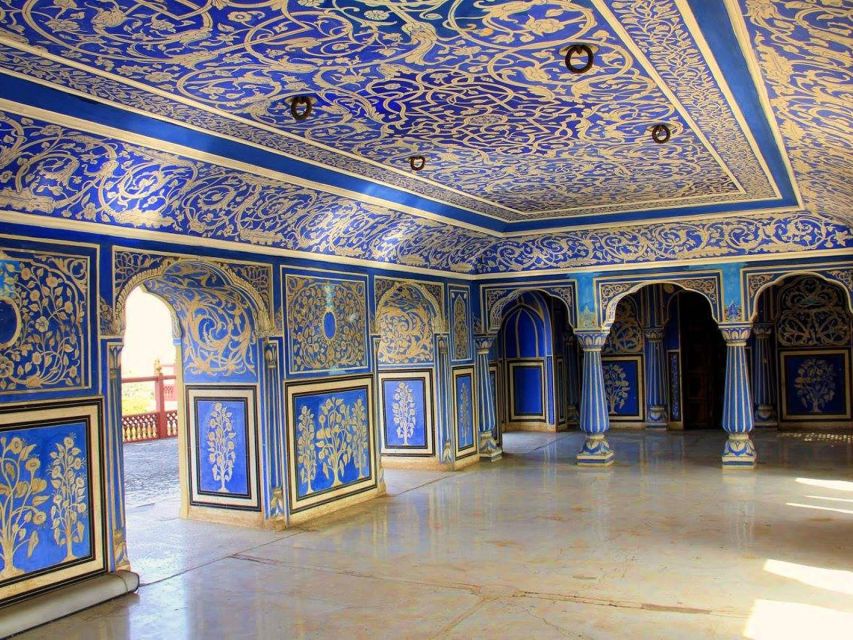
Jal Mahal is the quick dose of “wow” in the middle of the day. You get about an hour, and the key fact is simple: entry is prohibited inside the building. That might sound like a downgrade, but the tour makes the limitation work for you.
You’re there for exterior views and photography angles. The lake-palace look is strongest when you’re positioned to see the palace silhouette against the water. A guide can steer you toward the best viewpoints so you don’t waste time searching.
If you’re the type who hates being stopped at a gate, this is the one moment where you’ll need to reframe. Think of Jal Mahal as a photo-spot and a composition lesson, not a museum stop.
Panna Meena Ka Kund stepwell: patterned stairs for the camera
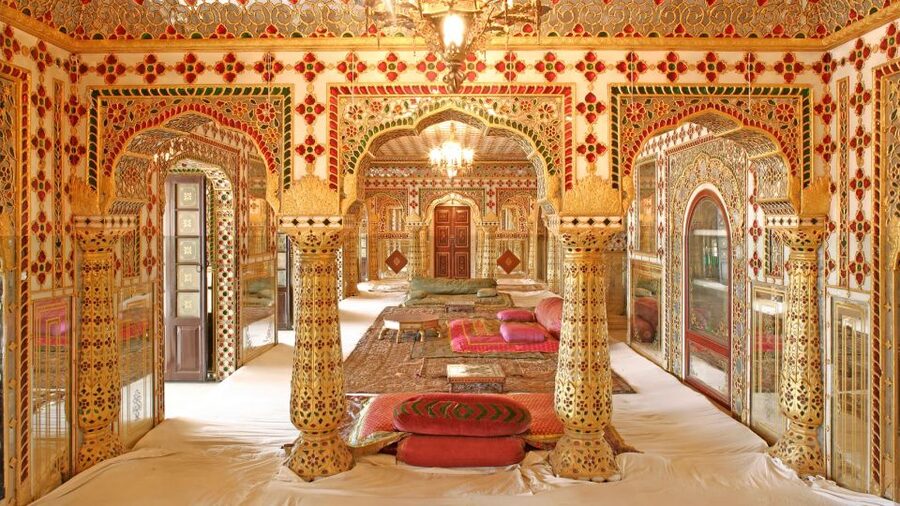
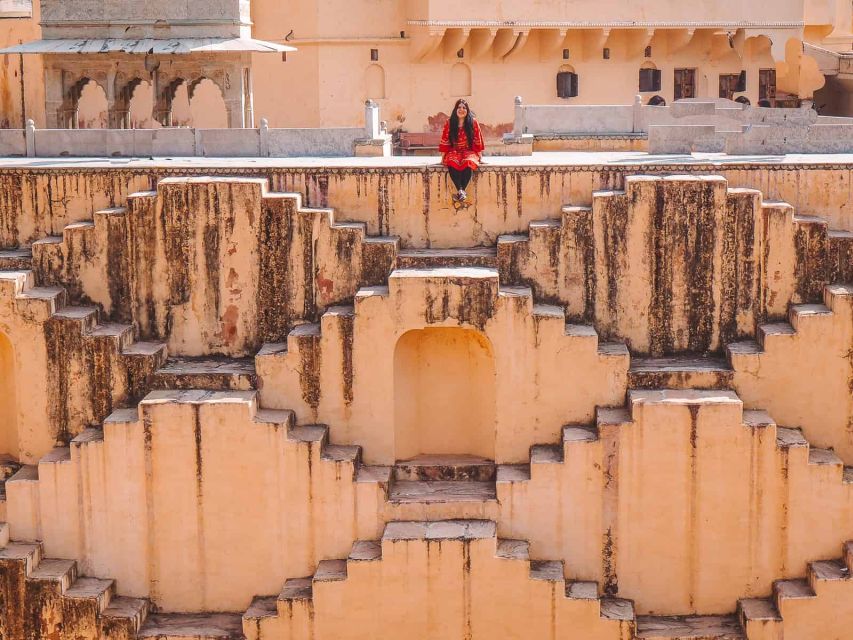
This is one of those Jaipur details that people miss when they only rush for the famous names. The tour aims to capture the patterned stairs of Panna Meena Ka Kund, a stepwell known for its repeating geometry.
Even if you’re not a photography expert, you’ll appreciate it because the structure gives you instant framing. Straight-on, angled, or shot from above, those patterns look good with minimal effort. And because it’s a different type of site than fortresses and palaces, it breaks up the day nicely.
Wear shoes you can walk in confidently, and keep an eye on where you step when you’re moving for photos.
Jantar Mantar: the observatory that turns time into architecture
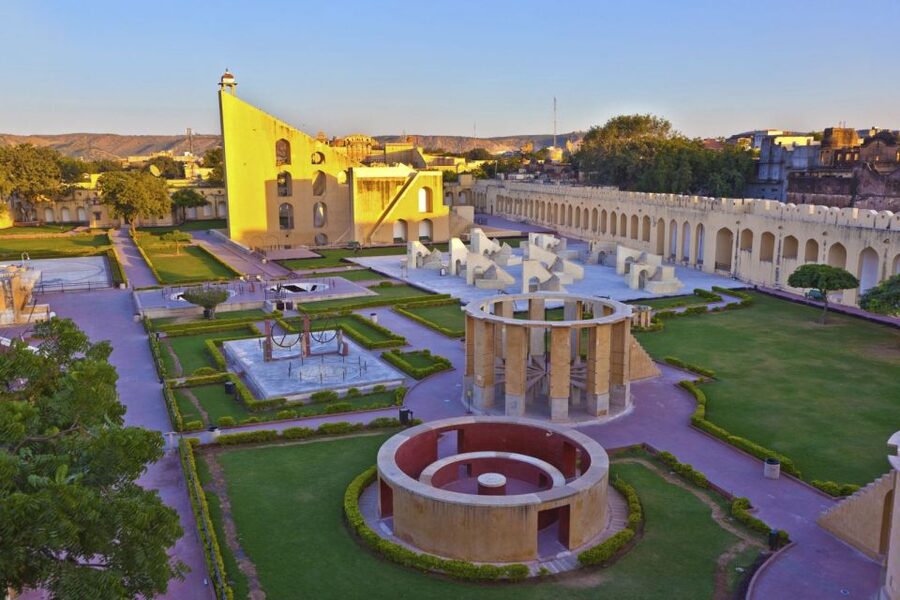
After Amber Fort (and the mid-day rhythm), you head to Jantar Mantar, a UNESCO World Heritage Site. Your guided time there is about 45 minutes.
This stop is special because it explains how the complex instruments worked. Jantar Mantar isn’t just “old rocks and symmetry.” The observatory includes architectural instruments used to measure time, predict eclipses, and track celestial bodies. A live guide helps you connect what you see—angles, markings, and instrument shapes—to the purpose behind them.
My advice: keep your phone ready, but also look away from it at least once. If you follow the guide’s explanations, you’ll start seeing why the instruments are built the way they are, instead of treating it like a quick photo lap.
Lunch breaks: plan for hunger, not meals
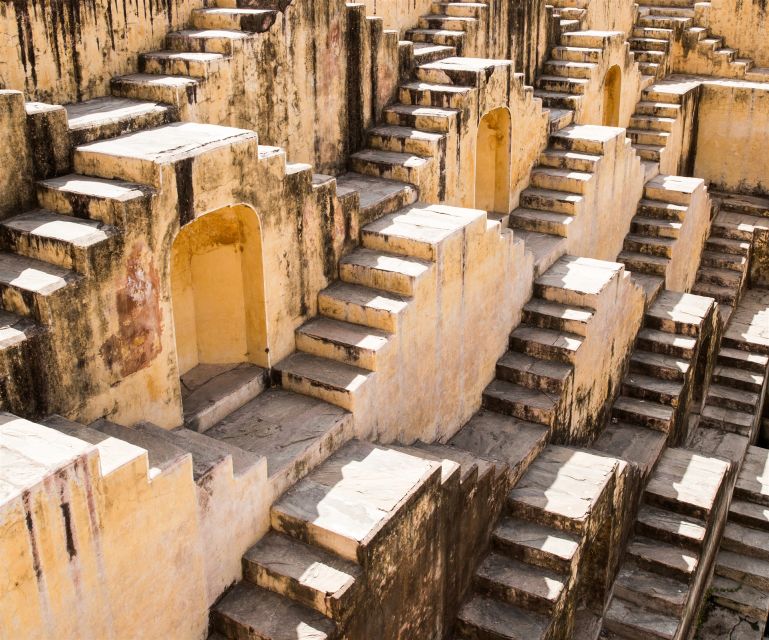
The day includes lunch time after earlier sights. Meals and drinks are not included, so you’ll want to budget for your food and water.
I like that you get scheduled breaks rather than wandering off to “find something.” Still, Jaipur can move fast and menus can vary. If you have preferences, I’d treat lunch as a chance to refuel and not a quest.
Carry some snacks if you think you’ll need them, especially on hot days. The tour includes water bottles, which helps.
City Palace and Chandra Mahal: where Rajput and Mughal meet
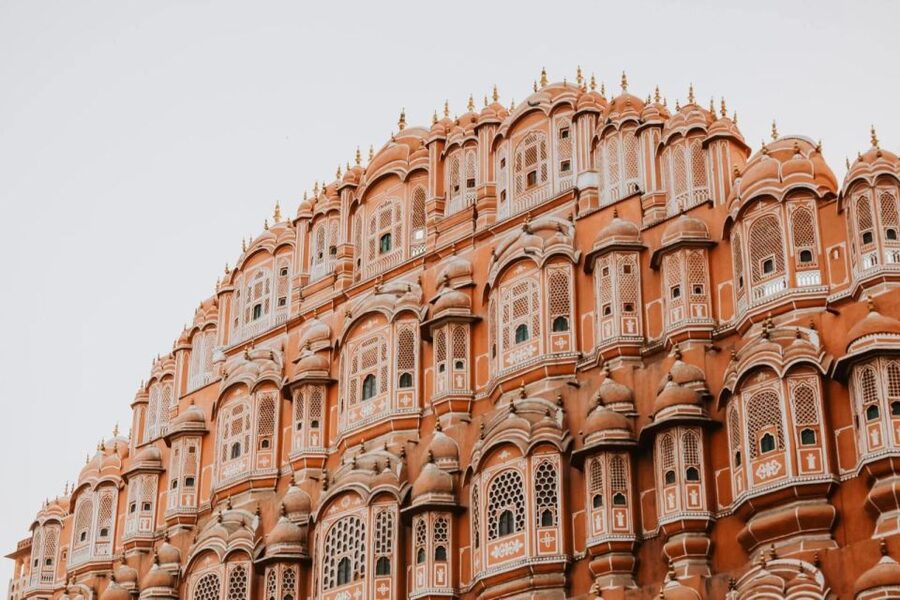
City Palace gets about 1 hour with a guided tour. This is where Jaipur feels like a living museum complex—courtyards, gardens, museums, and the famous Chandra Mahal.
The architecture here reflects a blend of Rajput and Mughal styles, and a guide makes it easier to see the transitions between spaces. Instead of feeling like you’re just walking through rooms, you can understand what each area was built to do.
If you like details, this is a strong stop. The guide’s explanations turn what could feel like “more rooms” into a sense of how the palace complex functioned over time.
Hawa Mahal: the 953 windows and how the design worked
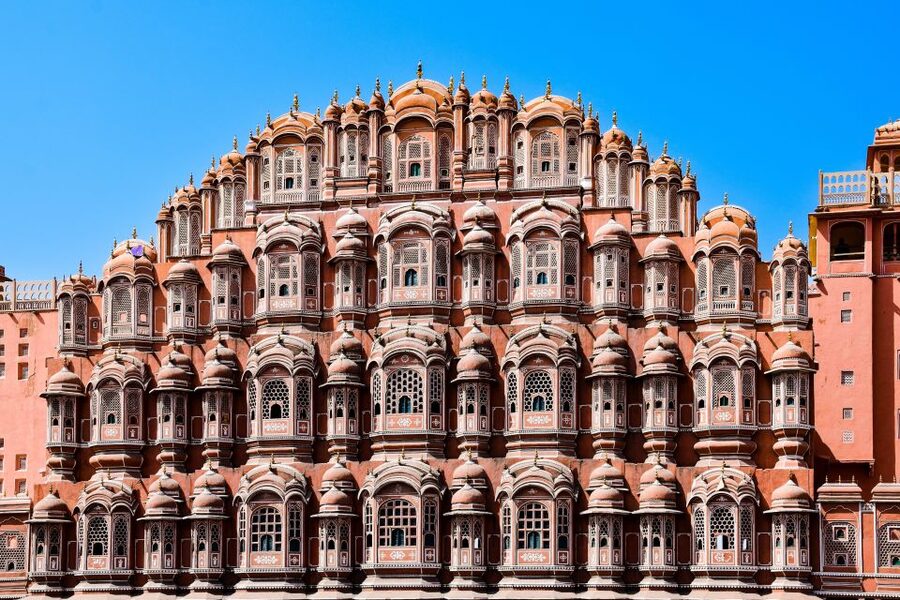
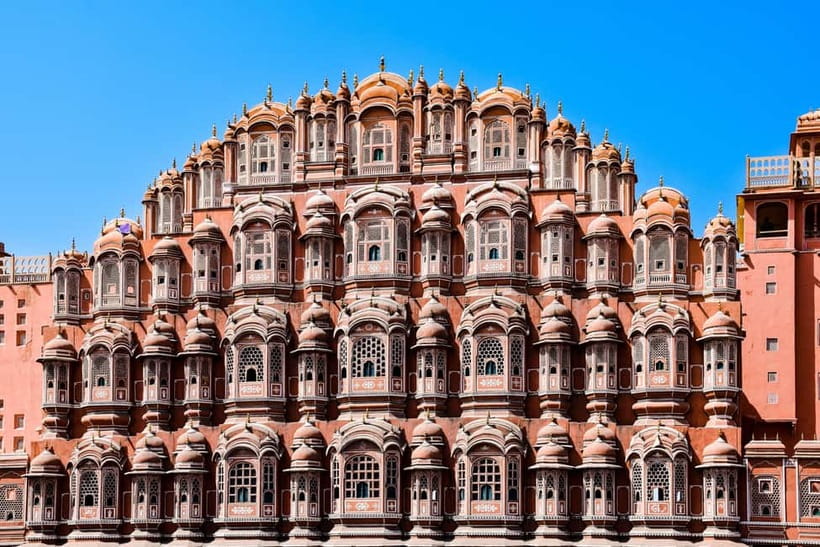
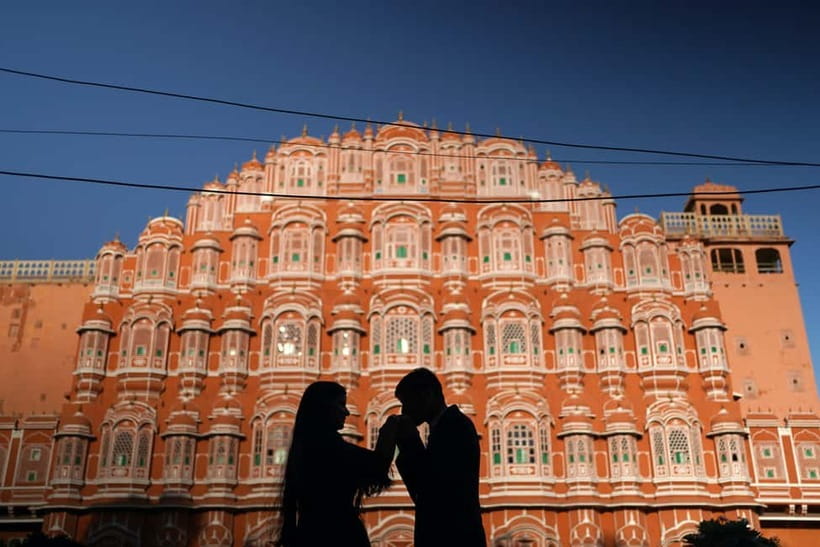
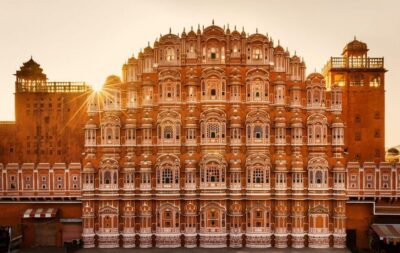
Hawa Mahal is iconic for a reason. You get about 45 minutes here, and it’s built around a very specific idea: royal women could observe street activity during festivals without being seen.
The structure is five stories tall and covered in intricate latticework. The best-known detail is the 953 small windows, which create that honeycomb look and the famous photo angles.
What I find useful is that the guide’s storytelling connects the windows to the social purpose. When you understand that, Hawa Mahal becomes more than a postcard. It becomes a design solution.
Practical note: expect crowds. Move with your guide, take your main photo from a sensible angle, then let the architecture details do the rest.
Galta Ji Temple (Monkey Temple): worth it if you have time
If your day has room, you can add Galta Ji Temple, also called Monkey Temple. The tour schedules it for about 1 hour, and it’s described as a holy pilgrimage site with ancient temples, water tanks, and bathing ghats in a natural setting.
Because this part is conditional—only if time allows—it’s a good fit for people who want one more religious and landscape-feeling stop beyond palaces and observatories. If you’d rather skip extra walking, you can also treat it as optional time rather than a requirement.
Bring respectful energy. Temples like this are active places, not only photo sets.
Your live guide and driver: the real quality marker
A huge part of why this works is the people. The tour is built as a private group with a live guide at the sights, plus a driver handling transfers.
The guide languages listed include English, Spanish, French, Russian, German, Japanese, Italian, Portuguese, Hindi, Arabic. That matters because it changes the value from “I saw the monument” to “I understood why it looks like that.”
Some guides have stood out by name in real-world feedback: Yusuf has been praised for a fun, Russian-speaking style; Soni gets credit for clear explanations and lively energy; Hitesh has been praised for excellent Spanish; and Rajentha for being easy to talk to. On the driving side, Mehar Singh has been noted as friendly and skilled, with guests feeling safe. Even if your guide isn’t one of those names, the point stays: you’re paying for guided context, not just movement.
Price and value: what you’re really paying for
The price is listed at around $27 per person, and for a long day that includes a lot of heavy lifting.
Here’s what that money covers (based on the provided details):
- Hotel or station pickup and drop-off
- A private air-conditioned car with driver (even on the train option, you still get the private car inside Jaipur)
- Round-trip train coach fare for the train option
- Live tour guide services at each location
- Monument entry tickets at all places if the option with tickets is booked
- Water bottles
- Tolls, parking, and taxes
What’s not included:
- Meals and drinks
- Personal expenses
So the real value equation is this: you’re paying to avoid planning chaos—coordinating trains, finding coaches, navigating monuments, and translating architecture into meaning. You’re also paying for a private guide experience rather than a generic audio stop.
Is it worth it? If you price out a day of guided monument visits plus transportation between Delhi and Jaipur, $27 can feel like a bargain. If you’re the type who already knows exactly what to do and wants total freedom, you might find cheaper DIY options. But you’ll also spend your day solving problems instead of seeing sights.
Practical tips so the day feels smooth (not frantic)
- Start with comfy shoes. Forts and temples involve real walking and standing.
- Bring sunglasses and sunscreen. Jaipur sun can make a short stop feel long.
- Use an ID you can show (passport or ID card is mentioned).
- Keep an eye on the end times: the train tour is longer into the night (arriving back around 10:40 PM), while the car option typically ends earlier (8–9 PM).
- If you pick the car plan, you can request toilet breaks as needed.
- This tour isn’t listed as suitable for pregnant women—so plan accordingly.
Who should book this Jaipur day trip?
This fits best if:
- You want a first visit overview with major Jaipur highlights in one day.
- You value guided explanations more than wandering independently.
- You’re traveling with a group and prefer a private group experience.
- You’re comfortable with an early start and a packed schedule.
If you’re the kind of person who needs lots of downtime between stops, you may find the pace tiring. In that case, consider breaking Jaipur into two days.
Should you book this tour?
I’d book it if you want a high-return day: architecture, observatory science, palace design, and iconic photo stops, all with a live guide doing the explaining. The mix of fast logistics (pickup, train seats help or car transfer) and guided monument time is where the value lives.
Skip it if your ideal travel day is slow, flexible, and quiet. This is a full schedule with early departure and fixed sightseeing windows, plus lunch that you’ll need to handle on your own.
If you’re deciding between train and car, choose based on stress tolerance: train for predictable timing, car for door-to-door comfort and flexibility.
FAQ
How long is the Jaipur day trip from New Delhi?
It runs about 15–16 hours, starting around 5 AM and returning late in the evening (the train option comes back around 10:40 PM, while the car option typically ends 8–9 PM).
What time does the tour start?
For both options, pickup is around 5 AM.
Do I need to buy train tickets myself?
For the train option, round-trip train coach fare is included. The driver also helps you find the correct coach and seats.
Is there a guide at every stop?
Yes. The tour includes a live tour guide services at each location.
Are meals included?
No. Meals and drinks are not included, though lunch time is planned during the day.
Which monuments are included?
Amber Fort, Jal Mahal exterior viewing, Jantar Mantar, City Palace, and Hawa Mahal are included. Galta Ji Temple is included if you have time in hand.
Is Jal Mahal entry allowed?
No. Entrance is prohibited in Jal Mahal, but you can see it from outside and take pictures.
Are there accessibility options?
Yes. The tour is listed as wheelchair accessible.
Is this tour suitable for pregnant women?
No. It is specifically noted as not suitable for pregnant women.
More Jaipur Tours to Compare
- Jaipur: Private Full Day Sightseeing Tour By Car with Guide★ 4.9 · 1,839 reviews
- 3-Hour Morning Bike Tour of Jaipur★ 5.0 · 1,253 reviews
- Jaipur: Private Sightseeing Day Tour with Guide by Car★ 4.8 · 773 reviews
- Jaipur: Full-Day City Tour with Car, Guide & Skip-the-Line★ 4.8 · 512 reviews
- Full-Day Jaipur Private Sightseeing Tour by Car with Guide★ 5.0 · 472 reviews
- Pink City Cooking Class★ 5.0 · 452 reviews
All of Jaipur in a Day
- Jaipur: Private Full Day Sightseeing Tour By Car with Guide★ 4.9 · 1,839 reviews
- Jaipur: Private Sightseeing Day Tour with Guide by Car★ 4.8 · 773 reviews
- Jaipur: Full-Day City Tour with Car, Guide & Skip-the-Line★ 4.8 · 512 reviews
- Full-Day Jaipur Private Sightseeing Tour by Car with Guide★ 5.0 · 472 reviews
- Private Full Day Jaipur Sightseeing Tour By Tuk Tuk★ 5.0 · 382 reviews
- Jaipur: Private Full-Day Guided City Tour★ 4.9 · 308 reviews
North to Delhi
- Golden Triangle & Ranthambore: 4-Day Private Tour from Delhi★ 5.0 · 355 reviews
- From Delhi: Private 3-Day Golden Triangle Tour with Hotels★ 4.9 · 339 reviews
- From Delhi: Private 5-Day Golden Triangle Tour★ 4.9 · 208 reviews
- Same Day Jaipur Tour from Delhi by Car or Train★ 5.0 · 87 reviews
- From Delhi: Private Jaipur & Amber Fort Guided Tour by Car★ 4.8 · 84 reviews
- Golden Triangle Tour – Delhi-Agra-Jaipur★ 5.0 · 73 reviews
Newly Added Jaipur Reviews




More from Delhi Day Trips from Jaipur.
 ★ 5.0Golden Triangle & Ranthambore: 4-Day Private Tour from DelhiFrom $215355 reviews
 ★ 4.9From Delhi: Private 3-Day Golden Triangle Tour with HotelsFrom $93339 reviews
 ★ 4.9From Delhi: Private 5-Day Golden Triangle TourFrom $191208 reviews
 ★ 5.0Same Day Jaipur Tour from Delhi by Car or TrainFrom $9787 reviews
 ★ 4.8From Delhi: Private Jaipur & Amber Fort Guided Tour by CarFrom $584 reviews
Golden Triangle Tour – Delhi-Agra-JaipurFrom $32273 reviews
★ 4.8From Delhi: Private Jaipur & Amber Fort Guided Tour by CarFrom $584 reviews
Golden Triangle Tour – Delhi-Agra-JaipurFrom $32273 reviews
 ★ 5.0Private 6-Day Golden Triangle Tour: Delhi, Agra, Jaipur by CarFrom $21560 reviews
 ★ 4.6From Delhi: Private 4-Day Golden Triangle Tour with PickupFrom $12338 reviews
This tour also appears in