
Reviewed · JAIPUR SIGHTSEEING TOURS
Experience the Best of Jaipur on a Full-Day Sightseeing Tour
Jaipur can feel big fast, so this tour keeps it focused. You’ll hit the city’s top landmarks in one smooth day, with hotel pickup, a private A/C vehicle, and a guide who ties the sights together. I especially like how the route balances showstoppers like Hawa Mahal with quieter stops like the Royal Gaitor cenotaphs, and you also get some afternoon breathing room for gifts and personal wandering. The main drawback: monument entry fees (and camera fees) are not included, so you’ll want to budget a little extra on top of the $48.
Expect a full day with moderate walking, plus smart dress rules at temples. If you’re traveling with limited time and want structure (not guesswork), this plan is a strong fit. Just note that it starts at 9:00am and runs about 8 hours, so it’s not the best choice if you prefer slow mornings and long breaks.
In This Review
- Key Highlights Worth Your Attention
- A 9:00am Start That Fits a One-Day Jaipur Plan
- Hawa Mahal: Tiered Jali Screens and the Story Behind the Palace of Winds
- City Palace: Mughal and Rajput Mixing, Plus a Still-Lived Royal Complex
- Jantar Mantar: 1729 Astronomy Made Physical
- Royal Gaitor Tumbas: Quiet, Carved Cenotaphs Outside the City Walls
- Jal Mahal: The Lake Palace Setting on Man Sagar Lake
- Amer (Amber) Fort Area: UNESCO Status and the Layers Before the Fort
- How the Guide Makes This Day Feel Personal (Even in a Fixed Route)
- Price and Practical Costs: Is $48 Good Value for This Route?
- Dress Code, Shoes, and the Passport Detail You Shouldn’t Skip
- Who This Jaipur Best-of Day Works For
- Should You Book This Jaipur Highlights Tour?
- FAQ
- How long is the Jaipur full-day sightseeing tour?
- What’s included in the $48 per person price?
- Are monument entrance fees included?
- Does the tour include meals?
- Is there walking involved?
- What should I wear?
- Do I need a passport?
- Can I cancel for a full refund?
Key Highlights Worth Your Attention
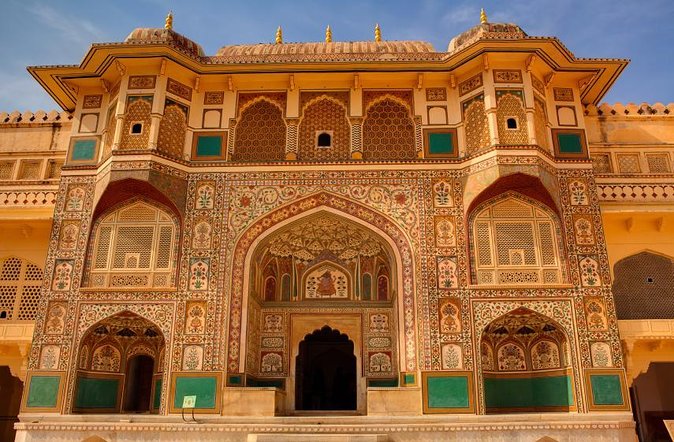
- A tight one-day circuit that mixes palaces, an astronomical observatory, stepwell-style heritage, tombs, and a lake palace area
- Hotel pickup and drop-off plus a private A/C vehicle for comfortable, low-hassle moving between sites
- Guide-led commentary that helps you understand why these places matter, not just what they look like
- Photo-worthy stops early in the day, including Hawa Mahal and City Palace, before the heat and crowds build
- Amer/Fort time included without admission cost for that stop, which helps your overall budget
- Afternoon free time built in so you can pick up gifts without rushing the morning itinerary
The big Jaipur hits, gathered in one run
- Jaipur: Private Full Day Sightseeing Tour By Car with Guide
★ 4.9 · 1,839 reviews - Jaipur: Private Sightseeing Day Tour with Guide by Car
★ 4.8 · 773 reviews - Jaipur: Full-Day City Tour with Car, Guide & Skip-the-Line
★ 4.8 · 512 reviews - Full-Day Jaipur Private Sightseeing Tour by Car with Guide
★ 5.0 · 472 reviews
A 9:00am Start That Fits a One-Day Jaipur Plan
This tour is built for people who need the highlights without turning the day into a transportation marathon. The meeting time is 9:00am, and the total experience runs about 8 hours. You’ll get pickup from your hotel (or airport/railway station), then travel in a private chauffeur-driven A/C vehicle, with bottled water along the way.
For me, the value here is the structure. Jaipur has plenty to see, but trying to piece together Hawa Mahal, the City Palace complex, Jantar Mantar, the Gaitor tombs, and the Amer fort area on your own can turn into a lot of waiting and backtracking. This gives you a clear order, with the guide acting like your translator for the city’s symbols, names, and dates.
One practical consideration: the stops include sites where you’ll be moving on foot for a moderate amount of time. Comfortable shoes matter. Also, smart casual dress is required, and short shorts or sleeveless tops aren’t recommended at temple areas.
Hawa Mahal: Tiered Jali Screens and the Story Behind the Palace of Winds
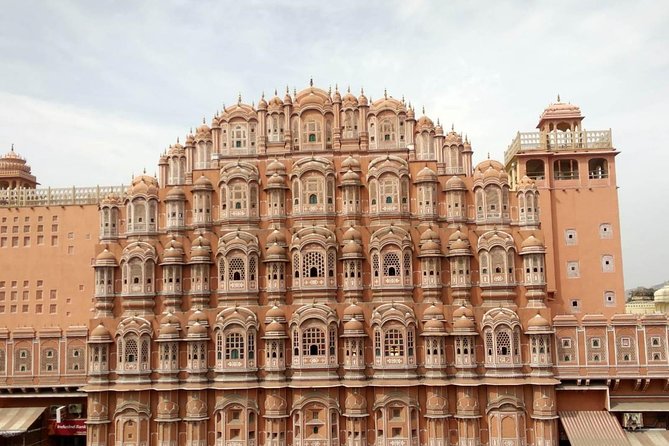
You start with Hawa Mahal, the landmark most people recognize immediately from photos: a façade with stacked, curved arches and a pattern of lattice screens called jali. The tour framing is smart—this isn’t presented as just a pretty building. It’s described as something built for royal household viewing of everyday city life, tied to Sawai Pratap Singh’s vision.
Why this stop works early: Hawa Mahal is the kind of place where your brain wants to read the details—tiers, arches, and the jali effect. When you’re fresh, it’s easier to slow down and notice what makes the design unusual. Also, since this is on the famous “must-see” list, you’ll appreciate having a guide keep you moving and explain the logic behind what you’re seeing.
Drawback to plan for: the ticket for this monument isn’t included. You’ll also want to check camera-fee rules on the day you visit, since those aren’t covered either.
City Palace: Mughal and Rajput Mixing, Plus a Still-Lived Royal Complex
Next comes the City Palace complex, inside the walled city, associated with Maharaja Sawai Jai Singh II, the founder of Jaipur. The big idea here is the architecture blend—Mughal and Rajput styles combined into one political statement. You’re also told this complex is partly still a residence, with the last ruling royal family living in a private section.
I like this stop because it gives you a different angle on the Pink City. Hawa Mahal looks like a spectacular façade meant for viewing. City Palace feels more like governance and daily life—spaces built for authority, administration, and ceremony. With a guide, you’ll stand in the right places and understand why certain rooms and designs exist, instead of just wandering and guessing.
What to watch for: City Palace entrance isn’t included, so your final cost will depend on your ticket category. Plan for about two hours here, which is enough time to see the major parts without turning it into a sprint.
Jantar Mantar: 1729 Astronomy Made Physical
Then you hit Jantar Mantar, Jaipur’s astronomical observatory. It’s credited to Sawai Jai Singh II around 1729, and the point isn’t vague science trivia—it’s how the structures were used to measure and track cosmic movement with real precision.
This is a great stop if you like learning that feels practical. You’re not just looking at art; you’re looking at instruments—stone tools for observation. A guide helps you connect the shapes to what they were designed to do, so it doesn’t become a set of strange monuments you can’t “read.”
Time needed is about one hour, and that’s right. You’ll move from one instrument area to another, and the guide keeps it understandable.
Same budget note as before: entrance fees aren’t included here either, and camera fees may apply.
Royal Gaitor Tumbas: Quiet, Carved Cenotaphs Outside the City Walls
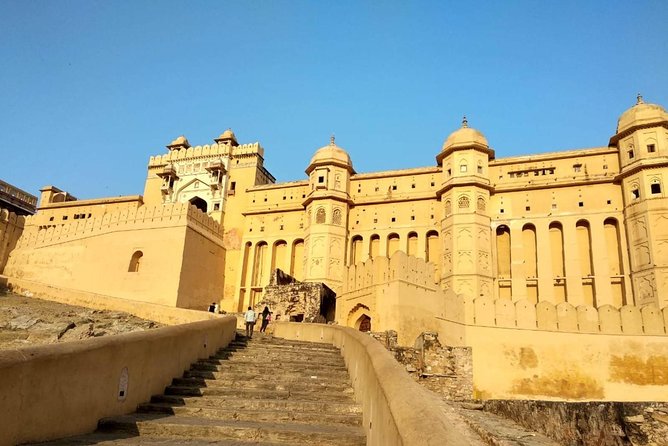
Royal Gaitore is a change of pace: royal cenotaphs just outside the city walls, beneath Nahargarh. The tone of this part is calmer. The monuments are carved with detail, and you can feel the contrast with the more visually crowded stops.
This is one of those places where you get more from slowing down. The tour notes that multiple royals are honored there, including Maharajah Pratap Singh, Madho Singh II, and Jai Singh II. Jai Singh II’s marble cenotaph is highlighted, with a dome supported by 20 carved pillars—an impressive detail once you’re there and can actually see the support rhythm.
The good part for your day: it’s described as surprisingly undiscovered. That’s helpful because you can take photos and absorb the craftsmanship without feeling like you’re constantly battling for space.
Ticket note: admission isn’t included for this stop either, but the time is about one hour, so it fits neatly without eating your day.
Jal Mahal: The Lake Palace Setting on Man Sagar Lake
Jal Mahal is the water palace in the middle of Man Sagar Lake. The tour explanation focuses on it as a distinct Rajput cultural structure—built as a five-storied building in red sandstone, and renovated/enlarged in the 18th century by Maharaja Jai Singh II of Amber.
I like this stop because it changes the visuals again. After palaces and observatories, your eyes get a rest: water, reflections, and a building that reads differently depending on where you stand. Even if you’re not a “lake view” person, it’s a nice contrast to the desert-stone look that dominates much of Jaipur.
The catch: this stop also doesn’t include admission tickets. The itinerary lists it as about one hour, which is usually enough time to see the palace setting, take photos, and let the guide give you the background without rushing.
Amer (Amber) Fort Area: UNESCO Status and the Layers Before the Fort
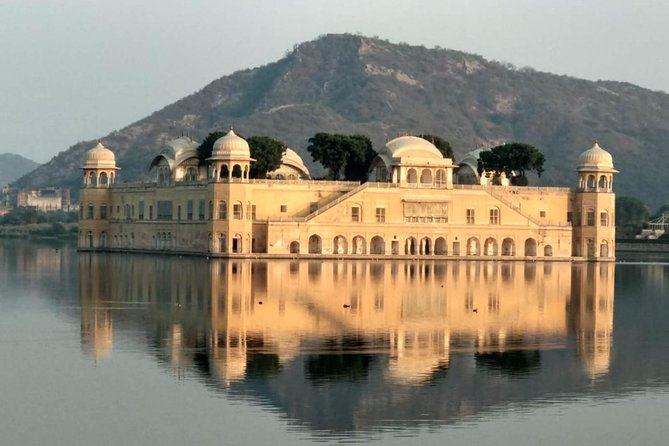
This is the longest stop—about two hours in the Amer region, described as Dhundhar. The tour gives helpful context: before Jaipur’s later dominance, Amer was tied to Meena chiefs from five tribes, and they were subordinate to Bargurjar Rajput influence from Deoti. That kind of background matters because it reminds you that forts aren’t built on a blank page.
You’re also told that the Amer fort area is part of a UNESCO World Heritage site designated in 2013. The wording points you toward the scale and collective nature of Rajput fort complexes in the region. Even if you don’t memorize the UNESCO details, it helps you understand why this area is treated as more than a single landmark.
Budget upside: this stop is listed as admission ticket free in the itinerary. That can meaningfully offset the other stops where you’ll likely pay extra at the gate.
Practical downside: Amer/Fort area usually involves more movement than some of the urban monuments. Since the overall tour notes moderate walking, wear shoes you trust and don’t plan anything right afterward that depends on being fully fresh.
How the Guide Makes This Day Feel Personal (Even in a Fixed Route)
The route may be set, but your experience doesn’t have to feel robotic. One review highlight tied to this tour is that the guide Abdul has a lot of knowledge and can tailor the day to your interests. That matters because Jaipur can be overwhelming: you might care more about architecture, or you might want story-heavy context.
In practice, a good guide does a few things fast:
- He or she points out what you should notice first, so you’re not staring at random detail without context
- He or she connects place to place, so Hawa Mahal, City Palace, and the observatory feel like one theme
- He or she helps you adjust pacing if you’re more photo-focused or more explanation-focused
Even with a fixed circuit, that “small adjustments” effect can be the difference between sightseeing and actually understanding what you’re seeing.
Price and Practical Costs: Is $48 Good Value for This Route?
At $48 per person, this tour is positioned as a budget-friendly way to cover a lot of ground. And the included items are the real reason the price works: hotel pickup and drop-off, private A/C vehicle transportation, fuel, parking, taxes, a professional guide, and bottled water.
To judge whether it’s a bargain for you, add up what’s not included:
- Monument entrance fees and possible camera fees
- Meal expenses
- Tips for the driver and guide
So the honest way to think about it is: you’re paying for time-saving logistics and interpretation, then topping up the day with site tickets. If you would have had to arrange private transport or buy separate tickets while navigating the city alone, the overall value can look better quickly.
My advice: treat $48 as the base price for movement + guiding, and keep an extra budget line for entrance fees at each paid stop.
Dress Code, Shoes, and the Passport Detail You Shouldn’t Skip
This tour asks for smart casual clothing. Short shorts or sleeveless tops aren’t recommended at temple areas. That’s not just about comfort—it’s about avoiding awkward refusals and keeping your day smooth.
Also, plan for a moderate amount of walking. Comfortable shoes are a must. Bring water too, even though bottled water is included—hot afternoons in Rajasthan can sneak up on you.
One unusual requirement is important: you need a current valid passport on the day of travel for all participants. That’s not something you want to discover at pickup time, so make sure it’s packed and accessible.
Who This Jaipur Best-of Day Works For
This is a strong fit if:
- You have limited time in Jaipur and want the big names covered in one day
- You prefer a guided plan so you don’t waste time figuring out routes
- You like variety—palaces, observatory science, tomb architecture, and a lake palace setting
- You want afternoon flexibility for gifts and personal stops
It’s less ideal if:
- You want a slow, unstructured day with lots of free roaming and fewer planned stops
- You don’t want to pay additional monument fees during the day
- Your schedule can’t handle an early 9:00am start
If you’re traveling with family, the tour notes that children must be accompanied by an adult, and most people can participate. Just keep expectations realistic about walking.
Should You Book This Jaipur Highlights Tour?
If you’re trying to see a lot without losing the day to logistics, I think this is a smart booking. The best part is the mix: iconic landmarks like Hawa Mahal and City Palace, plus the less “tour-brochure” feeling of Royal Gaitor, and then the science angle of Jantar Mantar. Add in the private A/C transport and hotel pickup, and you get a low-stress way to build a full Jaipur picture.
I’d only hesitate if you’re strongly budget-limited after tickets, or if you want maximum spontaneity with fewer scheduled stops. But for most people doing a first visit with one-day time pressure, the value and the structure are hard to beat.
FAQ
How long is the Jaipur full-day sightseeing tour?
It runs about 8 hours (approx.) and starts at 9:00am.
What’s included in the $48 per person price?
Hotel/airport/railway station pickup and drop-off, private chauffeur-driven A/C vehicle for Jaipur sightseeing, fuel and parking charges, all taxes, a professional guide, and bottled water.
Are monument entrance fees included?
No. Monument entrance fees and camera fees are not included.
Does the tour include meals?
Meal expenses are not included.
Is there walking involved?
Yes, a moderate amount of walking is involved, so comfortable shoes are recommended.
What should I wear?
Smart casual clothing is required. Short shorts or sleeveless tops are not recommended in temple areas.
Do I need a passport?
Yes. A current valid passport is required on the day of travel for all participants.
Can I cancel for a full refund?
Yes, free cancellation is available. You can cancel up to 24 hours in advance for a full refund. If you cancel less than 24 hours before the start time, the amount paid will not be refunded.
More Jaipur Tours to Compare
- Jaipur: Private Full Day Sightseeing Tour By Car with Guide★ 4.9 · 1,839 reviews
- 3-Hour Morning Bike Tour of Jaipur★ 5.0 · 1,253 reviews
- Jaipur: Private Sightseeing Day Tour with Guide by Car★ 4.8 · 773 reviews
- Jaipur: Full-Day City Tour with Car, Guide & Skip-the-Line★ 4.8 · 512 reviews
- Full-Day Jaipur Private Sightseeing Tour by Car with Guide★ 5.0 · 472 reviews
- Pink City Cooking Class★ 5.0 · 452 reviews
All of Jaipur in a Day
- Jaipur: Private Full Day Sightseeing Tour By Car with Guide★ 4.9 · 1,839 reviews
- Jaipur: Private Sightseeing Day Tour with Guide by Car★ 4.8 · 773 reviews
- Jaipur: Full-Day City Tour with Car, Guide & Skip-the-Line★ 4.8 · 512 reviews
- Full-Day Jaipur Private Sightseeing Tour by Car with Guide★ 5.0 · 472 reviews
- Private Full Day Jaipur Sightseeing Tour By Tuk Tuk★ 5.0 · 382 reviews
- Jaipur: Private Full-Day Guided City Tour★ 4.9 · 308 reviews
Newly Added Jaipur Reviews



More from Jaipur Sightseeing Tours.
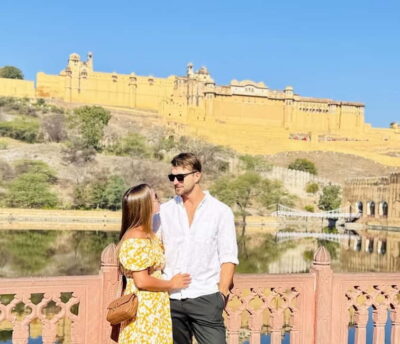 ★ 4.9Private Full Day Sightseeing Tour By Car with GuideFrom $41,839 reviews
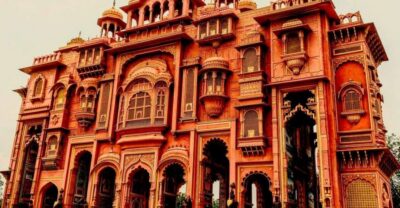 ★ 4.8Private Sightseeing Day Tour with Guide by CarFrom $5773 reviews
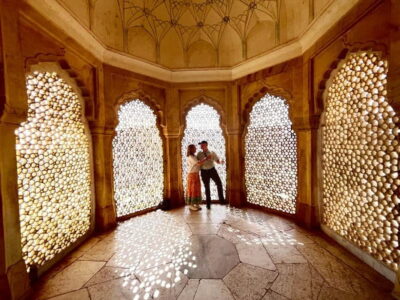 ★ 4.8Full-Day City Tour with Car, Guide & Skip-the-LineFrom $9512 reviews
 ★ 5.0Full-Day Jaipur Private Sightseeing Tour by Car with GuideFrom $11472 reviews
 ★ 5.0Private Full Day Jaipur Sightseeing Tour By Tuk TukFrom $5382 reviews
 ★ 4.9Private Full-Day Guided City TourFrom $22308 reviews
★ 5.0Full-day Jaipur Private Sightseeing Tour by Car with GuideFrom $75240 reviews
★ 4.9Private Full-Day Guided City TourFrom $22308 reviews
★ 5.0Full-day Jaipur Private Sightseeing Tour by Car with GuideFrom $75240 reviews
 ★ 5.0Private Full Day Jaipur Tour with GuideFrom $5214 reviews
This tour also appears in