
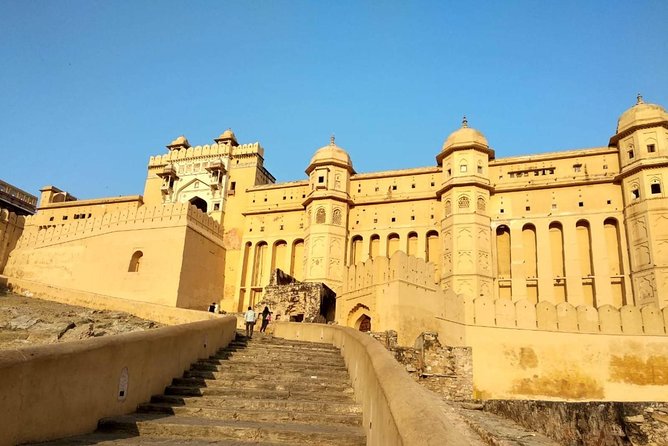
Reviewed · TAJ MAHAL & AGRA DAY TRIPS
4-Nights 5-Days India’s Golden Triangle – Jaipur Agra Delhi Tour
You can do the Golden Triangle with less stress. This private 4-night, 5-day tour strings together Jaipur, Agra, and Delhi in a chauffeur-driven A/C vehicle with professional guides, plus hotel/airport/rail pickup. What I like most is how the plan hits big-hitters like the Taj Mahal and Hawa Mahal, while also squeezing in smart extras like Jantar Mantar and Fatehpur Sikri. One thing to plan for: monument entrance tickets and camera fees are not included, so your final spend will depend on how many sites you enter.
You’ll also appreciate the small practical touches: free bottled water, mobile tickets, and a guide who helps you make sense of what you’re seeing. The pace is busy by design, and there’s “moderate walking,” so comfortable shoes matter—especially in places with uneven stone steps.
In This Review
- Key things that make this Golden Triangle tour work
- The Golden Triangle route: what 5 days really gives you
- Jaipur highlights that feel like a story, not a checklist
- Jal Mahal and Man Sagar Lake: why this quick stop works
- Abhaneri stepwells: Chand Baori’s cool math
- Fatehpur Sikri en route to Agra: Mughal planning in a compact hit
- Mehtab Bagh to Taj Mahal: getting the morning light right
- Agra Fort and Itimad-ud-Daulah: the “other” Mughal masterpieces
- Delhi’s top monuments in a tight loop: pick your pace
- Private car logistics: the real comfort you pay for
- Price and value: what $340 covers for 5 days
- Tips that make the Taj and Delhi days go smoother
- Should you book this Golden Triangle tour?
- FAQ
- What is included in the tour price?
- Are monument entrance fees included?
- Does the tour include accommodation?
- What about meals during the tour?
- Is pickup available from the airport or train station?
- Is the Taj Mahal ever closed during this tour period?
- What dress code should I follow?
- How much walking should I expect?
- Is this a private tour just for my group?
Key things that make this Golden Triangle tour work
- Private A/C car with pickup/drop so you spend less time negotiating and more time seeing
- Guided highlights in all three cities (Jaipur, Agra, Delhi) so you don’t miss the story
- Sunrise-style Taj Mahal time for softer light and quieter viewing (plus Friday closure awareness)
- A good mix of famous and meaningful stops, from Jantar Mantar to Itimad-ud-Daulah
- Free bottled water and a mobile ticket for an easier day-to-day
- Drivers praised for care and flexibility, including smooth support when India feels like a lot
East to Agra and the Taj, other ways there
- Skip The Line: Sunrise Taj Mahal & Agra Day Tour From Jaipur
★ 5.0 · 251 reviews - Same Day Taj Mahal, Agra Fort & Baby Taj Tour from Jaipur by Car
★ 5.0 · 242 reviews - From Jaipur: Private Taj Mahal & Agra Day Trip with 5* Lunch
★ 4.9 · 161 reviews - Golden Triangle Tour – Delhi-Agra-Jaipur
★ 5.0 · 73 reviews
The Golden Triangle route: what 5 days really gives you

The Golden Triangle is three cities and a lot of “major landmarks per hour.” Done alone, you’ll burn energy on logistics: timetables, ticket lines, and figuring out where to start. Done with a private setup, the value is clear—your day is structured, and your transport is handled.
I like that this itinerary doesn’t just list monuments. It builds a route that makes geographical sense: you begin in Jaipur, then head toward Agra, and finish with Delhi. In a trip this short, that flow matters. You get the wow moments (Taj Mahal, Red Fort), plus context stops that explain how the region thought, worshiped, and built.
That said, it’s still intense. You’ll be moving between cities and walking inside major sites. If you hate tight schedules, you might find yourself wishing for more unplanned time. If you want maximum sight coverage with less friction, this format fits well.
Jaipur highlights that feel like a story, not a checklist
Jaipur is where the tour earns its name. You start with architecture, then move into science and urban design, then finish with scenic calm.
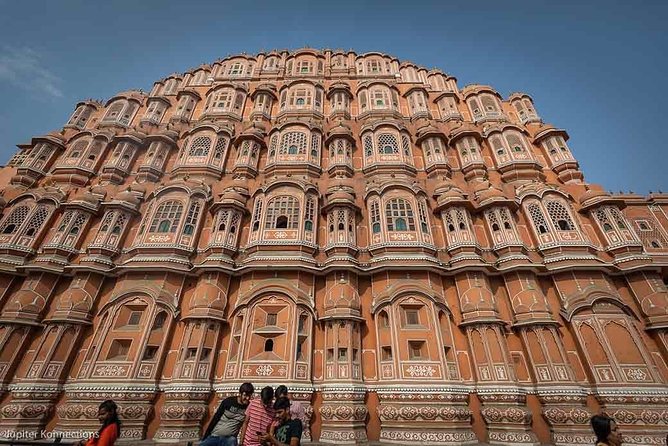
Hawa Mahal (Palace of Wind) is your first visual hit. This “palace of winds” is famous for its curved latticework arches rising upward. Even if you only have an hour, it’s the kind of landmark that makes you look up and notice details: it’s built to let the royal household move through visibility and privacy at the same time.
Next comes City Palace of Jaipur, a sprawling complex rather than one single building. You’ll see separated gardens and courtyards across a large footprint. It’s a reminder that Jaipur’s royal identity wasn’t one room—it was an entire living landscape.
Then you’ll hit Jantar Mantar, a UNESCO site centered on astronomical instruments. The big draw is the largest stone sundial in the world, but the better takeaway is this: these weren’t museum pieces. The monument is still used as an observatory, so you’re seeing a working idea, not only an old structure.
Practical note: you’ll spend around an hour at each of these, so your guide’s timing matters. A good guide helps you choose what to linger over and what to see quickly.
Jal Mahal and Man Sagar Lake: why this quick stop works
After the palace-and-precision vibe, Jal Mahal gives you contrast. It’s the water palace sitting in the middle of Man Sagar Lake, and it’s built in red sandstone with a five-storied look. It’s not the “main event” like Hawa Mahal, but it breaks the day’s energy.
This is the kind of stop where the photo isn’t the whole point. Standing here, you start understanding how Jaipur’s rulers used water and landscape as part of their city identity. Also, the lake setting can feel cooler and more open than busy temple streets nearby.
You’ll only have about 30 minutes, so come ready to glance, photograph, and move on. If you’re the type who needs 45 minutes to “warm up” for views, you’ll want to manage your time here.
Abhaneri stepwells: Chand Baori’s cool math
Abhaneri is a short escape from Jaipur’s core, and it adds a distinct Rajasthan flavor. The big attraction is Chand Baori, a stepwell complex (listed here as popular for the step wells). Stepwells in India were built to cope with dry seasons—big, deep tanks for water storage and cooling, plus practical ritual space before temple visits.
The tour also mentions the Harshat Mata Temple, which adds a spiritual reason to slow down near the wells. Even if you don’t go deep into religious practice, the setting helps you understand why this architecture existed: people needed water access and shade, and they built it into monumental form.
You’ll have about an hour. If you’re prone to skipping side areas, don’t. This is one place where walking the lines of the steps makes the whole structure feel real.
Delhi, Agra and Jaipur strung together


Fatehpur Sikri en route to Agra: Mughal planning in a compact hit
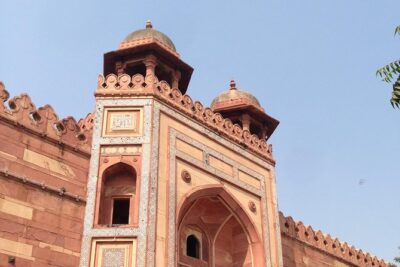
Then it’s time to leave Rajasthan and head toward Agra, with a stop at Fatehpur Sikri. The highlight here is that it was a short-lived Mughal capital under Emperor Akbar. You’re not just seeing ruins—you’re seeing the idea of a planned city built in Mughal style with Indian, Persian, and Islamic architectural influences.
The practical value: Fatehpur Sikri is 40 km west of Agra, so it works as a “reset stop” while traveling. It’s also an easy way to connect the dots between Jaipur’s Rajput architecture and Agra’s Mughal masterpieces.
You’ll have around two hours. If you like to understand design (city layout, fortified structures, how different styles blend), you’ll get a lot from that time. If you prefer only the most iconic single structures, you might skim too fast—use the guide to pick a few key viewpoints.
Mehtab Bagh to Taj Mahal: getting the morning light right
Agra is the emotional center of the Golden Triangle, and the tour leans into timing. You’ll go to Mehtab Bagh (Moonlight Garden) for a view of the Taj Mahal at sunset, listed here as about an hour. The bigger story: these gardens were aligned so the Taj appears framed from across the Yamuna River. It’s not just scenery—it’s design meant for contemplation.
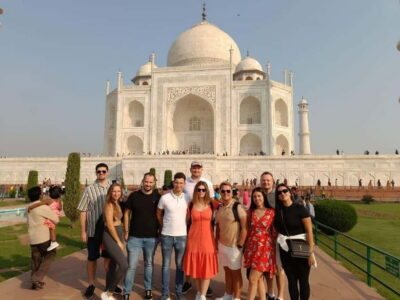
Then comes Taj Mahal, and the tour specifically aims for the relative quiet of early morning. That matters because the marble changes as the light changes—soft grey and yellow turning toward pearly cream and white. Even if you’ve seen the Taj in photos, standing near it in softer light feels different: the scale reads better, and the mood is calmer.
Two important planning notes:
- The Taj Mahal is closed every Friday, so your day must not land on that weekday.
- Entrance tickets are not included, so budget for them separately.
You’ll have about three hours for Taj Mahal. That’s a good window. You can see the main complex, pause for views, and still have time to breathe instead of rushing through every corner.
Agra Fort and Itimad-ud-Daulah: the “other” Mughal masterpieces
Most people focus only on the Taj, but this tour adds two stops that help Agra feel bigger than one building.
Tomb of Itimad-ud-Daulah is often called a draft of the Taj Mahal in the sense that it uses similar marble-inlay ideas. Here, it’s described as a “jewel box” and sometimes nicknamed the Baby Taj. The practical effect is that it gives you detail-focused viewing—great if you like textures and craftsmanship instead of only large-scale symmetry.
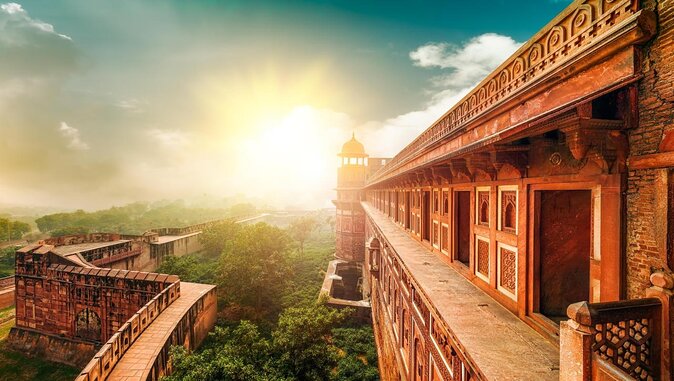
Next is Agra Fort, a massive red sandstone fort tied to Mughal power. You’ll see highlights like Diwan E Aam, Khas Mahal, Pearl Mosque, and Musamman Burj. The tour also notes that Aurangzeb imprisoned his father Shah Jahan here, which adds a sharper historical edge to the walls you’re standing inside.
You’ll have around:
- 1 hour at Itimad-ud-Daulah
- 2 hours at Agra Fort
If you’re only planning one “deep” heritage site in Agra, Taj is the obvious choice. But these two stops are what make the overall trip feel more complete.
Delhi’s top monuments in a tight loop: pick your pace
In Delhi, the tour hits four major heritage sites that each represent a different angle of the city’s history.
First up is Qutub Minar, part of the Qutab complex (UNESCO). It’s a towering minaret made of brick and described here as the second tallest minaret in the world, about 73 m-high. It was built after the defeat of Delhi’s last Hindu kingdom, giving the monument political weight alongside its dramatic height.
Then you’ll visit Red Fort (Lal Qalʿah) in Old Delhi. Built in the mid-17th century by Shah Jahan, it remains one of India’s top fort structures and is UNESCO-listed. This stop works well if you like understanding how power looks in brick, stone, and gate design.
After that comes Humayun’s Tomb, highlighted as the first garden tomb in Asia and a heritage site. Its Persian-influenced garden layout is part of why it’s often treated as a turning point for later Mughal tomb design.
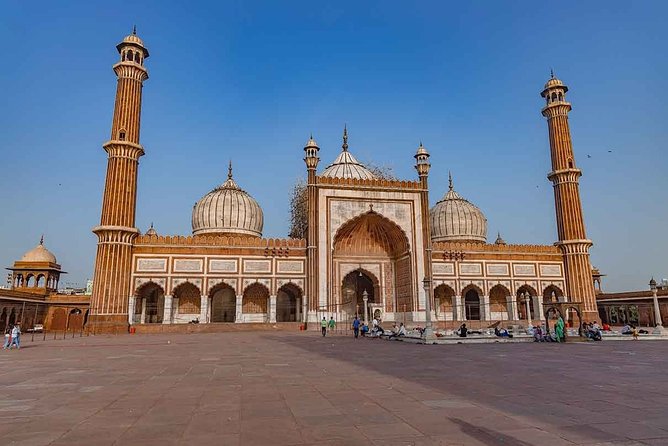
Finally, you’ll end with Jama Masjid, one of Delhi’s largest mosques, built by Shah Jahan. It’s a massive example of Mughal architecture, and it gives you a different sensory experience than forts and tombs. If you’re coming from sightseeing earlier in the day, this is where you’ll feel the scale of Old Delhi’s religious center.
In the data, each stop is allotted about 1–2 hours. That’s enough if you focus on big architectural cues and let the guide translate the symbolism.
Private car logistics: the real comfort you pay for
For most people, the best part isn’t even the monuments. It’s the transport setup.
This tour includes round-trip transportation in a chauffeur-driven A/C private vehicle, with pickup from your hotel, airport, or railway station and drop-off back. That’s a big deal in the Golden Triangle because routes between Jaipur, Agra, and Delhi can turn into time traps if you’re booking ad hoc rides.
You’ll also get free bottled water, which is one of those “small” inclusions that becomes major once the day heats up and you’re doing outdoor walking.
The other comfort factor is how the tour is run as a private activity. It says only your group participates, which typically means you’re not stuck waiting on other schedules. Reviews also back this up with praise for drivers who made guests feel safe and comfortable, including drivers named Zaheer, Jaheer, Rakesh, Lalan, and Nadeem.
One more practical reminder from the tour notes: the transfer time depends on traffic, and walking is moderate. Build in mental patience and keep your shoes comfortable.
Price and value: what $340 covers for 5 days
At $340 per person for roughly 4 nights and 5 days, the headline value is that you’re buying guided sightseeing plus city-to-city private transport. Many travelers underestimate the cost of a private A/C car with a chauffeur across multiple days. Here, that core service is included.
What’s included:
- hotel/airport/rail pickup and drop
- chauffeur-driven A/C private vehicle
- professional informative tour guide for Delhi, Agra, and Jaipur
- bottled water
What’s not included:
- accommodation
- personal meals and other activity expenses
- monument entrance fees and camera fees
- driver and guide tips
So how do you judge value? If you were to hire a car and a guide for three cities on your own, it would likely cost more than this total, especially for the travel days. The tour is also set up to reduce planning overhead, which is worth something if you’d rather focus on the sights than the logistics.
Your main “variable” cost is entrances. Some stops list admission tickets as not included, meaning you should expect separate payments for those sites.
Tips that make the Taj and Delhi days go smoother
A few details are worth treating like rules, not suggestions.
- Plan for Friday closure of the Taj Mahal. If your schedule lands on Friday, the tour will need to adjust your Taj day.
- Use smart casual dress. For temple-related areas, short shorts and sleeveless tops are not recommended.
- Bring your valid passport on the day of travel for all participants.
- Wear comfortable shoes. The itinerary includes a moderate amount of walking and lots of stone surfaces.
- Budget time for ticket lines and entrance fees since monument admission isn’t included.
- If you’re sensitive to heat or want extra comfort, keep drinking bottled water and pace yourself during outdoor stops.
From reviews, the best days seem to be the ones where the driver and guide help with the flow. One common theme was how drivers (like Rakesh, Jaheer, Zaheer, and Nadeem) were praised for care, punctuality, and helpful support. That kind of planning makes a short itinerary feel less rushed.
Should you book this Golden Triangle tour?
Book it if you want the “big three” (Jaipur, Agra, Delhi) with private A/C transport, guided stops, and a schedule that’s built to cover key sights without you doing all the homework. It’s also a strong pick if this is your first time in India and you’d like a driver to handle the hard parts of getting around.
Consider a different option if you want lots of free time, prefer very slow sightseeing, or you don’t want to handle extra costs for entrances. This tour is practical, but it’s still a packed route.
FAQ
What is included in the tour price?
Hotel/airport/railway station pickup and drop-off, a chauffeur-driven A/C private vehicle for sightseeing, professional informative tour guides for Delhi, Agra, and Jaipur, and bottled water.
Are monument entrance fees included?
No. Monument entrance fees and camera fees are not included.
Does the tour include accommodation?
No. Accommodation is not included.
What about meals during the tour?
Personal meals and other activity expenses are not included.
Is pickup available from the airport or train station?
Yes. Pickup is offered from your hotel, airport, or railway station.
Is the Taj Mahal ever closed during this tour period?
The Taj Mahal is closed every Friday.
What dress code should I follow?
Smart casual is advised. Short shorts or sleeveless tops are not recommended in temple areas.
How much walking should I expect?
The tour notes a moderate amount of walking, so comfortable shoes are important.
Is this a private tour just for my group?
Yes. It’s a private activity and only your group participates.
North to Delhi
- Golden Triangle & Ranthambore: 4-Day Private Tour from Delhi★ 5.0 · 355 reviews
- From Delhi: Private 3-Day Golden Triangle Tour with Hotels★ 4.9 · 339 reviews
- From Delhi: Private 5-Day Golden Triangle Tour★ 4.9 · 208 reviews
- Same Day Jaipur Tour from Delhi by Car or Train★ 5.0 · 87 reviews
- From Delhi: Private Jaipur & Amber Fort Guided Tour by Car★ 4.8 · 84 reviews
- Golden Triangle Tour – Delhi-Agra-Jaipur★ 5.0 · 73 reviews
The Golden Triangle, End to End
- Golden Triangle & Ranthambore: 4-Day Private Tour from Delhi★ 5.0 · 355 reviews
- From Delhi: Private 3-Day Golden Triangle Tour with Hotels★ 4.9 · 339 reviews
- From Delhi: Private 5-Day Golden Triangle Tour★ 4.9 · 208 reviews
- Golden Triangle Tour – Delhi-Agra-Jaipur★ 5.0 · 73 reviews
- 3-Days Golden Triangle’s Private Tour★ 5.0 · 69 reviews
- Private 6-Day Golden Triangle Tour: Delhi, Agra, Jaipur by Car★ 5.0 · 60 reviews
East to Agra and the Taj
- Skip The Line: Sunrise Taj Mahal & Agra Day Tour From Jaipur★ 5.0 · 251 reviews
- Same Day Taj Mahal, Agra Fort & Baby Taj Tour from Jaipur by Car★ 5.0 · 242 reviews
- From Jaipur: Private Taj Mahal & Agra Day Trip with 5* Lunch★ 4.9 · 161 reviews
- Golden Triangle Tour – Delhi-Agra-Jaipur★ 5.0 · 73 reviews
- From Jaipur: Taj Mahal & Agra Private Guided Day Tour★ 4.9 · 68 reviews
- Private 6-Day Golden Triangle Tour: Delhi, Agra, Jaipur by Car★ 5.0 · 60 reviews
Newly Added Jaipur Reviews




More from Taj Mahal & Agra Day Trips.
 ★ 5.0Skip The Line: Sunrise Taj Mahal & Agra Day Tour From JaipurFrom $72251 reviews
 ★ 5.0Same Day Taj Mahal, Agra Fort & Baby Taj Tour from Jaipur by CarFrom $73242 reviews
 ★ 4.9From Jaipur: Private Taj Mahal & Agra Day Trip with 5* LunchFrom $5161 reviews
Golden Triangle Tour – Delhi-Agra-JaipurFrom $32273 reviews
★ 4.9From Jaipur: Private Taj Mahal & Agra Day Trip with 5* LunchFrom $5161 reviews
Golden Triangle Tour – Delhi-Agra-JaipurFrom $32273 reviews
 ★ 4.9From Jaipur: Taj Mahal & Agra Private Guided Day TourFrom $5368 reviews
 ★ 5.0Private 6-Day Golden Triangle Tour: Delhi, Agra, Jaipur by CarFrom $21560 reviews
 ★ 5.0Private Transfer From Jaipur to Agra including Fatehpur SikriFrom $4258 reviews
 ★ 5.0Private Same-Day Taj Mahal & Agra Fort Tour from Jaipur by CarFrom $4552 reviews
This tour also appears in