
Reviewed · 2-DAY EXPERIENCES
2-Day Jaipur Forts Palaces and Temples Tour
Jaipur rewards anyone with a tight plan. In two days, this tour hits the big, photo-friendly icons and the hilltop fort system that made the Pink City famous.
I like that it’s set up with hotel/airport pickup plus a private AC vehicle, so you’re not juggling rickshaws or waiting around. I also like the mix of sights: you get royal architecture (Hawa Mahal and City Palace), science history (Jantar Mantar), and real fort engineering (Amer, Jaigarh, Nahargarh).
One thing to consider: entrance fees aren’t included for several major stops, so your total cost will depend on which ticketed sites you choose to go into during the day.
In This Review
- Key things to love about this Jaipur tour
- A private AC car and guide that keep Jaipur from feeling like math homework
- Day 1: Hawa Mahal, City Palace, Jantar Mantar, and the market run
- Hawa Mahal (Palace of Wind): honeycomb views and jharokha windows
- City Palace Complex: Mughal meets Rajput, and the royals still live here
- Jantar Mantar (UNESCO): stone instruments that measure the sky
- Isarlat Sargasooli: the 140-foot passage to heaven
- Albert Hall Museum: coins, crystals, and everyday art
- Birla Mandir: white marble temple in daylight calm
- Patrika Gate and Toran Gate: photo spots built around gardens and gateways
- Pink City and bazaars: Johri Bazar and Bapu Bazar
- Day 2: Jal Mahal and Amer Fort, then Jaigarh and Nahargarh
- Jal Mahal: a palace perched on Man Sagar Lake
- Amer Fort: pale sandstone, marble details, and the Panna Meena stepwell
- Jaigarh Fort: artillery history and the Jaivana cannon
- Nahargarh Fort: the hilltop defender above the Aravalli Hills
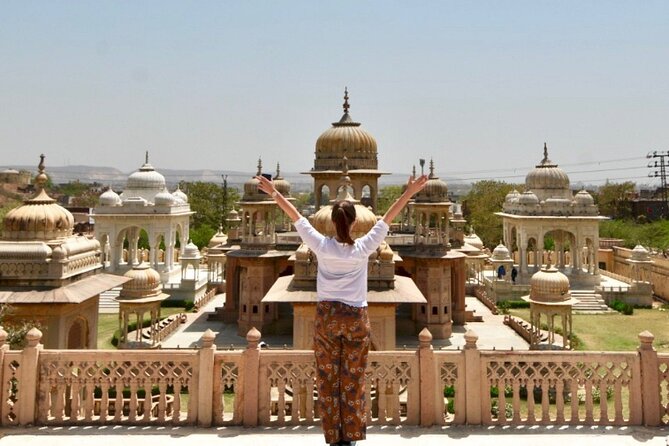
- Galtaji Temple and Royal Gaitor Tumbas: the quieter side of Jaipur forts
- Royal Gaitor Tumbas: peaceful tombs away from city energy
- Galtaji Temple: the monkey temple experience
- Evening Old City glow: Hawa Mahal, Albert Hall, and Isarlat at night
- Price and value: why $119.82 per group can be a good deal
- The “personal service” factor: drivers named, schedules adjusted, answers fast
- Who should book this Jaipur forts, palaces, and temples tour
- Should you book it?
- FAQ
- What does the 2-Day Jaipur Forts Palaces and Temples Tour include?
- Is there an entrance ticket included for all monuments?
- How many people are in a group?
- Do you get to see Jaipur at night?
- What time does Day 1 start?
- What kind of vehicle and driver are provided?
- Is a mobile ticket provided?
- Is free cancellation available?
Key things to love about this Jaipur tour
- Private AC car + English-speaking driver: you spend less time figuring out logistics and more time seeing the city.
- Two days with a private guide: the “why” behind each stop matters as much as the photos.
- Hawa Mahal + Jantar Mantar + City Palace on Day 1: a smart order that stacks Jaipur’s must-sees early.
- Amer Fort, Jaigarh Fort, and Nahargarh Fort on Day 2: you see how the defense system worked in practice.
- Galtaji Temple with monkeys: a temple visit with wildlife energy, right outside the usual fort circuit.
- Evening Old City walk: you get illuminated views of key monuments without needing a second full day.
A shortlist worth scanning before you book:
- 2-Day Private Jaipur City Sightseeing Tour with Three Forts
★ 5.0 · 145 reviews - Ranthambore Tiger Safari from Jaipur – 1 or 2 Days
★ 5.0 · 88 reviews - 2 Days Private Tour to Jaipur
★ 5.0 · 69 reviews - 2 Day Jaipur Tour for First-Time Visitors
★ 5.0 · 51 reviews
A private AC car and guide that keep Jaipur from feeling like math homework
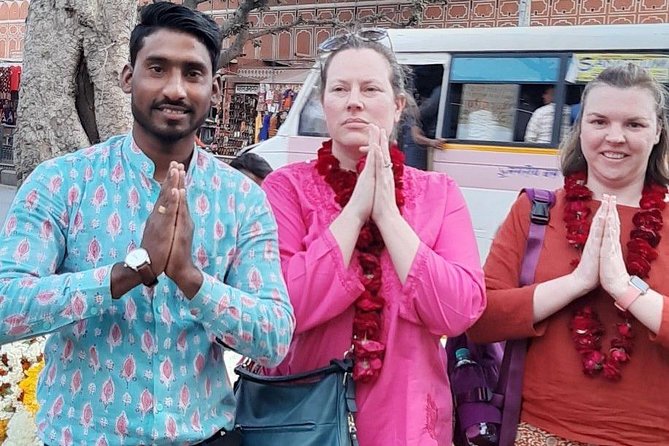
Jaipur can be a lot. Traffic, distance between neighborhoods, and timing at forts can turn sightseeing into a scavenger hunt. This tour lowers that stress with a private AC vehicle and a professional driver, and you’ll also have a private guide for 2 days.
What that means for you: you’ll get a smooth flow between areas like the Old City markets and the Amer hill zone, instead of paying for separate taxis or losing time to directions. You also get bottled water and covers for practical costs like parking, tolls, and fuel.
This is priced per group (up to 3), which is a big deal in India where “private” can range from great value to surprisingly expensive. Here, the structure is simple: you pay for the car + guide experience, and you handle monument entrance fees separately where needed.
Day 1: Hawa Mahal, City Palace, Jantar Mantar, and the market run
Day 1 starts after breakfast with pickup at 9:00 AM. Expect a full, guided sight route that balances major architecture with a few “where am I?” photo stops.
Hawa Mahal (Palace of Wind): honeycomb views and jharokha windows
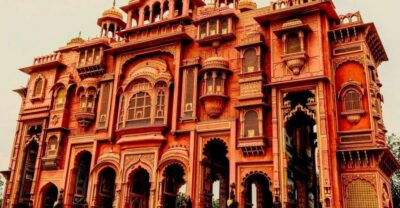
Hawa Mahal is one of those buildings you think you already know—until you see it up close. It’s a five-story facade that looks like a honeycomb beehive, built with lots of jharokhas (window balconies) designed for ventilation. The name fits: Palace of Winds.
A key detail you’ll hear from your guide: it’s famous for its unusual 87-degree angled pyramidal architecture and the idea that it could remain standing without a traditional foundation. The purpose behind the windows wasn’t just pretty design—it was about letting people inside view the street scene.
Possible drawback: it’s iconic, so it can be busy. Going early in the day helps.
City Palace Complex: Mughal meets Rajput, and the royals still live here
Next is the City Palace Complex, built by Maharaja Sawai Jai Singh II. It’s a blend of Mughal and Rajput architecture, and it’s still connected to the royal family. Your route here is about understanding how Jaipur ruled and represented itself—through walls, courtyards, and ceremonial spaces.
What I like about this stop in a two-day plan: it’s not just one building. It’s an entire complex, so the guide can give you context on the layout and what you’re looking at.
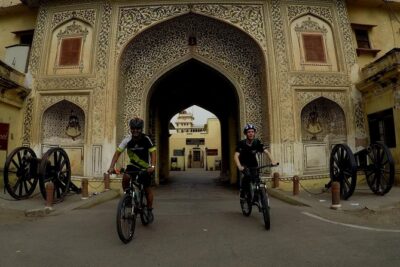
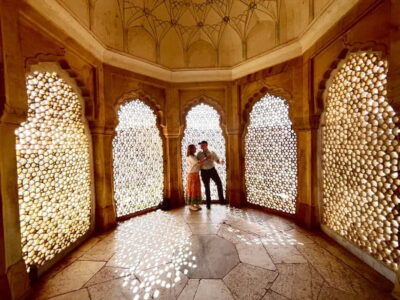
Jantar Mantar (UNESCO): stone instruments that measure the sky
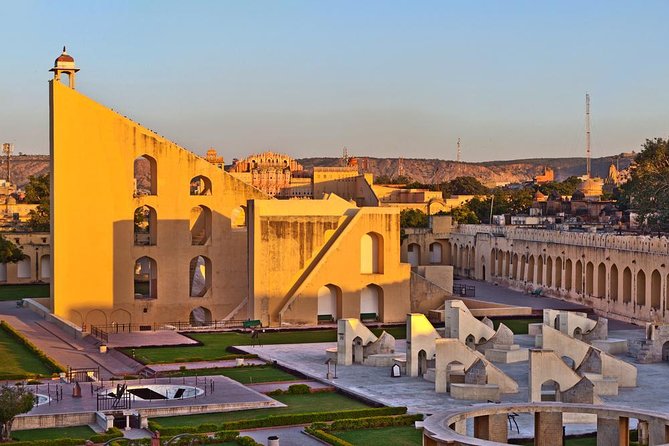
Jantar Mantar is a collection of 19 astronomical instruments built under Sawai Jai Singh in 1738 CE. It’s UNESCO-listed and known for the world’s largest stone sundial.
If you’ve ever wondered how people studied time and the heavens before computers, this is the answer—built into stone. You’ll leave with a better sense of how scientific curiosity shaped palace culture in Jaipur.
Ticket note: admission isn’t included on the itinerary for this stop, so plan for that if you want entry.
Isarlat Sargasooli: the 140-foot passage to heaven
Isarlat Sargasooli (also called Sargasuli) is easy to miss if you don’t know what it is. It rises 140 feet in a seven-story structure at a busy intersection near Tripolia Bazaar and Gangori Bazaar.
The nickname passage to heaven comes up for a reason—your guide can explain the symbolic and visual impact of the tower as you view it in context with the surrounding gates and bazaars. This is the kind of stop that’s short but satisfying.
Albert Hall Museum: coins, crystals, and everyday art
Albert Hall Museum is another big name in Jaipur. The museum collections include things like painting, jewelry, carpets, ivory, stone sculptures, and crystal, plus coins from eras such as the Gupta Empire, Kushan Dynasty, Delhi Sultanate period, Mughal period, and British Raj.
On a two-day tour, this is a practical inclusion because it gives you a place to slow down a bit, compare styles, and connect what you saw outside to objects inside.
Like other ticketed sites, admission isn’t included for Day 1 on the plan.
Birla Mandir: white marble temple in daylight calm
Birla Mandir is a Hindu temple built in 1988 from white marble by the B.M. Birla Foundation. It’s marked as free on this schedule, and it offers a quieter reset between palace-fort intensity.
Patrika Gate and Toran Gate: photo spots built around gardens and gateways
Patrika Gate is an entrance to Jawahar Circle Garden and one of the most photographed spots in Jaipur. Toran Gate is also on your Day 1 list, near Jaipur Airport at Jawahar Circle Park.
These aren’t “historic palace rooms,” but they’re useful: they help you understand modern Jaipur’s design language and give you clean, easy views for photos.
Pink City and bazaars: Johri Bazar and Bapu Bazar
Your Day 1 ends with time in the markets. The plan specifically calls out Johri Bazar and Bapu Bazar, where you can browse without feeling rushed.
My practical take: markets like these are best when you decide what you want before you arrive. Do you want textiles, jewelry style ideas, small gifts, or snacks? Even if you don’t buy much, it helps you navigate without getting overwhelmed.
Day 2: Jal Mahal and Amer Fort, then Jaigarh and Nahargarh
Day 2 keeps the focus on Jaipur’s defensive and royal architecture—especially the fort belt above the city.
Jal Mahal: a palace perched on Man Sagar Lake
Jal Mahal sits in the middle of Man Sagar Lake. The original structure dates to around 1699, and it was later renovated and enlarged by Maharaja Jai Singh II in the early 18th century.
It’s a visual stop: lake + sandstone + the idea of royalty controlling the view. Even if you’re not paying for entry, this is the kind of place that gives you a different angle on Jaipur’s style.
Amer Fort: pale sandstone, marble details, and the Panna Meena stepwell
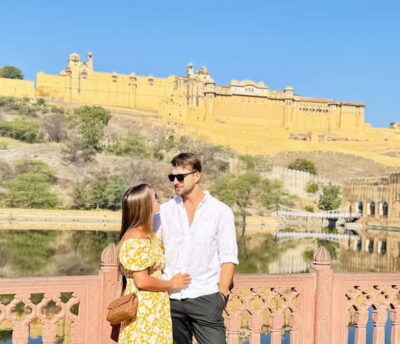
Amer Fort is the star. It’s 11 km from Jaipur city, and it’s built with pale yellow and pink sandstone and white marble. Plan to spend time absorbing the scale, not just taking pictures.
The route includes Panna Meena Ka Kund, a stepwell located near Amer Fort. The itinerary marks it free, and it’s a powerful contrast: while the fort is about power, the stepwell shows how people engineered water access.
Two things I think you’ll appreciate here:
- It’s a strong example of how function and design can share the same space.
- The fort-and-stepwell pairing makes the whole area feel connected, not random.
Jaigarh Fort: artillery history and the Jaivana cannon
Jaigarh Fort was a center for artillery production for the Rajputs. Today it’s known for the engineering behind the Jaivana, produced in 1720, described as the largest cannon on wheels from the early modern era. There’s also mention of its own foundry.
This is a good stop if you like military history without needing a textbook. You’ll get a sense of how the fort system wasn’t just walls—it was built to operate.
Nahargarh Fort: the hilltop defender above the Aravalli Hills
Nahargarh Fort sits atop the Aravalli Hills. In the historical defense picture, it worked with Amer and Jaigarh to protect the region.
This is where the tour’s structure really pays off. Because you’ve seen Amer and Jaigarh earlier, Nahargarh feels less like a random fort stop and more like part of a planned system.
Galtaji Temple and Royal Gaitor Tumbas: the quieter side of Jaipur forts
Not every memorable Jaipur moment has to be loud and crowded. Day 2 includes two stops that slow things down.
Royal Gaitor Tumbas: peaceful tombs away from city energy
Royal Gaitor Tumbas are known for a calm atmosphere, with many maharajas buried there. It’s a different mood than Amer’s big architecture and a good change of pace.
If you’re the type who likes atmosphere as much as highlights, this is a solid mid-to-late day inclusion.
Galtaji Temple: the monkey temple experience
Galtaji Temple is about 10 km east of Jaipur and is popular for its colony of monkeys, which is why it’s nicknamed the Monkey Temple. The itinerary marks this as free.
This is a practical stop because it adds something you won’t get at the palace forts: a little “wildlife in your temple visit.” Do keep a respectful distance around animals, and expect they might be bold around people.
Evening Old City glow: Hawa Mahal, Albert Hall, and Isarlat at night
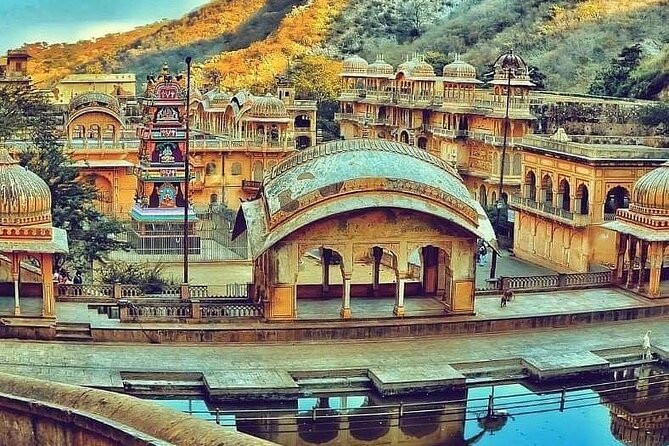
The day ends with an illuminated walking tour through Old City, visiting places like Albert Hall Museum, Hawa Mahal, and Isarlat, plus additional nearby highlights.
This is smart for two reasons:
- Night views make architecture feel different. Even the same facade can look brand new under lights.
- Walking helps you absorb the city rhythm without adding another long drive.
Based on the schedule, this evening block is marked free, which likely means you’re mostly viewing exteriors or light-access areas rather than buying additional entry tickets. Still, you should treat it as a photo and atmosphere window, not a replacement for daytime museum entry.
Price and value: why $119.82 per group can be a good deal
The price is listed as $119.82 per group (up to 3) for two days, with pickup/drop-off included. For a private AC vehicle, a driver, and a private guide for two days, the math usually works best for small groups—families or two friends traveling together.
Here’s where the value comes from:
- You’re paying for time saved: fewer transfers and less hunting for directions.
- You’re paying for interpretation: a guide helps you connect what you see, especially at Jantar Mantar and the fort circuit.
- You’re getting structured coverage: Day 1 is city-core classics; Day 2 is the fort-and-temple belt.
The main catch is entrance fees. The itinerary notes that tickets aren’t included for several top sights, including big names like Hawa Mahal, City Palace, and Jantar Mantar (plus some forts). Your final spend will depend on whether you add entry to every ticketed stop.
Practical tip: if you want to manage costs, decide in advance which ticketed sites are must-enter versus must-see from outside.
The “personal service” factor: drivers named, schedules adjusted, answers fast
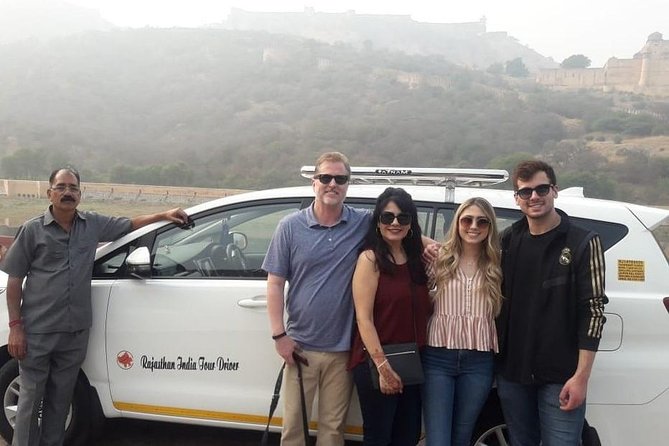
One of the best signals here isn’t the monuments—it’s the people running the experience. In feedback, Vinod is repeatedly credited for fast, responsive planning, including arranging tours with quick communication.
Drivers also got specific praise:
- Pawanji was singled out for providing a high-quality driving experience.
- Shakirbhai was described as cooperative and helpful with guidance.
- Nijam was noted as responsive and a genuinely nice presence during the trip.
The theme is clear: you’re not just getting a vehicle. You’re getting a team that pays attention to comfort and adjustments. One review also emphasizes that the schedule could be adjusted to match preferences, including doing more local-style shopping and market time.
That matters because Jaipur is flexible. If you prefer more market time and less museum time, a private plan gives you room to steer.
Who should book this Jaipur forts, palaces, and temples tour
This tour fits best if you want:
- Two days without bouncing between too many separate tours.
- A good spread of palaces + forts + temples, not only one category.
- A small-group feel (up to 3) with a private car.
It’s especially appealing for families who want structure, and for couples who like architecture but don’t want to research every route and ticket in advance.
If you love to move at a very slow pace with long independent lunch breaks, you might want to plan on adjusting the itinerary. This plan is active by design.
Should you book it?
Yes, I’d book it if you want the highlights of Jaipur Fort culture with minimal hassle. The combination of private AC transport, a real guide, and a fort circuit that makes historical sense is the strongest reason.
Skip the impulsive booking mindset if you know you’re trying to keep entrance fees extremely low. Several major stops are ticketed on the plan, so your budget should include that possibility.
If you’re arriving for two days and want a clean, well-paced overview of the Pink City’s royal and hilltop side, this one is a solid choice.
FAQ
What does the 2-Day Jaipur Forts Palaces and Temples Tour include?
It includes hotel or airport pickup and drop-off, a private AC vehicle, bottled water, fuel and parking/toll coverage, and a private guide for 2 days.
Is there an entrance ticket included for all monuments?
No. The itinerary lists many stops as admission ticket not included, while some stops are marked free.
How many people are in a group?
The price is per group for up to 3 people.
Do you get to see Jaipur at night?
Yes. There is an illuminated walking tour through Old City that includes sights such as Albert Hall Museum, Hawa Mahal, and Isarlat.
What time does Day 1 start?
Day 1 starts with pickup at 9:00 AM after breakfast.
What kind of vehicle and driver are provided?
You’ll have a private AC vehicle with an English-speaking driver.
Is a mobile ticket provided?
Yes, the tour includes a mobile ticket.
Is free cancellation available?
Free cancellation is available up to 24 hours in advance of the experience start time for a full refund. The experience requires good weather.
More 2-Day Experiences in Jaipur
- 2-Day Private Jaipur City Sightseeing Tour with Three Forts★ 5.0 · 145 reviews
- Ranthambore Tiger Safari from Jaipur – 1 or 2 Days★ 5.0 · 88 reviews
- 2 Days Private Tour to Jaipur★ 5.0 · 69 reviews
- 2 Day Jaipur Tour for First-Time Visitors★ 5.0 · 51 reviews
- Pink City Private 2 day TukTuk Tour with Free Pickup.★ 5.0 · 48 reviews
- 2-Days Private Ranthambhore Tiger Tour from Jaipur★ 4.5 · 38 reviews
More Jaipur Tours to Compare
- Jaipur: Private Full Day Sightseeing Tour By Car with Guide★ 4.9 · 1,839 reviews
- 3-Hour Morning Bike Tour of Jaipur★ 5.0 · 1,253 reviews
- Jaipur: Private Sightseeing Day Tour with Guide by Car★ 4.8 · 773 reviews
- Jaipur: Full-Day City Tour with Car, Guide & Skip-the-Line★ 4.8 · 512 reviews
- Full-Day Jaipur Private Sightseeing Tour by Car with Guide★ 5.0 · 472 reviews
- Pink City Cooking Class★ 5.0 · 452 reviews
Newly Added Jaipur Reviews


More from 2-Day Experiences.
 ★ 5.02-Day Private Jaipur City Sightseeing Tour with Three FortsFrom $99145 reviews
 ★ 5.0Ranthambore Tiger Safari from Jaipur – 1 or 2 DaysFrom $3388 reviews
 ★ 5.02 Days Private Tour to JaipurFrom $5169 reviews
 ★ 5.02 Day Jaipur Tour for First-Time VisitorsFrom $2751 reviews
 ★ 5.0Pink City Private 2 day TukTuk Tour with Free Pickup.From $1748 reviews
 ★ 4.52-Days Private Ranthambhore Tiger Tour from JaipurFrom $26038 reviews
 ★ 5.02-Day Private Jaipur City TourFrom $6934 reviews
 ★ 5.0Private- 2 Day Jaipur Guided TourFrom $7018 reviews
This tour also appears in